
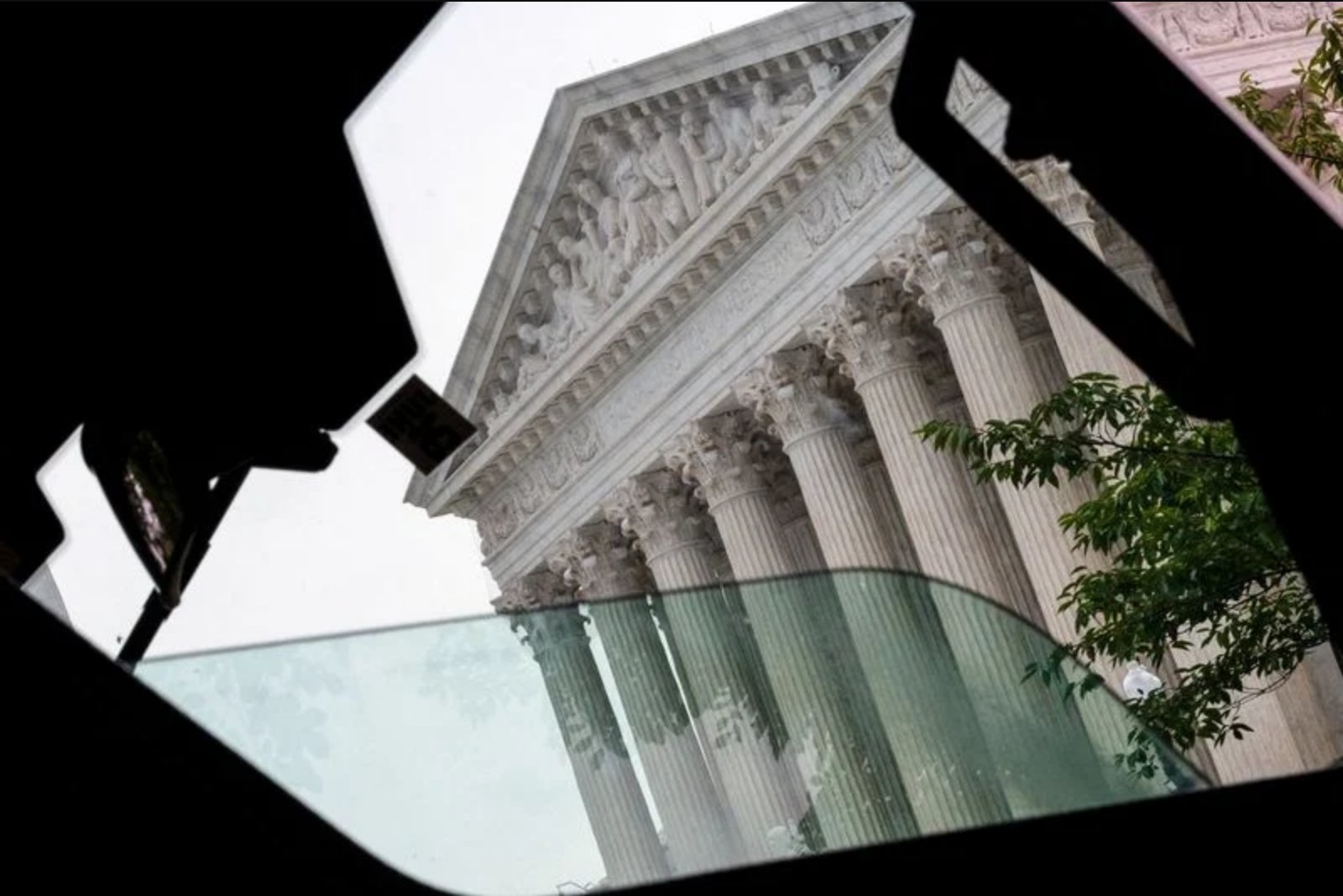
The U.S. Supreme Court on Monday ruled that the president possesses wide authority to remove agency officials who exercise executive power, a decision that overturns a decades-old precedent and strengthens presidential control over parts of the federal regulatory apparatus.
The justices voted 6-3 to uphold the removal of Federal Trade Commission member Rebecca Slaughter, rejecting statutory protections that had limited the president's ability to dismiss commissioners except for cause. The opinion concluded that officials who wield executive authority may be removed by the president, a determination that significantly narrows the legal space for tenure protections Congress previously provided to leaders of certain regulatory bodies.
At the same time, the court indicated that its ruling should not be read as broadly eliminating independence for the Federal Reserve. In a separate decision on the same day, the court refused to permit the removal of Federal Reserve Governor Lisa Cook - citing the central bank's unique historical tradition and distinguishing it from other agencies affected by the ruling.
Legal scholars and commentators characterized the FTC decision as a major shift in the balance between presidential authority and the so-called "administrative state" - the network of federal agencies that regulate finance, air traffic safety, labor relations and other spheres of public life. For decades, many of these agencies operated with a degree of insulation from direct presidential control, with congressional statutes providing for-cause removal protections for commissioners and agency leaders.
Several academics viewed Monday's decision as a pivotal triumph for the "unitary executive" theory - a conservative legal doctrine asserting that the president holds exclusive control over the executive branch, including the power to remove and replace federal agency heads at will. The ruling was described by University of North Carolina School of Law professor Michael Gerhardt as "the most significant decision expanding presidential power in decades," and by him as "the culmination of years of planning by conservative groups." He added that the decision left the administrative state "nearly a nullity."
John Yoo, a professor at the University of California, Berkeley School of Law, said the opinion transfers control of an administrative state that grew under past Democratic presidents to the presidency, calling it the largest single gain in constitutional power in a case named Trump v. Slaughter. Yoo stated, "There is no more independent administrative state."
The case began after President Trump dismissed two Democratic FTC commissioners in March 2025, including Rebecca Slaughter, whose term was scheduled to continue until 2029. Slaughter challenged her removal in court, citing a 1914 statute that limited presidential removal of FTC commissioners to instances of inefficiency, neglect of duty, or malfeasance in office - grounds that do not include policy disagreements. Comparable tenure protections have been applied to officials at more than two dozen independent entities, such as the National Labor Relations Board and the Merit Systems Protection Board.
Lower courts that reviewed Slaughter's challenge had continued to uphold those statutory protections based on a 1935 Supreme Court decision known as Humphrey's Executor v. United States. In Humphrey's Executor, the court had sustained Congress's authority to restrict presidential removal of certain agency officials because the functions performed by such agencies were more akin to legislative or judicial roles than to executive ones. That earlier ruling had rebuffed an attempt by President Franklin Roosevelt to remove an FTC member over policy differences.
The Trump administration argued that the FTC's modern role had evolved to include substantial executive authority, diminishing the force of Humphrey's Executor. The Supreme Court's majority agreed, explicitly overruling the 1935 precedent. The court's three liberal justices dissented from that ruling.
Legal observers noted that while the Supreme Court had in recent years narrowed the reach of Humphrey's Executor, it had previously stopped short of fully overturning it. In 2020, the court recognized that Article II of the Constitution confers a general removal power on the president while also acknowledging that Humphrey's Executor created an exception allowing for-cause protections for certain multi-member expert agencies. Monday's decision, however, eliminated that exception in the context presented in Trump v. Slaughter.
Christine Chabot, a professor at Marquette University Law School, described the overruling of Humphrey's Executor as "the biggest win to date for the 'unitary executive' theory." Erwin Chemerinsky, dean of the University of California, Berkeley Law School, predicted the ruling will likely lead to greater politicization of federal regulatory agencies that Congress intended to vest with nonpartisan expertise. "I think agency independence is now gone," Chemerinsky said, adding that agencies "will need to do what the president wants."
University of Illinois Chicago law professor Steve Schwinn, who criticized the decision, warned that it could produce the "hyper-politicization of previously independent federal agencies," and cautioned that the full consequences of the ruling might not become apparent for years or decades.
Observers pointed to the practical implications: with removal protections reduced, agencies that were designed to operate with some insulation from partisan pressure may now be more responsive to shifts in presidential administrations, producing broader regulatory swings when power shifts between parties. Sectors that rely on stable, predictable regulatory regimes - including finance, aviation, labor relations and other areas administered by expert agencies - could see increased volatility tied to changes in presidential priorities.
Monday's decisions, by both expanding presidential removal authority in one context and preserving a special status for the Federal Reserve in another, mark a notable recalibration of the legal boundaries that govern the relationship between the presidency and independent regulatory institutions. The rulings close a long-running legal debate over the scope of executive removal power, reshape expectations for agency independence, and underscore the court's pivotal role in defining the architecture of administrative governance.
Summary
The Supreme Court's 6-3 decision removes statutory barriers that had protected leaders of certain regulatory agencies from at-will presidential removal, overruling the 1935 Humphrey's Executor precedent. The ruling upheld the firing of FTC Commissioner Rebecca Slaughter and narrowed tenure protections across multiple agencies, while a separate decision preserved the Federal Reserve's unique independence.
- Key points
- The court held that presidents can remove agency officials who exercise executive power, strengthening presidential control over parts of the administrative state.
- The 1935 Humphrey's Executor precedent was overruled in this context, reducing statutory tenure protections for commissioners at agencies such as the FTC.
- The court simultaneously preserved a distinct legal posture for the Federal Reserve, declining to allow the removal of a Fed governor in a separate case.
- Sectors impacted
- Finance - potential shifts in regulatory enforcement and policy with changes in presidential administrations.
- Aviation and public safety - agencies overseeing air traffic safety could be more susceptible to political direction.
- Labor relations - boards and panels with prior tenure protections may face increased political influence.
- Risks and uncertainties
- Increased politicization of regulatory agencies - previously insulated bodies may align more closely with presidential priorities, introducing regulatory uncertainty for affected industries.
- Broader policy swings - agencies may implement substantially different regulatory postures when administration control changes, which could affect capital planning and compliance strategies across sectors like finance and aviation.
- Long-term impacts unclear - legal scholars warn that the full consequences of removing long-standing tenure protections may take years or decades to materialize and to be fully understood.
Disclosure
No additional disclosures.