
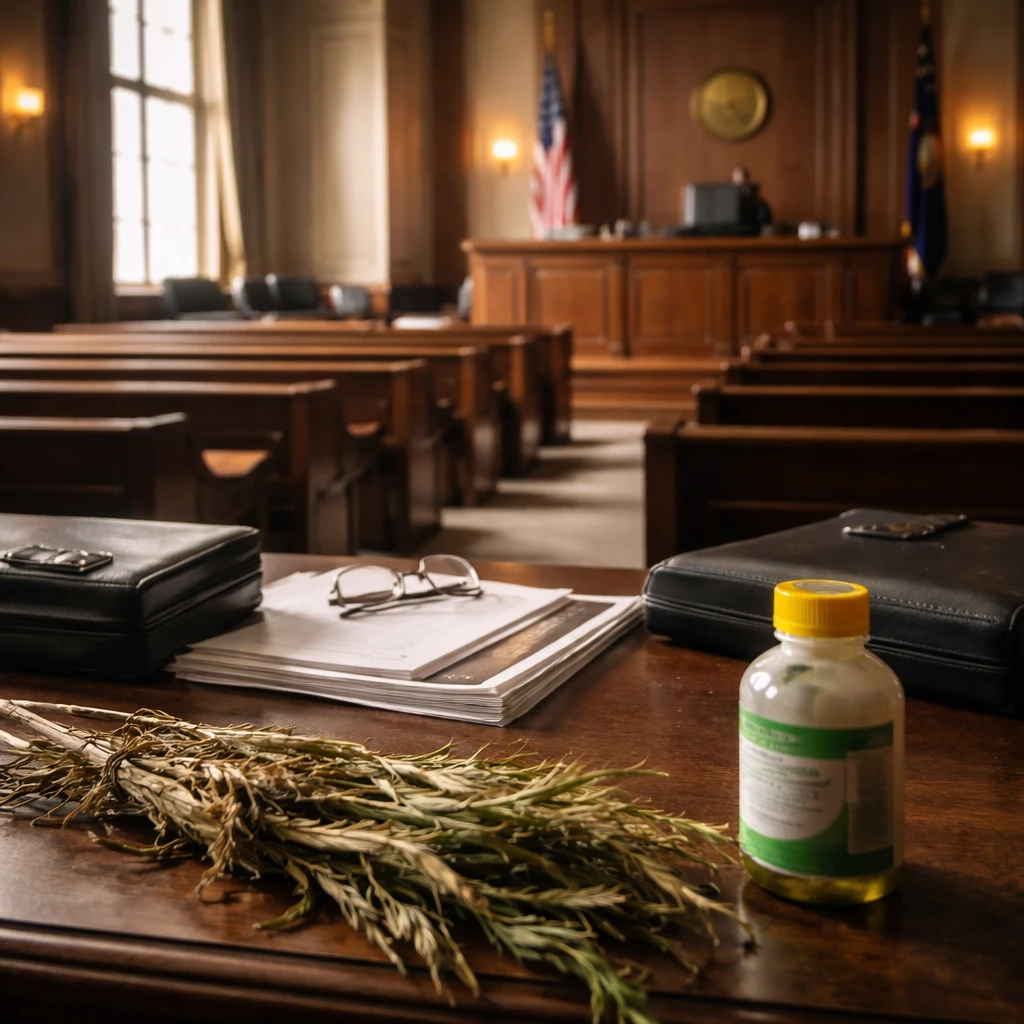
Bayer will press a federal judge on Thursday to dismantle the consolidated federal litigation that ties together almost 4,000 lawsuits alleging that the company's Roundup weedkiller causes cancer. The push follows a recent decision by the U.S. Supreme Court that, in Bayer's view, undercuts the central legal theory driving those federal suits.
U.S. District Judge Vincent Chhabria in San Francisco convened a status conference to chart how the consolidated proceedings should move forward now that the high court has ruled plaintiffs may not pursue claims that Roundup’s warning label was inadequate under state law. In that ruling, the Supreme Court relied on the U.S. Environmental Protection Agency’s conclusion that the label does not require a cancer warning.
Bayer has argued in filings to Judge Chhabria that the Supreme Court decision removes the foundation of the consolidated litigation. Company lawyers contend that "failure to warn" claims are central to the suits and that once those claims are foreclosed, the MDL has "no reason to exist." According to Bayer, other causes of action asserted by plaintiffs - including negligence and design defect - are essentially derivatives of the core allegation that Roundup was sold without an appropriate warning.
Plaintiffs' attorneys have pushed back, saying the high court’s decision was narrowly focused on the product’s label and does not automatically eliminate other claims commonly pressed in Roundup personal injury cases. Those attorneys argue that allegations such as design defect and negligence remain legally distinct and therefore should survive the Supreme Court ruling.
The status conference was originally scheduled for Tuesday but was moved two days later after Judge Chhabria asked both sides for more detailed responses about the ruling’s practical effects on the MDL. In a Monday order, Chhabria described the initial submissions from both parties as "unsatisfying," and said they should be ready to address complex legal questions without presuming either universal dismissal or universal survival of the cases.
Bayer separately noted that the Supreme Court’s ruling is unlikely to affect more than 60,000 related claims pending in state courts. Most of those state-court actions are the subject of a proposed $7.25 billion settlement that Bayer is attempting to finalize; a Missouri judge is slated to review that settlement in August.
The company, which acquired Roundup as part of its 2018 purchase of Monsanto, has maintained that decades of studies demonstrate that glyphosate - Roundup’s key ingredient - is safe and not a cause of cancer.
Robin Greenwald, one of the plaintiffs' attorneys, said the consolidated litigation should not be shut down. Bayer’s Monsanto unit did not immediately reply to requests for comment.
Case caption and counsel
The matter is captioned In Re: Roundup Products Liability Litigation, U.S. District Court for the Northern District of California, No. 16-md-02741.
For the plaintiffs: Robin Greenwald and Robert Quigley of Weitz & Luxenberg; and David Dickens of The Miller Firm.
For Monsanto: Brian Stekloff and Rakesh Kilaru of Wilkinson Stekloff.