
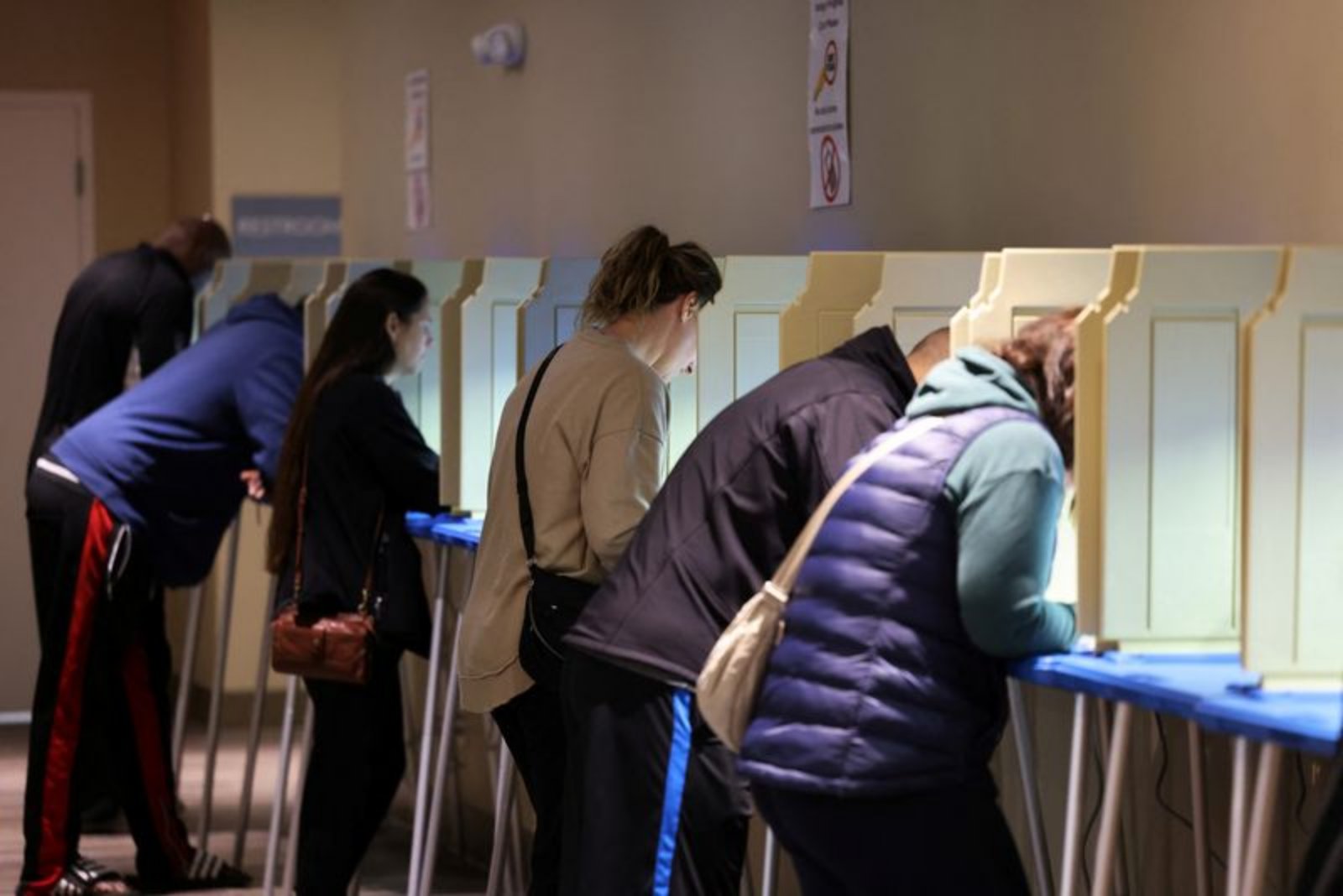
On May 12 in Washington, a closely contested Democratic primary in Nebraska that could flip an open Omaha House seat remained too close to call as tallies approached completion. With about 89% of precincts reported, activist Denise Powell held 38.9% of the vote and state senator John Cavanaugh had 36.8%, according to the Associated Press. The victor will challenge Omaha city councilman Brinker Harding in the general election for the state's 2nd congressional district.
Harding secured the Republican nomination without opposition. Federal campaign finance disclosures indicate he has raised $1.3 million and reported a cash-on-hand balance larger than the combined resources of both Democratic contenders. The fundraising gap underscores the competitiveness of the general election in a district that Democrats view as one of their better targets this cycle outside of newly drawn districts.
Cavanaugh, who ran to the left of Powell, has criticized his rival by labeling her "Dark Money Denise." The primary carries weight beyond the district level: a Democratic victory in the general election would leave the Nebraska Legislature's seat vacant and produce a chain reaction in which the state's Republican governor would appoint a successor. That scenario would, according to some Democrats, strengthen the state Republican majority and potentially clear the way for more conservative policy changes at the state level.
Democratic critics warn that bolstering the Republican majority in the Nebraska Legislature could enable the party to pursue a stricter ban on abortion, redraw the state's congressional districts and convert the presidential primary to a winner-take-all format. Supporters of Cavanaugh counter that Democrats are well positioned to make gains in state legislative contests, while Powell has presented a more moderate message aimed at preserving Democratic inroads around Omaha.
In statewide voting patterns from 2024, President Donald Trump carried the state popular vote by more than 20 percentage points and won two of the state's three congressional districts by double-digit margins. At the presidential level in the 2nd district, Joe Biden's running mate performed differently: Kamala Harris won the district by under five percentage points in 2024. That makes the district one of three nationally that Harris carried yet are currently represented by Republicans. Bacon's seat is the only one of those Harris-won districts that will be without an incumbent in the coming election, which is why it has become a priority pick-up opportunity for Democrats.
At the national level, Republicans maintain a narrow control of the U.S. House of Representatives with a 217-212 margin, counting the chamber's lone independent who caucuses with Republicans. The House also has five vacancies stemming from deaths and resignations. For Democrats to reclaim the majority for the final two years of the presidential term, they must net three seats in November's midterms.
The president's party traditionally faces losses in midterm contests. In this cycle, former President Trump has publicly urged Republican state governments to redraw congressional maps in ways that would protect GOP seats. That push has amplified a redistricting battle nationwide, with both parties seeking maps that confer advantage in competitive states including Texas, California, Florida, Louisiana and Tennessee. Separately, Republican-controlled states across the South have been adjusting district lines following a recent Supreme Court decision that substantially weakened Section 2 of the Voting Rights Act, a change that threatens to alter previously protected majority-minority districts.
The Nebraska Senate primary field also drew attention on Tuesday. U.S. media projected Republican Senator Pete Ricketts to win his party's nomination. Dan Osborn, the candidate expected to challenge him in November, is running as an independent. Osborn's 2024 performance against Senator Deb Fischer—losing by less than seven percentage points—was noted for outperforming statewide results for Harris, illustrating his relative strength in the state.
On the Democratic side of the Senate primary, Cindy Burbank was projected to defeat William Forbes. Democratic operatives have described Forbes as an anti-abortion Trump voter whom they accused of running a candidacy intended to confuse voters. Burbank's campaign materials labeled Forbes a so-called "fake" Democrat and suggested his presence on the ballot could split Democratic votes and indirectly benefit Senator Ricketts. Burbank is anticipated to withdraw from the race after securing the nomination so that Osborn can face Ricketts without a Democrat listed on the ballot.
The close Democratic primary in Omaha and the surrounding contests in Nebraska will be watched closely by both parties because of their potential to shift legislative control and influence state-level policy decisions. Fundraising dynamics, local party strategies and voter preferences in the 2nd district will determine whether Democrats convert this opening into a flip that impacts the balance of power in Washington and in Lincoln, Nebraska's capital.