
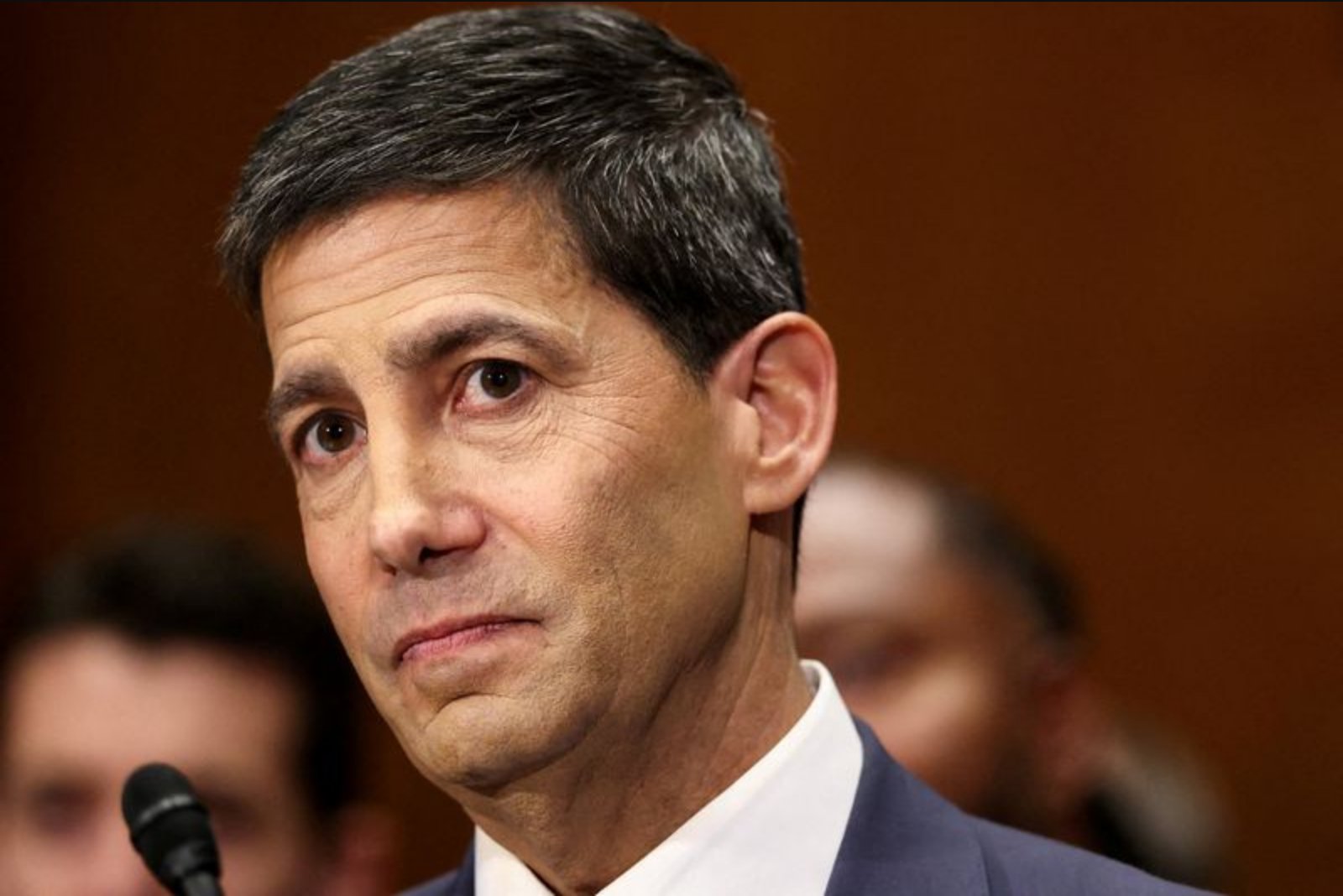
NEW YORK, May 13 - The U.S. Senate voted on Wednesday to confirm Kevin Warsh as chair of the Federal Reserve, formally authorizing the lawyer, financier and former central-bank governor to lead the central bank. Warsh, 56 years old, will step into the role at a time when inflation is on the rise and market participants are recalibrating expectations for monetary policy amid political pressure for lower borrowing costs.
The confirmation followed a separate vote on Tuesday that approved Warsh for a 14-year term as a Federal Reserve governor. That action set the procedural path for the Senate to approve him for a concurrent four-year term as chair. Both appointments require final administrative completion - his swearing-in to the governorship and to the chairmanship is pending the White House signatures on paperwork that the Senate has transmitted.
Jerome Powell's tenure as chair is set to conclude on Friday, leaving Warsh to assume the leadership responsibilities and chair the Federal Open Market Committee in a volatile policy environment. The Fed's current target range for short-term borrowing costs remains 3.50% - 3.75%.
Investors have been adjusting their rate assumptions in recent weeks as oil prices have climbed since the start of the Iran war. That upward move in energy costs has nudged some market participants to consider the possibility of at least one rate increase before the end of the year, altering the expectations that had previously leaned toward a hold or eventual easing.
Warsh's stated agenda
Warsh has said he intends to pursue what he calls "regime change" at the Fed. That program, as he described it, would involve tighter coordination between the Federal Reserve and the Treasury Department and the Trump administration on non-monetary policies. He has also signaled a desire to put the Fed on a path toward a smaller balance sheet, a move he argues should permit a lower policy rate once implemented.
Market and analyst reactions
Market strategists and bond analysts have responded to his confirmation with a mix of caution and close attention to the tone Warsh will adopt in public remarks and at forthcoming Fed meetings. Several market professionals shared their perspectives on the risks that the new leadership and current inflation trends pose to bond markets and broader financial conditions.
“There is a big risk right now in terms of inflation expectations. If you look at something like a 10-year TIPS breakeven inflation rate, it’s still reasonably well-anchored and consistent with inflation returning to target over time. But it has been rising recently, and it’s certainly near the top end of that range since 2023. And you can see there’s definitely a risk of it breaking out. And so I do think if Kevin Warsh, if the first things we hear from him are these dovish arguments about how the Fed can cut interest rates, I think that’s going to be a big problem for the bond market. That would really risk those inflation expectations breaking out and sort of losing control of the long end of the yield curve and that would be a big problem. In my base case, I don’t think he’s going to do that. But certainly, it’s a huge risk right now. He definitely has to shift his tone, otherwise we’re going to have problems in the bond market here. Now that he is confirmed he has the job. I’d be pretty surprised if he starts arguing in favor of rate cuts anytime soon. I’d be pretty shocked if he does that, because I would say that’s it’s really hard to build an economic case for that argument.”
- Ryan Swift, Chief U.S. Bond Strategist, BCA Research, Montreal
“Markets are likely viewing Kevin Warsh’s confirmation as signaling a more inflation-focused Fed, given his long-standing criticism that policymakers stayed too loose for too long after the pandemic. Investors could also interpret his leadership as favoring less market intervention and a smaller Fed balance sheet, potentially leading to a more market-driven rate environment over time. At the same time, Powell’s continued presence on the board may help calm fears and avoid abrupt policy shifts, creating a transition that looks more like evolution than a complete regime change. Ultimately, Warsh’s confirmation suggests that the Fed could become more inflation-conscious and less interventionist over time. The bigger market question is whether he governs independently or aligns more closely with White House pressure for lower rates, especially as Trump has publicly pushed for cuts.”
- Phil Blancato, Chief Market Strategist, Osaic, New York
"It’s going to be entertaining to say the least If Warsh has to end up raising rates at some point this year. I think the expectation is still that oil’s rise remains capped and that we get some kind of Iran deal that gets dressed up in the right way. But it looks distant at the moment because they’re not even talking about talking, but certainly the inflation data is putting everyone on notice that we are going to deal with a return of inflationary pressures to at least some extent. And while the Fed isn’t too bothered about missing its inflation target because it’s never got near for quite some time and it’s more focused on employment, it will probably have to sound more hawkish. I don’t think they’ll be rushing to raise rates. Even the more hawkish members of the committee don’t really want to upset the apple cart too much. But undoubtedly, if we get a few more months of this, then the story begins to change quite significantly."
- Chris Beauchamp, Chief Market Analyst, IG Group, London
"As incoming chairman Warsh rolls up his sleeves to get to work, he has some challenges ahead of him. He’s not coming into a placid environment. The Fed has challenges in terms of the balance of risks between inflation and employment and what that means for rate policy. The challenge around the inflation picture is that there are a number of factors that weigh into the inflation outlook, some of which can’t be ideally addressed simply by raising rates. Raising rates isn’t going to lower global oil prices. You’ve got energy costs. You’ve got tariffs and the impact of a relatively tight labor market. A lot has been made of what he’s said in the past. We’ll have to wait and see what tone he takes as he steps into the new role. He’s not likely to be able to come into the Fed and change course radically even if he wanted to. There’s an existing committee that’s relatively independent."
- Jim Baird, Chief Investment Officer, Plante Moran Financial Advisors, Southfield, Michigan
"The confirmation and the confirmation hearings are always interesting theater. I’m going to be a lot more interested to see what he has to say once he goes through the first meeting in June and has a press conference. At that point, I think that’s when we’ll get an idea of what his goals and objectives truly are as opposed to talking to Congress. I think the markets are still a little unsure. He has been hawkish. He has talked about reducing the size of the balance sheet. He has talked about stopping QE and some of those types of things, which means that interest rates could stay higher for longer. But I think people are looking at his nomination as meaning that rates are going to come down because he’s a Trump appointee. I don’t know if that is going to be the case. I truly believe he is going to be, as many Fed governors, following the data."
- Paul Nolte, Senior Wealth Advisor and Market Strategist, Murphy & Sylvest Wealth Management, Elmhurst, Illinois
What lies ahead
Warsh takes the helm as the Fed confronts a mix of forces affecting inflation and market expectations. Rising energy prices tied to the conflict in Iran have contributed to upward pressure on consumer price indicators, prompting market participants to revisit the timeline for potential policy moves. Analysts emphasize that much will depend on the tone Warsh adopts in public communications and how he navigates the Fed's institutional constraints and the views of other committee members.
Observers also highlighted the potential for friction between a chair who advocates closer coordination with the Treasury and political pressures from the White House for lower rates. How Warsh balances those dynamics while operating within a committee structure described as relatively independent will be one of the central questions for investors and policymakers alike.
For now, markets await Warsh's first public statements in his new capacity and the Fed's upcoming meetings to gauge whether his approach will alter the current course of policy or represent an evolutionary shift in emphasis.