
U.S. Vice President JD Vance said Wednesday that negotiations intended to halt hostilities with Iran are progressing, despite President Donald Trump rejecting Tehran's most recent proposal as unacceptable.
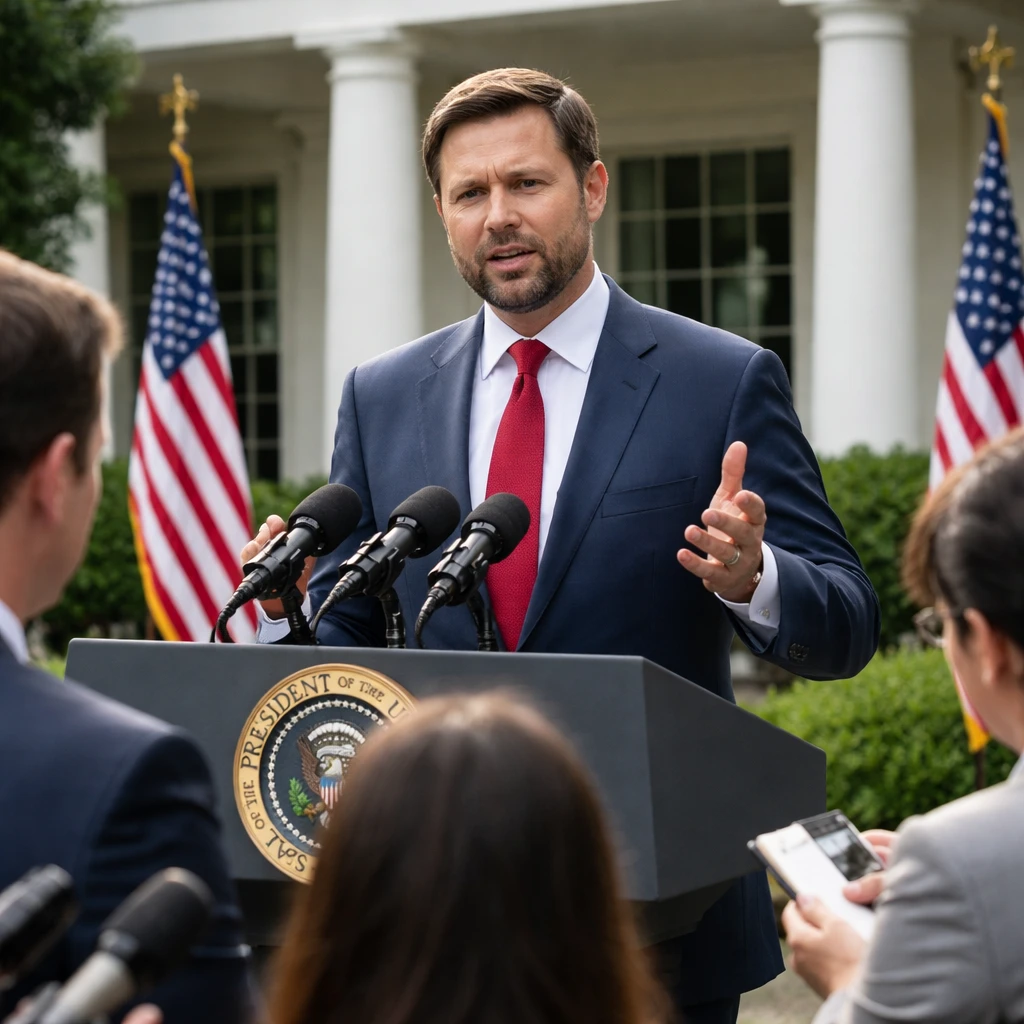
Speaking to reporters at the White House, Vance described the talks as advancing but framed the situation around a single pivotal question: can negotiators secure enough movement in the diplomatic process to satisfy the conditions set by the President.
According to Vance, Mr. Trump's condition is clear and specific. The President requires confidence that measures will be put in place to ensure Iran never acquires a nuclear weapon. Vance characterized that requirement as the administration's red line.
The Vice President's remarks followed Mr. Trump's public dismissal of the proposal put forward by Tehran. While Vance acknowledged the President's rejection, he also indicated that the diplomatic engagement is continuing to proceed.
Vance's comments reiterated two linked points reported by the administration: first, that talks are making headway; and second, that progress will be measured against a threshold defined by the President's need for assurances about preventing a nuclear weapons capability in Iran.
The account presented by the Vice President leaves open a central uncertainty identified in his remarks: whether the pace and substance of negotiations can produce the level of guarantees the President has stipulated. Vance did not offer further detail on the specific protections or mechanisms that would meet that test, nor did he provide a timeline for when such a determination might be reached.
Beyond noting Mr. Trump's rejection of Tehran's latest offer and restating the administration's stated red line, Vance stressed that the diplomatic process remains active.
Clear summary: Vice President JD Vance said talks with Iran are advancing, even as President Donald Trump rejected Tehran's most recent proposal. The President's principal requirement is confidence that Iran will never obtain a nuclear weapon; Vance indicated ongoing diplomacy will be evaluated against that standard.