
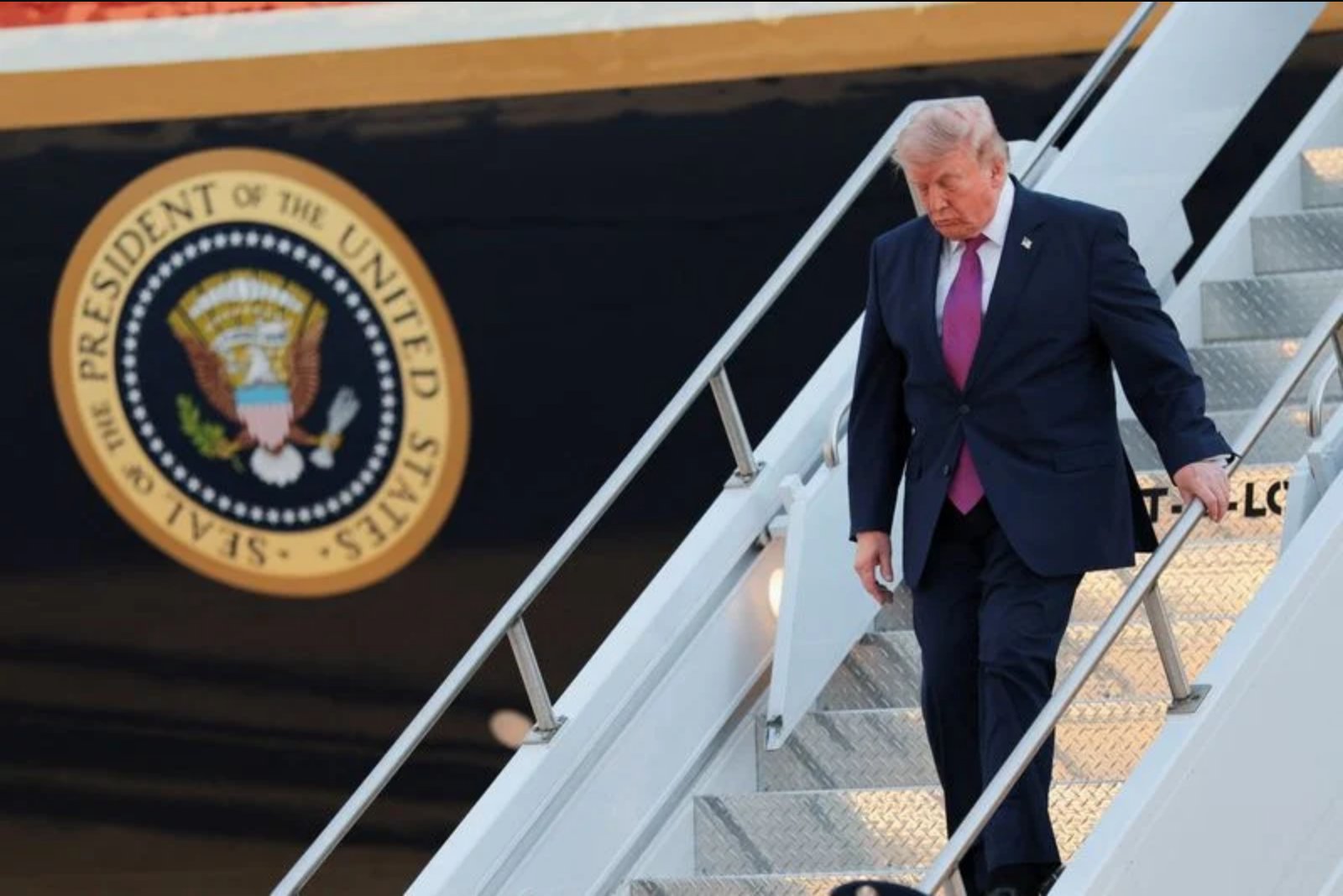
The New York Times reported on Saturday that the U.S. Department of Justice has compelled several of its journalists to testify before a federal grand jury after they published reporting on security concerns tied to President Donald Trump’s new Air Force One, a plane donated by Qatar.
According to the newspaper, subpoenas were issued on Friday requiring the journalists to appear before the grand jury on Wednesday to give testimony "in regard to an alleged violation of federal criminal law." The subpoenas were signed by Jay Clayton, the U.S. Attorney in Manhattan, the paper said, and in some instances were hand-delivered to reporters' homes by federal agents.
The New York Times characterized the legal action as "an extraordinary escalation in President Trump’s efforts to threaten and intimidate independent news organizations." The newspaper's statement framed the subpoenas as part of a broader pressure campaign directed at independent media.
A Department of Justice spokesperson, when contacted, did not confirm or deny whether subpoenas had been issued. The spokesperson said the administration's concern centers on individuals who may be leaking classified information and stressed that the focus is not on targeting reporters.
The White House did not immediately provide a response to a request for comment.
Separately, the story surrounding the aircraft's use has continued to draw attention. On Wednesday, President Trump said he would fly on an older Air Force One "for old time's sake" for the segment from Ankara to the Royal Air Force base at Mildenhall in Britain. Trump said the newer plane would stop at Mildenhall so that U.S. service members stationed there could tour the aircraft.
Late on Wednesday, video footage showed the president boarding the new Air Force One, which the New York Times describes as a gift from Qatar, at the British base as the plane prepared to depart for the United States.
The sequence of events links reporting on possible security concerns with subsequent legal steps by federal prosecutors. The subpoenas and the DOJ's stated focus on leaks of classified information highlight the legal tensions that can arise when national security intersect with investigative journalism.