
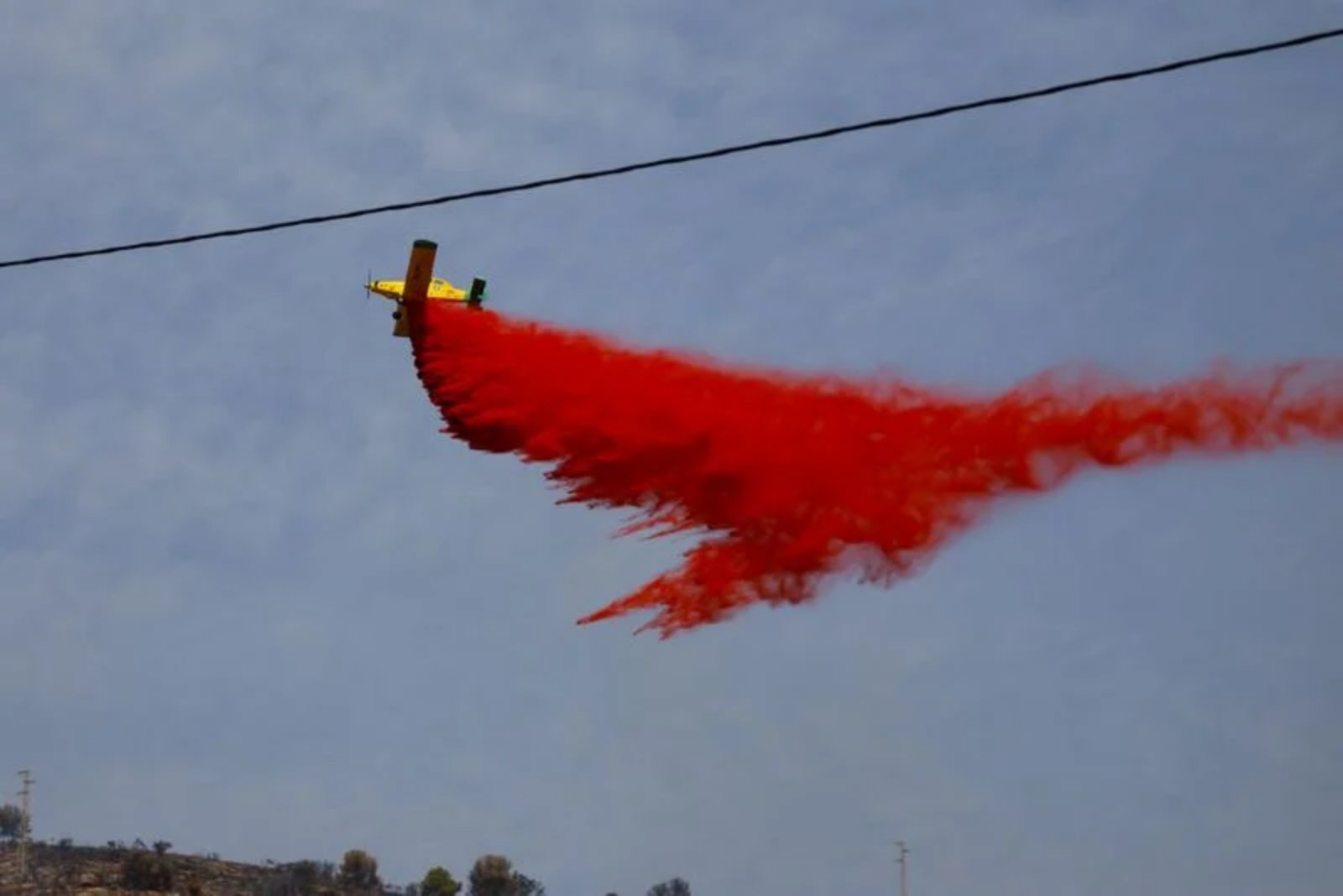
LOS GALLARDOS, July 11 - Firefighting authorities in Spain's Almería province said on Saturday they would begin active offensive operations to reclaim territory from one of the country's deadliest wildfires, even as additional precautionary evacuations were carried out overnight.
The wildfire, which broke out near the forested area of Bédar to the north of Los Gallardos, spread rapidly on Friday under gusty winds, catching some residents as they attempted to escape. Emergency services have recovered 12 bodies from close to the outbreak zone and autopsies have been completed on all of them, but authorities have not yet confirmed the victims' identities.
Regional emergency chief Antonio Sanz described the situation at the cordon surrounding the emergency zone as still "complex" and said the fire continued to make advances. He credited firefighters with preventing the blaze from crossing a key highway and threatening more densely populated coastal towns.
"So far we have been engaged in defense work, to prevent advances," Sanz said. "Today is the first day we will be able to work on attacking the fire." The shift in tactics signals a transition from primarily holding lines to seeking to reduce the wildfire's footprint.
Authorities believe most of the deceased are British and Belgian nationals, along with one Spanish national. Eight people have been injured in the fire; four of those injured are in serious condition and are being treated in a hospital in Seville.
The Institute of Forensic Medicine in Almería issued a late Friday statement noting that "no one has been identified yet, nor is it possible at this time to determine the age or sex of the deceased." The institute said tissue samples had been sent to laboratories in Madrid for further analyses and for DNA comparison with samples provided by relatives.
Officials have sought to temper concerns about a significant rise in the death toll, reporting that seven people had been formally declared missing by their families, compared with 23 informal reports of missing persons circulated by Friday. That discrepancy has led authorities to caution against assuming a larger number of unaccounted-for victims.
More than 1,400 residents had been evacuated by late Friday as the blaze continued to burn in the vicinity of Los Gallardos, with precautionary evacuations ordered for several communities around Bédar. Firefighting and emergency response resources on the ground exceed 500 personnel, including regional firefighters, soldiers and 19 specialists from a national firefighting brigade.
Crews have been concentrating their efforts on the western flank of the fire, which officials say remains the most intense and fastest-spreading front. To date, the wildfire has scorched approximately 6,600 hectares, officials reported.
Sanz said the night had been "relatively well, within the complexity and dimensions of the fire," with fronts remaining less active and no new direct threats to inhabited areas during the overnight period. Nevertheless, the operational posture has remained cautious and reactive while the western front is tackled.
Residents and local clergy recounted scenes of sudden, intense destruction as the blaze raced through the landscape. At one point on Friday, regional authorities said the fire covered as much as 15 kilometres within a two-hour window.
The parish priest serving Bédar and Los Gallardos, Víctor Manuel Fernández, described leaving to celebrate Mass in a neighboring village and returning to find a thick cloud of black smoke and mountains aflame. "It was a matter of minutes," he said, recalling how rapidly conditions deteriorated from a distant column of smoke to an engulfing wall of fire.
Emergency services continue to prioritize containment of active fronts and the protection of populated areas while forensic teams work to complete identification of the deceased using DNA matching. Authorities remain engaged in both managing the immediate humanitarian impact and organizing resources to reduce the fire's further spread.
Summary
Emergency teams in Almería moved from defensive firefighting tactics to active attack on July 11 as they sought to halt a rapidly spreading wildfire. Twelve bodies were recovered near Bédar and autopsies have been completed but the victims are not yet identified. Over 1,400 people have been evacuated and more than 500 emergency personnel are involved in containment efforts. The blaze has burned roughly 6,600 hectares and continues to present a complex operational challenge.
Key points
- 12 bodies recovered near Bédar; autopsies completed but identities pending confirmation.
- Firefighting strategy shifted from defense to active attack as crews focus on the western flank.
- Over 1,400 people evacuated; more than 500 emergency personnel, including 19 national brigade specialists, are engaged in response operations.
Risks and uncertainties
- Ongoing fire activity on the western flank continues to pose a risk of further spread and additional evacuations - this affects emergency services, local infrastructure and community stability.
- Identification of the deceased remains incomplete pending DNA comparisons, creating uncertainty around final victim counts and family notification processes - this implicates forensic services and health authorities.
- Discrepancies between formal and informal reports of missing persons introduce uncertainty about the true scope of unaccounted-for individuals - this affects search and rescue resource allocation.