
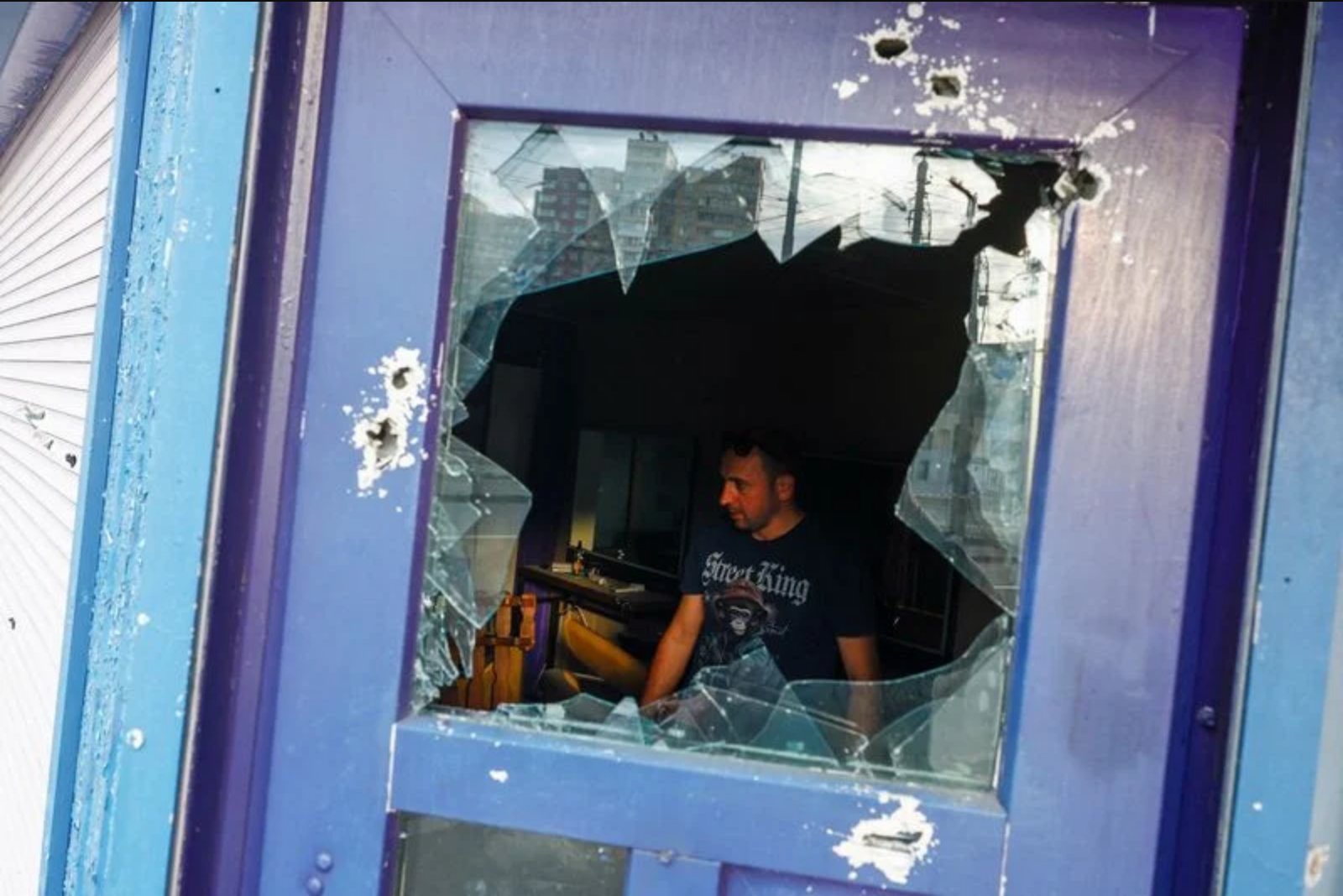
Kyiv, July 11 - Russia carried out an attack on Ukraine on Saturday using a mix of ballistic missiles, cruise missiles and drones that officials said resulted in two deaths and 19 wounded.
Authorities reported that the capital, Kyiv, suffered civilian injuries in an attack that used both ballistic and cruise missiles as well as unmanned aerial vehicles. Eleven people were hurt in Kyiv, where President Volodymyr Zelenskiy said that "civilian infrastructure was hit even before the air raid alert was issued," and that rescuers were operating at the scene.
Zelenskiy said Ukrainian air defences had taken down most incoming targets, "but not the ballistic ones," and he urged allies to hasten delivery of the air-defence support packages agreed at the NATO summit this week.
Ukraine’s air force provided a tally for the attack: six ballistic missiles, six cruise missiles and 121 drones were launched by Russian forces. The air force said Ukraine managed to shoot down at least two cruise missiles and 111 of the drones.
Later the same morning, a missile strike in the port city of Odesa killed two people and wounded another. In the eastern city of Kharkiv a drone strike hit a civilian enterprise and wounded seven people.
Munition shortages and defence capabilities
Officials say Ukraine is critically low on interceptor munitions for its Patriot air-defence batteries, a shortage that has left Kyiv largely unable to defeat ballistic missiles traveling at very high speeds over the past month. Ukrainian authorities have repeatedly appealed to allied states to supply additional munitions and have also pushed for collaborative work with European partners to develop an anti-ballistic defence system tailored to Kyiv’s needs.
U.S. President Donald Trump said this week that Ukraine will be granted a licence to produce its own Patriot interceptor missiles. Following Saturday’s strikes, Zelenskiy called for related projects to proceed "as swiftly as possible."
Pressure on logistics and maritime targets
Ukraine, meanwhile, has sought to disrupt Russian military logistics in occupied southern areas by targeting fuel and ammunition supplies, striking trucks and vessels operating well behind the front lines. Robert Brovdi, chief of Ukraine’s drone forces, said his units struck 21 fuel tanker vessels in the Sea of Azov overnight, along with seven other cargo and support ships, bringing the total to 76 vessels hit this week.
Russian forces have intensified strikes on Kyiv in recent weeks. Officials say more than 60 people have been killed so far this month in strikes on the capital and surrounding region.
Implications noted by authorities
Ukrainian leaders underscored the link between the shortage of interceptor munitions and the difficulty of countering ballistic attacks, pressing allies to accelerate deliveries of agreed support. They also emphasized continued operations aimed at degrading Russian logistical lines, with an emphasis on fuel and supply nodes that feed frontline forces.