
Economy June 29, 2026 11:15 PM

Trump Administration Links Federal Student Loan Access to Graduate Earnings

New rules tie university loan eligibility to graduate income metrics, triggering broader funding risks for underperforming programs

By Priya Menon
Share
Twitter Reddit Facebook LinkedIn

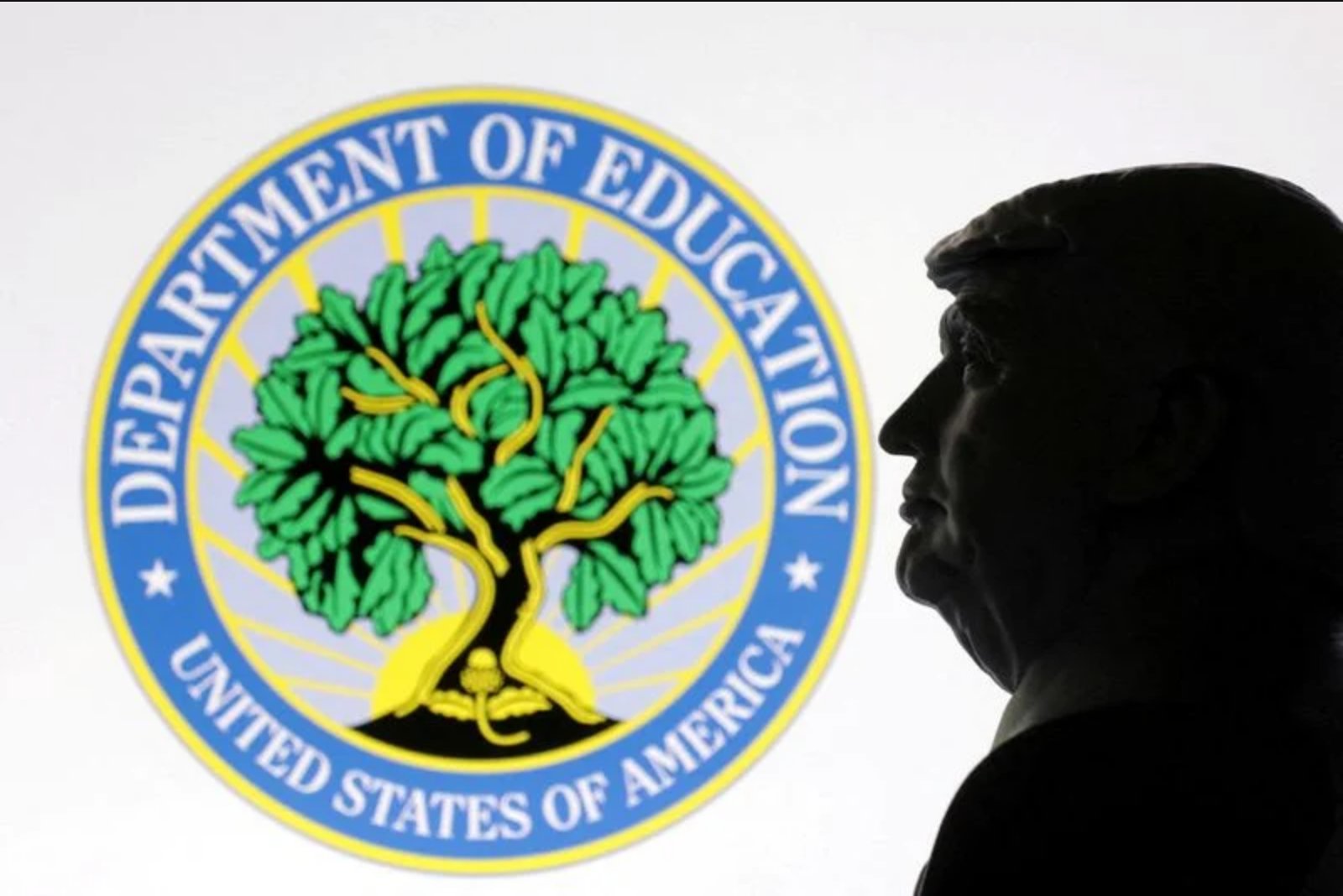
The U.S. Department of Education is finalizing a major shift in federal student loan policy, mandating that higher education institutions demonstrate measurable earnings growth for their graduates to retain access to the Direct Loan program. This change marks a significant escalation in the Trump administration's efforts to hold colleges accountable for graduate outcomes while simultaneously addressing a wide array of political and policy disputes. Schools failing to meet income benchmarks will face eligibility suspensions, with cascading consequences for financial aid programs and institutional funding.

Trump Administration Links Federal Student Loan Access to Graduate Earnings
Summarize with
ChatGPT Perplexity Claude Grok Gemini

Key Points

  • Federal loan eligibility for schools will now depend on graduate earnings relative to lower educational attainment benchmarks.
  • Institutions failing earnings benchmarks face suspension from the Direct Loan program, with potential loss of Title IV and Pell Grant eligibility for underperforming programs.
  • The policy shift intersects with ongoing political disputes over campus protests, transgender policies, and diversity initiatives, prompting institutional restructuring and legal challenges.
  • The realignment of federal student lending rules could significantly impact the higher education sector, altering capital flows into academic institutions and potentially affecting enrollment patterns across various degree programs.

The U.S. Department of Education announced Monday that it is finalizing new regulations that would condition schools' access to federal student loans on the post-graduation earnings of their students. The move represents the latest enforcement action by the Trump administration to exert pressure on colleges and universities.

Under the proposed Student Tuition and Transparency System (STATS) and Earnings Accountability rule, undergraduate programs must prove that their graduates earn higher incomes than the typical high school diploma holder. Similarly, graduate programs will need to demonstrate that their graduates out-earn the typical bachelor's degree holder. Institutions that fail to meet these benchmarks in two out of three consecutive award years will lose eligibility to participate in the federal Direct Loan program.

The Education Department confirmed that the final rule will be published on July 1, with 2027 marking the first year schools will be held accountable for meeting the earnings thresholds. The department also warned that institutions could face more severe penalties. After three consecutive years of failing the earnings premium measure, the Department of Education could terminate Title IV eligibility of the Higher Education Act (HEA), which includes Pell Grant eligibility, for all of an institution's low-earning outcome programs.

The Wall Street Journal earlier reported the finalization of the new lending requirements. This policy shift occurs as President Donald Trump intensifies scrutiny of top educational institutions, having previously attempted to freeze federal funding for several universities and colleges. The administration's pushback has centered on multiple policy disagreements, including pro-Palestinian protests against U.S. ally Israel's assault on Gaza, transgender policies, climate initiatives, and diversity programs.

Trump has specifically alleged that pro-Palestinian protests at universities were antisemitic and supported extremist groups. Conversely, protesters, including some Jewish organizations, argue that the government is wrongly conflating criticism of Israel's assault on Gaza and its occupation of Palestinian territories with antisemitism, and equating advocacy for Palestinian rights with support for extremism.

Rights advocates have expressed growing concerns regarding free speech, academic freedom, and due process. Some colleges have responded to the pressure by cutting programs, imposing restrictions on protesters, and laying off workers. In response, judges have in some instances ordered the Trump administration to restore frozen federal funds for universities. Additionally, the Trump administration has recently dismantled the Education Department.

Risks

  • Rights advocates highlight concerns over free speech, academic freedom, and due process as some colleges have cut down on programs, imposed restrictions on protesters, and laid off workers.
  • Judges have in some cases ordered the Trump administration to restore frozen federal funds for universities, creating legal uncertainty for institutions.
  • The Trump administration has also dismantled the Education Department, raising questions about regulatory oversight and enforcement stability.

More from Economy

Survey: More Public Investors Intend to Trim Dollar Holdings as Geopolitical Risks Rise Jun 30, 2026 Markets Start the Quarter With Risk-On Buying as Oil Retreats and AI-Led Gains Drive Asia Jun 30, 2026 Swift fall in oil prices eases immediate pressure on ECB, but a September rate rise remains probable Jun 30, 2026 Asian Equities Close Record Quarter Amid Dollar Surge and Yen Plunge Jun 29, 2026 RBA Signals Readiness for Further Rate Hikes Amid Persistent Inflationary Pressures Jun 29, 2026