
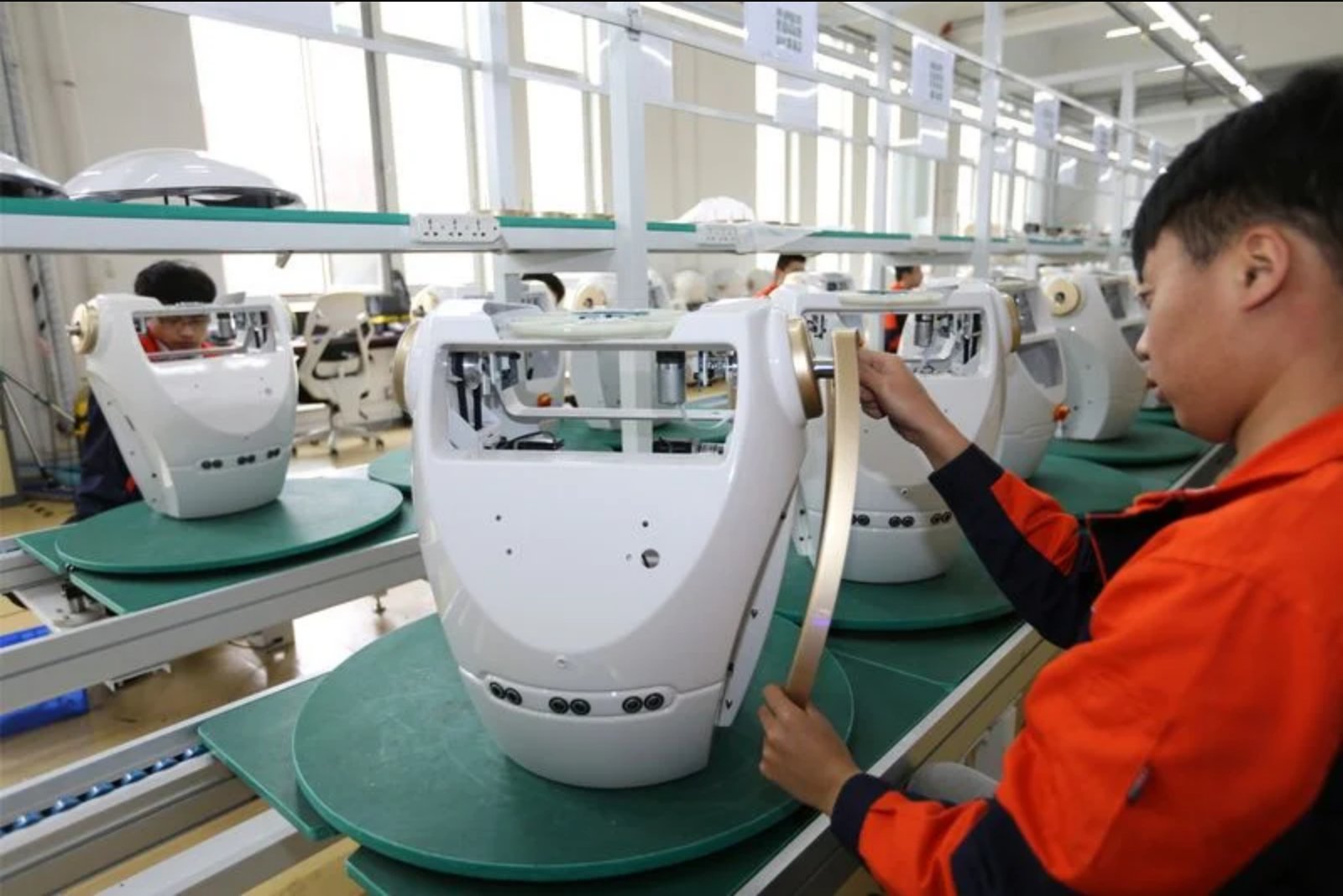
China’s industrial output registered an expansion in June, according to official government figures released Tuesday, marking a shift after months of stagnation. The surge was primarily attributed to a surge in high-tech manufacturing shipments tied to global demand for artificial intelligence infrastructure. However, broader industrial activity faces headwinds from persistent weakness in domestic consumption and a continuing downturn in the property sector.
The manufacturing purchasing managers’ index (PMI), a key gauge of factory activity, climbed to 50.3 in June from 50.0 in May. This reading surpasses the 50 threshold that separates expansion from contraction. The figure also exceeded market expectations outlined in a Reuters poll of economists, according to data compiled by the National Bureau of Statistics (NBS).
Broader economic indicators showed modest improvement as well. The non-manufacturing PMI, which encompasses services and construction sectors, edged up to 50.2 from 50.1 in May. The composite PMI, which combines manufacturing and non-manufacturing data, rose slightly to 50.6 from 50.5 in the previous month.
Despite these gains, underlying economic pressures remain significant. The real estate market continues to drag on growth, while employment conditions and consumer spending show limited recovery. Consequently, the economy remains heavily dependent on international demand to absorb the goods produced by its industrial sector.
A significant portion of this export strength stems from overseas demand for semiconductors that power data centers and advanced electronic devices. This aligns with China’s manufacturing capabilities in high-tech sectors. In contrast, other export categories remain lackluster. Trade data for May indicates that furniture exports grew by only 1.9% in value year-over-year. Meanwhile, shipments of automated data processing equipment surged by 60% during the same period.
Domestic conditions have also deteriorated. Retail sales for May fell for the first time in over three years, according to recent data. Additionally, new home prices are declining at an accelerated pace, underscoring the ongoing strain on the property sector.
In a move to support economic activity, China’s central bank instructed some commercial banks to increase lending this month, according to people familiar with the matter. This directive underscores the government’s reliance on credit expansion to stimulate demand.
Market participants are also monitoring potential trade dynamics. Xu Tianchen, a senior economist at the Economist Intelligence Unit, noted signs of trade front-loading in June. Exporters may be accelerating shipments to the United States ahead of new Section 301 tariffs scheduled to take effect in late July. This behavior was previously influenced by price increases driven by Middle East tensions.
As input costs rise and overseas buyers reduce inventories in anticipation of a ceasefire in the Middle East conflict, Chinese manufacturers face pressure to maintain access to global consumer markets. Diplomatic outcomes remain uncertain. A key meeting in May between U.S. President Donald Trump and Chinese leader Xi Jinping yielded no significant agreements on tariffs or Beijing’s influence over Tehran regarding the Iran war.
- AI and semiconductor exports drive manufacturing recovery, highlighting structural shifts in China’s industrial base.
- Domestic consumption and property markets remain weak, constraining broader economic growth.
- Central bank lending directives and potential tariff-driven front-loading add layers of complexity to near-term trade flows.