
Economy May 13, 2026 01:53 PM

Kashkari Says Iran Conflict Has Amplified Inflation While Job Market Holds Steady

Minneapolis Fed chief stresses commitment to 2% inflation target and highlights supply disruptions tied to the Strait of Hormuz

By Caleb Monroe

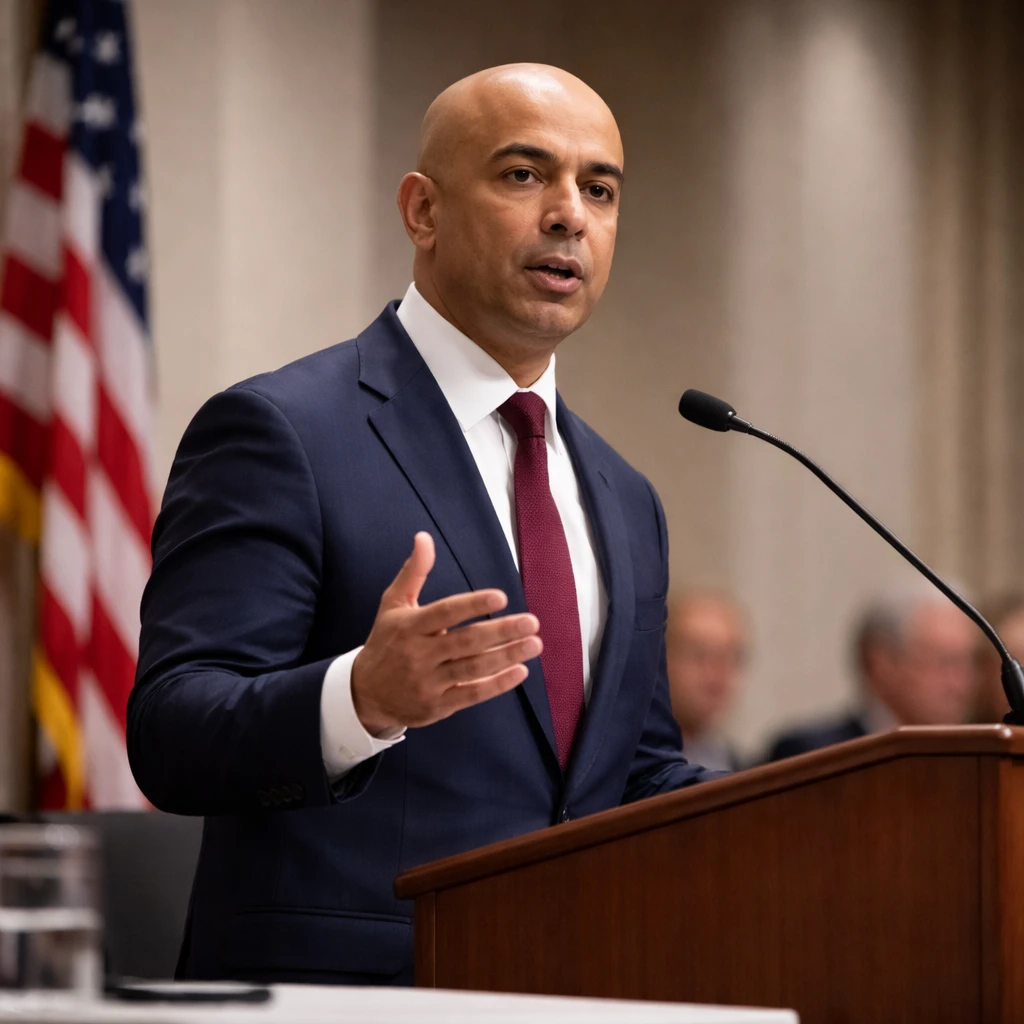
Minneapolis Federal Reserve President Neel Kashkari said the Iran war has intensified already-elevated inflation and warned that closure of the Strait of Hormuz adds a major unknown to price pressures. Speaking at a St. Paul Area Chamber event, Kashkari said the Fed must bring inflation back to its 2% target and described the labor market as ‘lukewarm’ but broadly stable.

Kashkari Says Iran Conflict Has Amplified Inflation While Job Market Holds Steady

Key Points

  • Kashkari says the Iran war has intensified inflation that was already elevated, with the duration of the Strait of Hormuz closure central to future price trends - impacts sectors tied to global trade and shipping.
  • He reaffirmed the Fed's commitment to returning inflation to the 2% target and said the goal should not be changed - relevant to interest-rate sensitive sectors including housing and financial markets.
  • The labor market is described as moving sideways and 'lukewarm' but appears to be holding steady compared with earlier in the year - important for consumer spending and labor-intensive industries.

Overview

Minneapolis Federal Reserve President Neel Kashkari told an audience at a St. Paul Area Chamber event in Minnesota that the conflict involving Iran has worsened inflationary pressures that were already elevated. He reiterated the Fed's responsibility to restore price stability and insisted the central bank should remain committed to its 2% inflation objective.

Inflation and the Strait of Hormuz

Kashkari flagged the closure of the Strait of Hormuz as a central uncertainty for inflation going forward. He said the length of time the waterway remains closed will have a substantial effect on price trends, and he warned that even if passage reopens, supply chains will require months to return to normal functioning. The Minneapolis Fed president said he had been confident inflation was moving back toward 2% prior to the onset of the Iran conflict, and he acknowledged that while inflationary shocks do not absolve the Fed of its responsibility, they have made the job of reining in inflation more difficult.

Labor market assessment

Kashkari characterized the U.S. labor market as moving sideways and described it as "lukewarm." He added that, despite that description, the labor market appears to be holding steady compared with earlier in the year, signaling no pronounced deterioration in jobs conditions in his view.

Monetary policy and mortgage rates

The Fed official also expressed uncertainty about whether decisions on the policy rate will have a significant impact on mortgage rates. He said he was not surprised by recent upticks in headline inflation, and reiterated that the critical factor in assessing those moves is how long the closure of the Strait of Hormuz persists.

Institutional independence

Commenting on the ongoing confirmation process for Kevin Warch, President Donald Trump's nominee for Fed Chair, Kashkari emphasized the foundational role of the Federal Reserve's independence. He said that both political parties recognize the importance of that independence as a core principle.


Context limitations

The remarks reflect Kashkari's assessment at that event and focus on near-term drivers of inflation, the current stance of the labor market, and institutional considerations. He did not present new policy decisions or timelines; instead, he outlined uncertainties tied to the Iran conflict and supply-chain normalization.

Risks

  • Uncertainty over how long the Strait of Hormuz will remain closed, which Kashkari said will substantially affect inflation - a risk to global supply chains and trade-reliant sectors.
  • Supply-chain disruptions tied to the Iran conflict that Kashkari said could take months to normalize even if the strait reopens - a risk to manufacturers and consumer goods availability and pricing.
  • Uncertainty about whether Fed policy rate actions will meaningfully move mortgage rates, leaving housing market sensitivity unresolved.

More from Economy

Court Filing Shows Sam Altman Holds More Than $2 Billion in Firms That Do Business With OpenAI May 13, 2026 ECB Signals Possible June Rate Increase to Curb Iran-Related Fuel Shock May 13, 2026 Canada and Alberta Set Industrial Carbon Price at C$130 per Ton by 2040 to Clear Path for Pacific Pipeline Support May 13, 2026 Vance Says Negotiations With Iran Are Advancing Despite Trump Rejecting Latest Offer May 13, 2026 Senate Confirms Kevin Warsh as Federal Reserve Chair as Inflation and Rate Debate Intensify May 13, 2026