
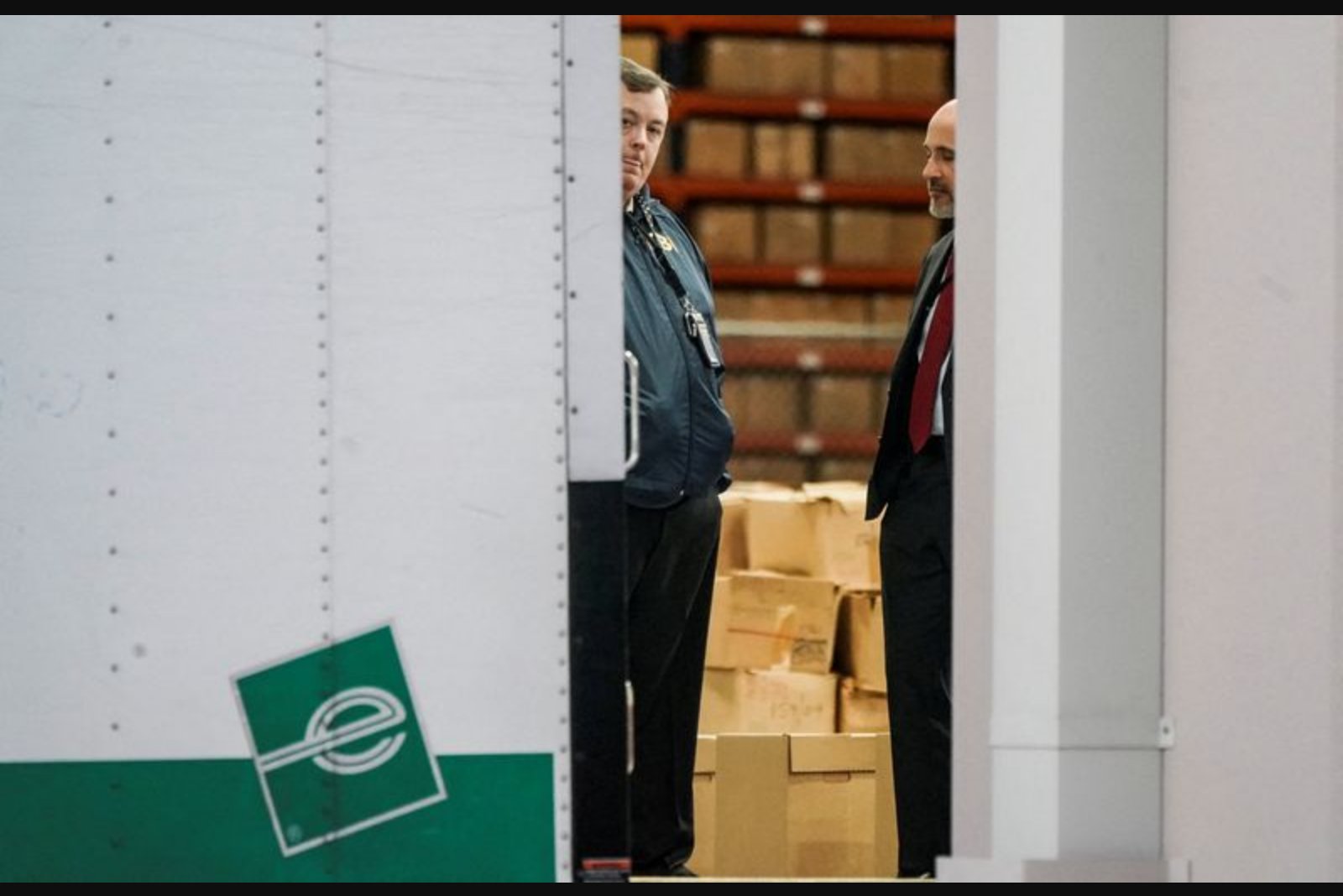
A U.S. district judge on Wednesday ruled that the Justice Department may retain custody of original 2020 election ballots and related materials seized during an FBI search in January, rejecting Fulton County's motion for their return.
Atlanta-based U.S. District Judge J.P. Boulee denied the county's request, resolving a high-profile dispute over whether the FBI's court-approved search exceeded legal bounds. Fulton County attorneys had argued the affidavit underlying the search warrant relied on faulty or previously investigated claims and therefore did not justify continuing government control of the documents.
The ruling allows federal agents to keep more than 600 boxes of ballots and records from the county's election center in Union City, Georgia, while the Department of Justice pursues a criminal investigation. Prosecutors say the inquiry is probing whether election records were improperly retained or whether county residents were deprived of a fair election.
Attorneys for the Justice Department argued in court that Fulton County failed to meet the strict legal standard required to secure the return of evidence taken during a warrant-authorized search. The search itself was approved by a federal magistrate judge, and agents seized original ballots and other documents from the local election hub.
Investigators cited alleged "deficiencies or defects" in the 2020 vote record, including claims that some digital images of ballots were missing and that certain absentee ballots did not show the folding pattern election officials required. Fulton County lawyers countered that the affidavit omitted important context demonstrating many of those claims had been previously examined and found to be either mistakes or unfounded.
During a March hearing in Atlanta, an election expert who advised the county on the 2020 process testified that much of the evidence relayed in the search affidavit suggested a misunderstanding of standard election procedures rather than intentional misconduct.
The investigation traces back to a referral from Kurt Olsen, a lawyer who assisted efforts to overturn the 2020 election results and who was later tasked by the White House to re-examine the vote. In an unusual move, Tulsi Gabbard, serving as director of national intelligence, attended the FBI search. The presence of a senior intelligence official at an investigation into domestic election records is notable given the traditional focus of that office on foreign threats.
Fulton County, a Democratic stronghold that covers most of Atlanta, became a focal point for claims of fraud and conspiracy theories following the 2020 election. President Donald Trump has repeatedly and falsely asserted that widespread fraud cost him victory in 2020, and he has pressed federal authorities to re-investigate aspects of the ballot collection and tallying process. The county's wide margin for Joe Biden in 2020 was a key factor in flipping Georgia to the Democrats. According to the record in this dispute, the state returned to Trump in 2024.
Legal obstacles remain for the Justice Department's inquiry. Prosecutors have not named any individuals as formal targets of the investigation, and they have not disputed assertions that the statute of limitations appears to have expired on the two crimes they say they are investigating. Those issues could constrain the scope or outcome of any potential prosecutions.
Fulton County officials did not immediately respond to requests for comment on the judge's ruling. The case had drawn national attention, with election officials and experts closely watching whether the federal government would maintain custody of local election records and how that might affect public confidence in future elections, especially with presidential contests looming in November.
Summary
- A federal judge permitted the Justice Department to retain more than 600 boxes of 2020 ballots and records seized during an FBI search of Fulton County's election center in January.
- Fulton County had argued the search affidavit relied on discredited or previously examined claims; the court found the county did not meet the legal threshold to reclaim the material.
- The DOJ's criminal probe is examining whether records were improperly retained or whether local residents were defrauded of a fair election, but prosecutors have not identified targets and have acknowledged potential statute of limitations problems.
Key points
- Judicial authorization to retain seized ballots - The court's decision allows federal authorities to keep over 600 boxes of 2020 ballots and related records while an investigation proceeds.
- Contention over affidavit credibility - Fulton County argued the search affidavit omitted context and relied on misunderstandings of election procedures; an expert testified some affidavit evidence indicated procedural misunderstanding rather than malfeasance.
- National political and governmental implications - The dispute has drawn attention from election officials and the public amid broader assertions by the president about election integrity and threats of federal intervention in local election administration.
Risks and uncertainties
- Procedural limits on prosecution - Prosecutors have not named targets and have not denied that statutes of limitations may have expired on the alleged offenses; this raises uncertainty about the potential for criminal charges.
- Public confidence in local election administration - Continued legal and political disputes over seized ballots and the affidavit's claims could further erode public trust in election processes, affecting election officials and administrators.
- Federal-local relations - The prospect of federal agents retaining local election materials and the involvement of senior federal officials could intensify tensions between federal authorities and local governments responsible for election administration.