
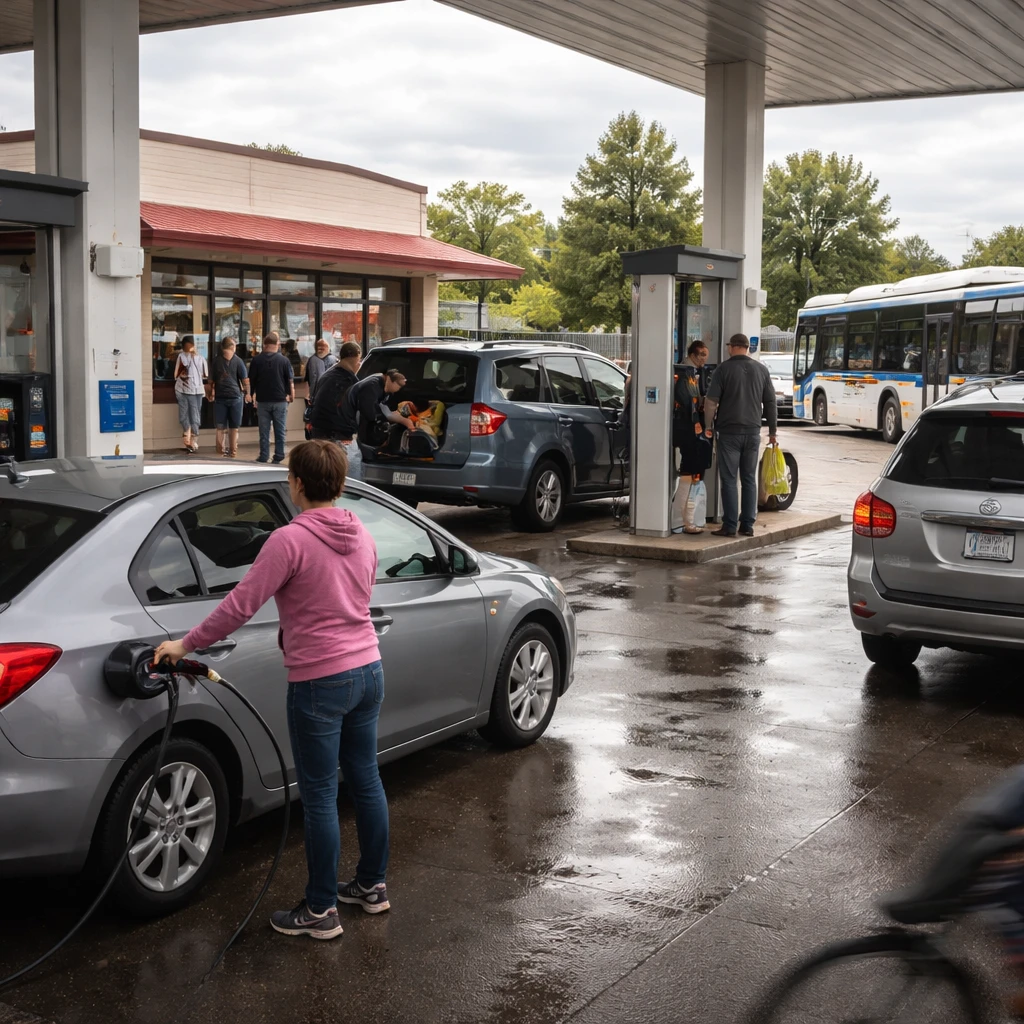
The Federal Reserve Bank of New York reported that households with annual incomes below $40,000 trimmed gasoline expenditures in March when accounting for the jump in fuel prices, while wealthier households kept gasoline spending essentially unchanged.
After adjusting expenditures for higher pump prices, the New York Fed's analysis shows lower-income consumers cut back on gasoline outlays in March. The report notes that these households may have shifted toward lower-cost travel options, potentially including carpooling or public transportation, as a response to rising fuel costs. By contrast, spending by households at the top end of the income distribution was largely flat over the same month.
The Fed's findings point to a widening split in consumption behavior by income. The report draws a parallel to the pattern observed after Russia's invasion of Ukraine in 2022, when fuel costs also spiked. The New York Fed highlights that the current divergence in spending between higher- and lower-income groups is quantitatively larger than what followed the earlier price shock.
Gasoline prices experienced a sharp uptick in March. The average price per gallon of regular gasoline moved from just under $3.00 to just over $4.00 during the month. Prices have continued to rise since then, reaching an average of $4.54 on Wednesday, according to AAA. The AAA figure represents a 52% increase since the war began, the report notes.
The data illustrate a K-shaped spending trajectory across the income spectrum. Households earning more than $125,000 per year have either maintained or increased gasoline spending, while those with incomes below $40,000 have cut back on outlays as pump prices rose.
Context and implications
This income-segmented response to rising fuel costs suggests that higher gasoline prices are having a concentrated effect on lower-income households' mobility expenses. The New York Fed's report does not assign causation beyond the observed associations, and it refrains from projecting future behavior beyond the March data it analyzes.