
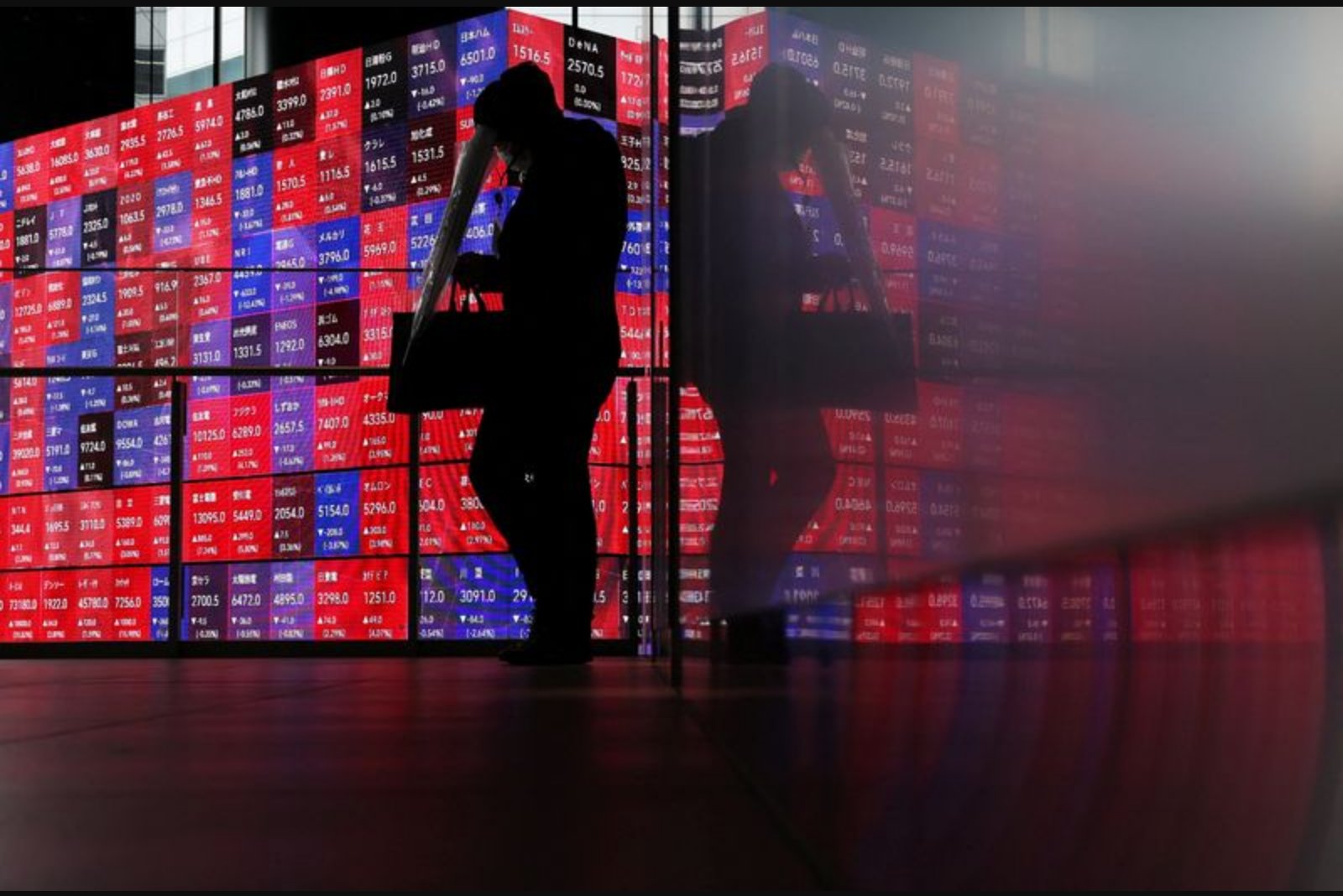
Asian equity markets entered a phase of consolidation on Thursday as market participants reacted to news regarding a new U.S. military strike in Iran. This development has complicated the outlook for potential peace negotiations, challenging previous optimism surrounding a near-term resolution to regional hostilities. Simultaneously, the financial sector remains on edge ahead of upcoming United States personal consumption expenditures (PCE) data, which serves as a primary gauge for inflation trends and will likely influence central bank trajectories.
Market Performance and Sector Impacts
The uncertainty surrounding Middle East stability has had a measurable impact on several key sectors:
- Equities: The tech-driven momentum observed in recent bull runs faced headwinds. In Japan, the Nikkei eased by 0.2%, while South Korean shares remained largely unchanged. The broader MSCI Asia-Pacific index, excluding Japan, saw a slight decline of 0.1%. In Europe, futures for the EUROSTOXX 50 and DAX both slipped 0.2%, with FTSE futures dropping 0.3%.
- Energy: Geopolitical friction has directly fueled commodity volatility. Brent crude rebounded by 2.3% to reach $96.50 a barrel, while U.S. crude rose 2.2% to $90.59. This follows a period where transits through the Strait of Hormuz have remained minimal.
- Fixed Income and Currencies: Treasury yields saw upward movement as the potential for sustained high oil prices increases inflation expectations. The 10-year note yield rose by 2 basis points to 4.502%. In the currency markets, the U.S. dollar found support, trading at 99.291 against a basket of currencies. The dollar also reached a four-week peak against the yen at 159.57, approaching the 160.00 level.
Key Economic Indicators and Central Bank Outlook
A significant portion of market attention is currently directed toward the upcoming release of U.S. PCE data, which contains the preferred inflation metrics used by the Federal Reserve. Forecasts suggest that rising fuel costs could push headline PCE to a three-year high of 3.8%. Furthermore, core PCE is projected to rise by 0.3% annually to 3.3%, a figure significantly higher than the Federal Reserve's 2% target.
These projections have prompted discussions among Federal Reserve members regarding a potential shift away from an easing bias, with some considering the necessity of rate hikes. Analysts at NAB have noted that the Fed faces "genuine two-sided risk," balancing inflation levels against the uncertain growth impacts of ongoing conflicts. Current market pricing reflects a 50-50 probability of a 25-basis-point increase in the funds rate to a range of 3.75% to 4.0% by the end of the year.
In Europe, ECB Chief Economist Philip Lane has underscored the necessity of ensuring that spikes in energy costs do not lead to higher inflation expectations. While the euro sits slightly lower at $1.1620, it maintains support from the expectation that the European Central Bank may implement interest rate hikes during its June meeting.
Risks and Uncertainties
Investors are currently grappling with several critical uncertainties that could shift market dynamics:
- Geopolitical Instability in the Strait of Hormuz: There is significant uncertainty regarding the fate of maritime traffic through the strait. Madison Cartwright, a senior geo-economics analyst at CBA, suggested that within the next two weeks, markets will likely see either a new ceasefire deal or the collapse of the current one, leading to active hostilities. The cost of insurance for transit through the strait has become prohibitively expensive, and it remains unclear how much insurance will be available or if Iran will implement tolls of some kind.
- Inflationary Pressures: The persistence of inflation above central bank targets remains a primary risk. If services core inflation firms up, the argument for "higher-for-longer" interest rates strengthens. Conversely, if there is a sharp moderation in inflation, focus may shift toward emerging growth headwinds.
- Commodity Volatility: Sustained high oil prices due to regional conflict present a continuous risk to inflation expectations and broader economic stability.
In other regional news, reports from Japan indicated that the government is planning the issuance of "bridging bonds" intended to fund major programs focused on economic security and investment in growth. Meanwhile, gold prices saw a slight decline of 0.3% to $4,445 an ounce, as it struggled to find support as both a hedge against inflation and a safe-haven asset.