
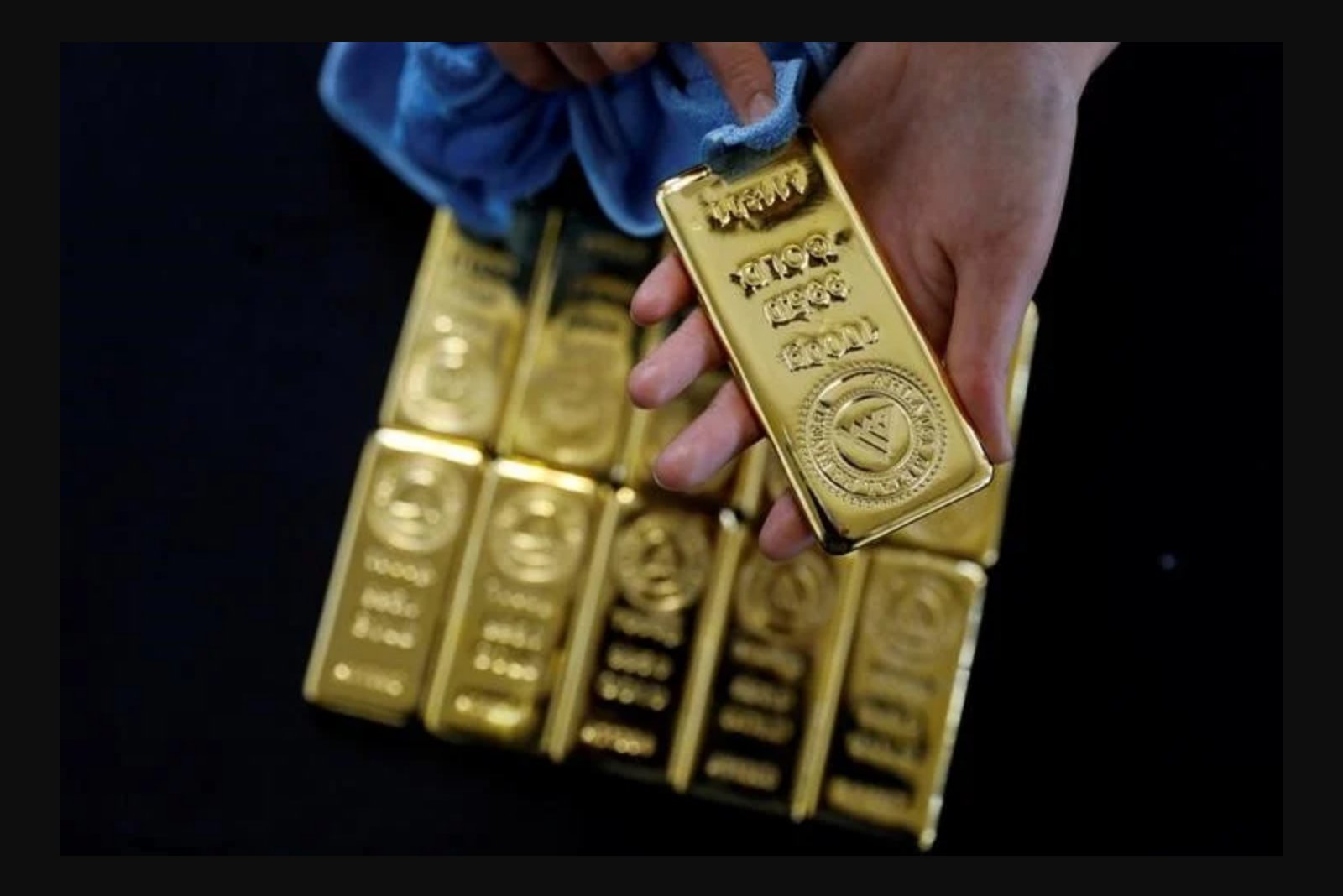
Gold extended losses on Monday, staying below the $3,900 an ounce mark as the U.S. dollar firmed and markets increased the odds of further interest-rate hikes by the Federal Reserve. At 00:10 ET (05:10 GMT), XAU/USD traded at $3,868.88 an ounce, down 0.4%. Gold futures fell 0.3% to $3,871.92.
Other precious metals registered sharper declines. Silver (XAG/USD) dropped 2.1% to $47.7430 an ounce. Platinum (XPT/USD) fell 1.3% to $1,473.49. Palladium (XPD/USD) declined 1.4% to $985.81, with palladium futures later reported at $984.25, down 1.6% on the day.
The U.S. Dollar Index inched higher by 0.03% to 103.44, contributing to headwinds for bullion, which does not yield interest and often underperforms when real yields rise.
Recent market moves and data
Bullion lost 4.5% during the previous week, touching a more than one-year low as rising oil prices pushed inflation concerns higher and strengthened expectations that borrowing costs would remain elevated for longer. U.S. producer prices accelerated in October, delivering their largest annual increase in four years, a development that market participants said reinforced the case for additional Fed tightening following expectations for a December rate increase.
Federal Reserve officials continued to voice concern about persistent inflation. Kansas City Fed President Jeff Schmid said on Sunday that inflation was still "running too hot" and that policymakers had "some work to do" to bring it under control. Fed Vice Chair Philip Jefferson said on Friday that, with economic growth continuing and the labour market stabilising, inflation was now guiding his policy outlook, remarks that pointed toward support for further rate increases. Boston Fed President Susan Collins indicated tighter monetary policy would be necessary to address elevated inflation, suggesting rates might need to rise further than she had previously anticipated.
Market expectations and event risk
Markets are placing a significant probability on a December rate move. The CME's FedWatch tool indicated a 94% probability of a 25-basis-point increase in December, while assigning a 6% chance to a larger, 50-basis-point move. Some investors also expect tightening to continue beyond December.
Investors will be watching remarks from Fed Chair Kevin Warsh, who is scheduled to speak later on Monday, ahead of the release of minutes from the Federal Open Market Committee's October meeting on Wednesday. Those events are expected to provide further policy guidance that could influence bullion and other interest-rate-sensitive assets.
Geopolitical developments
Geopolitical risks remained in focus after Iran and its allies increased pressure on the U.S. and Gulf states on two fronts on Sunday. Saudi-backed forces reportedly retreated in their fight against Iran-aligned Houthi rebels in Yemen, while Iran launched drone attacks against U.S. bases in Bahrain. Such developments added another layer of uncertainty for markets already contending with monetary policy shifts and inflation data.
What this means for markets
The combination of firmer U.S. inflation readings, hawkish commentary from Fed officials, elevated odds of a December rate increase and a stronger dollar contributed to the downward pressure on gold and other non-yielding precious metals. Investors will likely continue to track Fed commentary, the upcoming FOMC minutes and geopolitical developments for further directional cues.