
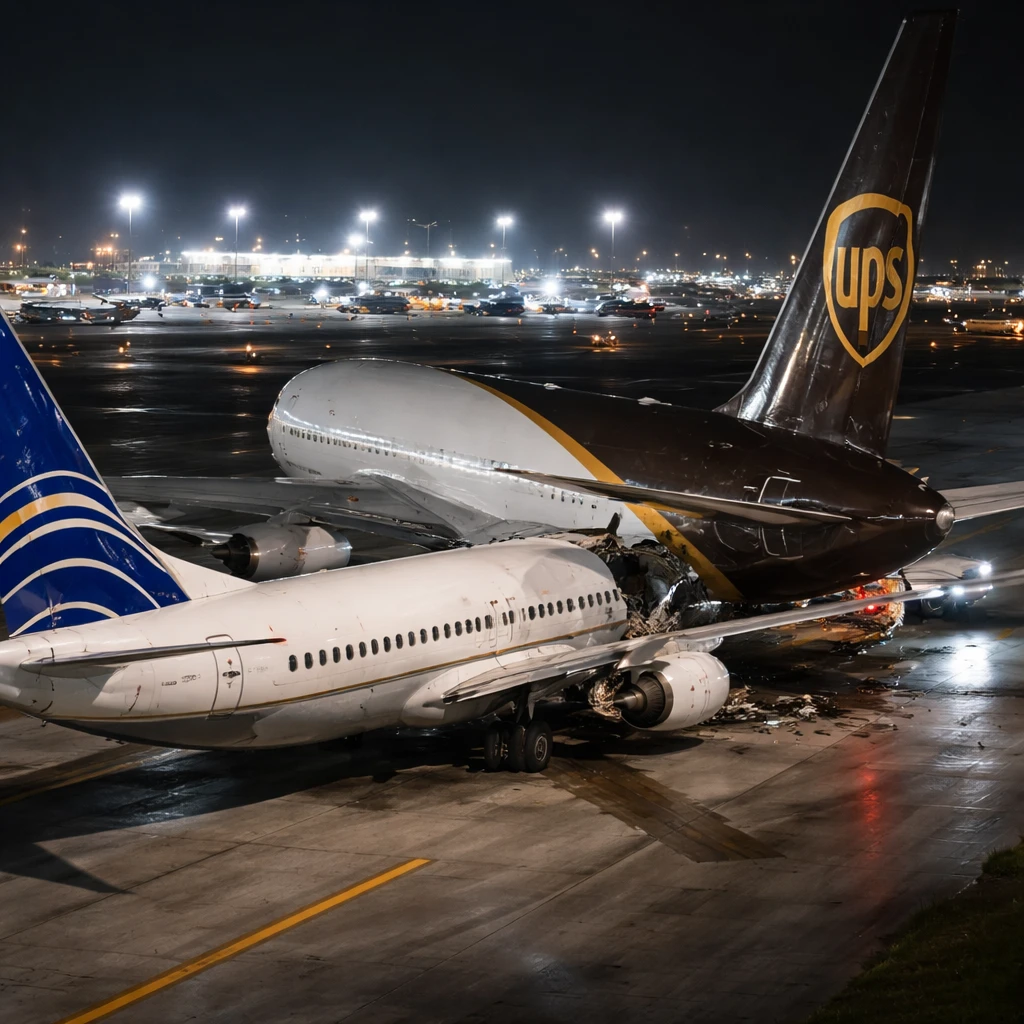
A Copa Airlines passenger jet and a UPS cargo aircraft collided on the ground at Miami International Airport on Saturday evening, after the cargo plane reportedly entered the passenger jet's path, according to communications between pilots and air traffic controllers.
The incident involved a Copa Airlines Boeing 737 arriving from Panama and a UPS Boeing 767 cargo aircraft. According to flight tracking service Flightradar24, the Copa jet's wing struck the UPS aircraft at approximately 9 p.m. local time.
Air traffic control recordings indicated that the UPS aircraft had traveled beyond its intended position, entering an area where the Copa jet was taxiing. A controller indicated that the UPS crew was supposed to yield to the passenger aircraft. The UPS pilot acknowledged traveling too far before the collision, according to the recorded exchange.
Neither UPS nor Copa Airlines had immediately responded to requests for comment outside regular business hours.
The ground collision occurred against a backdrop of significant disruption across the U.S. aviation system. A nationwide flight grounding had been triggered by technical problems with air traffic control infrastructure. The Federal Aviation Administration had lifted the grounding after a data overload disrupted communications and radar systems, causing the longest nationwide shutdown of its kind in more than two decades.
The disruption resulted in widespread cancellations and delays across major U.S. airports. More than 6,500 flights were canceled Saturday, with another 8,200 delayed as of 10:40 p.m. New York time, according to aviation data provider FlightAware.
The operational problems have renewed scrutiny of aging air traffic control infrastructure and the need for substantial modernization. Transportation Secretary Sean Duffy said he would formally request $50 billion in emergency funding from Congress on Monday to upgrade the country's air traffic control system. The proposed investment follows mounting concerns about the resilience of aviation infrastructure after the nationwide outage disrupted thousands of passenger journeys.
For investors, the episode highlights the interconnected risks facing the air transport sector. Airlines such as Copa and cargo operators such as UPS face operational disruptions that can ripple through schedules and costs, while the broader aviation system's reliance on aging infrastructure remains a focal point for policy and spending decisions.