
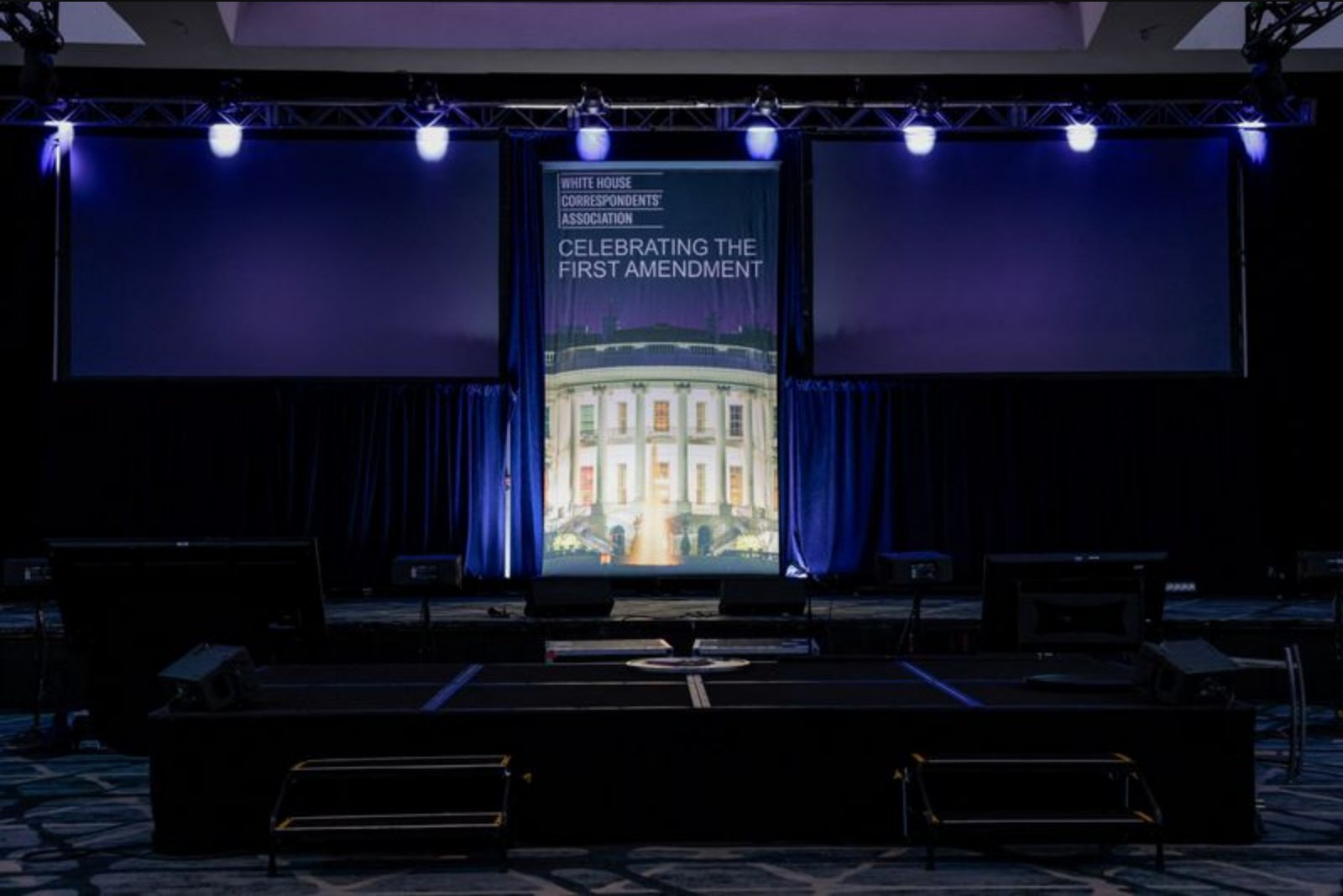
WASHINGTON - Officials at the White House acknowledged on Monday that they had discussed naming a designated survivor and reviewed the presidential line of succession ahead of the White House Correspondents' Association (WHCA) dinner, following an attempted attack that disrupted the high-profile event over the weekend.
The incident on Saturday sent attendees of the black-tie gala scrambling for cover under tables when shots were fired, and law enforcement moved senior administration figures out of the ballroom. President Donald Trump, who had been scheduled to speak later that evening, was escorted off the stage by security after the shooting.
Also present at the dinner were several officials who appear in the statutory line of succession - Vice President JD Vance, House Speaker Mike Johnson, U.S. Secretary of State Marco Rubio, Treasury Secretary Scott Bessent and Defense Secretary Pete Hegseth. One notable absentee was Republican U.S. Senator Chuck Grassley of Iowa, who is the president pro tempore of the Senate and holds a position in the succession order as the highest-ranking and most senior member of the majority party in the Senate.
The concentration of senior officials in the hotel's expansive ballroom raised questions about whether a designated survivor had been appointed for the evening to preserve continuity of government in case of catastrophe. At a White House briefing on Monday, Leavitt addressed those concerns and said the issue had been considered before the event.
"Those conversations ahead of the WHCA dinner did take place, but there were several members of the Cabinet in the line of succession who did not attend for various personal reasons. So designating one survivor was not necessary as we have several members who were not there already," Leavitt said.
The term designated survivor refers to a Cabinet member specifically chosen to miss a major gathering - such as the State of the Union address - and remain at a secure, undisclosed location so that the continuity of government can be maintained if a catastrophic event incapacitates senior leaders.
The chaotic scenes at the dinner, a fixture of Washington's social calendar, highlighted concerns about the safety of top U.S. officials when many are gathered in a single large venue. Authorities moved quickly during the episode, and attendees' sheltering under tables underscored the immediate alarm within the ballroom.
While questions about succession planning and protective measures were publicly addressed by the White House, details about which Cabinet members were absent and the precise makeup of those not attending were characterized by Leavitt as the basis for not designating a single survivor for the event. Beyond her statement, officials did not provide further specifics at the briefing about the succession arrangements or operational security decisions related to the evening.
The exchange at the briefing aimed to explain why a formally designated survivor was not named for that night, citing the presence of several Cabinet-level officials who were already not in attendance.
Summary: The White House confirmed pre-event discussions about the line of succession and a designated survivor ahead of the WHCA dinner after a shooter disrupted the event, concluding that naming one designated survivor was unnecessary because several Cabinet members in the succession line were not present.