
Two days after a shooting tied to an event President Trump was to attend, Republican lawmakers in Congress moved to advance legislation that would finance and speed the construction of a new White House ballroom, citing heightened security concerns.
Senate Budget Committee Chairman Lindsey Graham of South Carolina, together with two other Senate Republicans, has drafted a bill to underwrite the ballroom project - which is already under way - at public cost, according to a statement released on Monday. Graham’s office, citing "increased threats," said, "By funding these necessary upgrades to the ballroom and the White House’s security infrastructure, President Trump and future presidents will be able to host large events without having to leave the White House grounds."
The move follows a Saturday incident at a dinner where Mr. Trump had been expected to speak. The event, which drew about 2,600 guests, was disrupted when a man was apprehended inside the hotel where the dinner was taking place and he allegedly fired shots at a U.S. Secret Service agent. Neither Mr. Trump nor the White House ultimately hosted the dinner that evening.
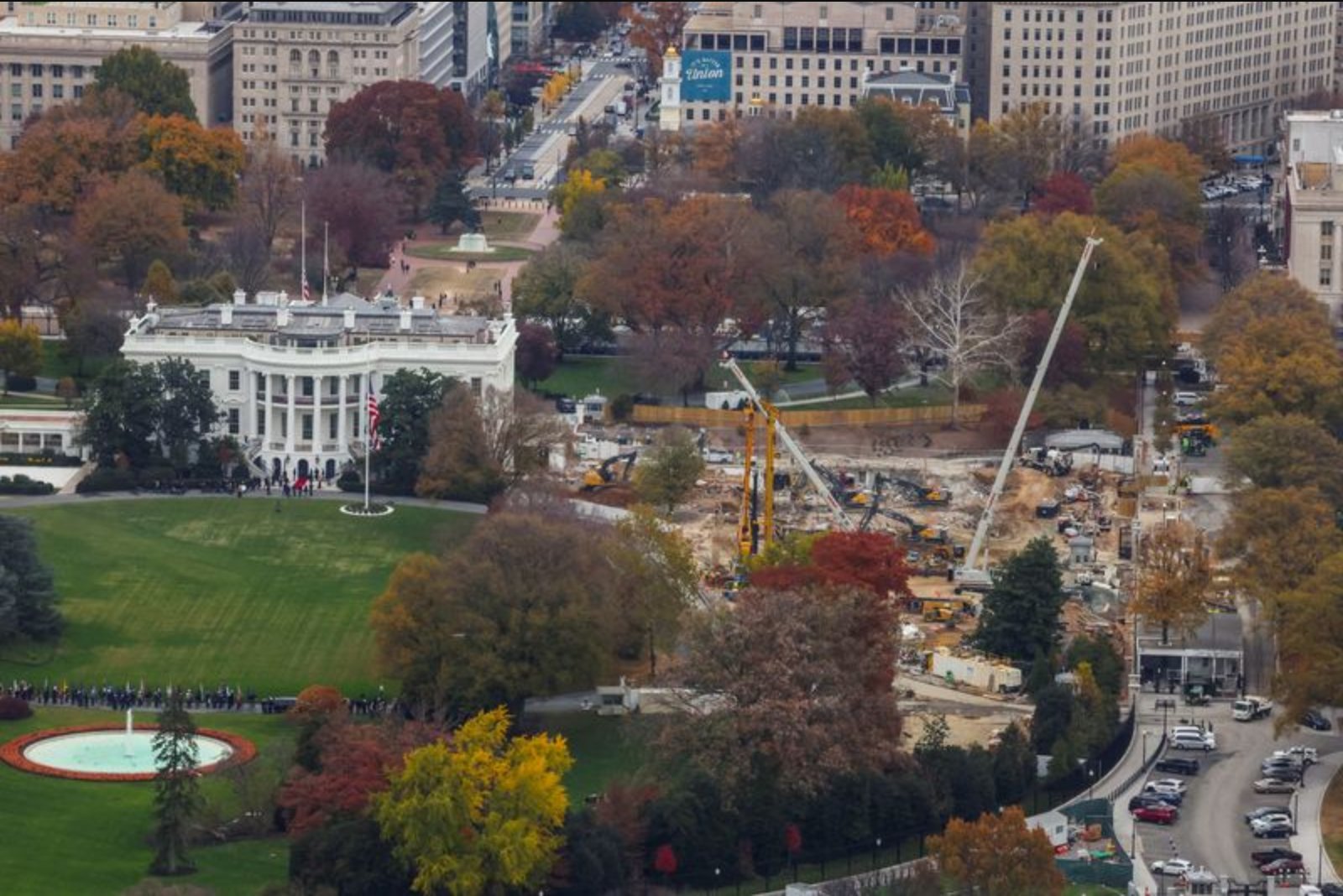
Construction on the new ballroom has already begun after the historic East Wing of the White House was torn down. The planned facility is being described as a sizable venue - a 90,000-square-foot project with seating for up to 1,000 guests. Mr. Trump previously said private donations would cover the estimated $400 million cost of the ballroom. The proposed legislation would shift that financing to taxpayers.
The Senate pathway for the Graham measure is uncertain. Democrats in the Senate are expected to oppose the bill, and it was unclear how Graham would carry it forward. A Graham aide did not immediately respond to a request for comment.
Republican Representative Chip Roy of Texas posted on X on Sunday that a broader budget bill Graham and other Republicans are promoting in Congress should include provisions to fund the ballroom. That budget measure is slated to move through the Senate using a special procedure that permits passage by a simple majority of 51 votes rather than the 60-vote threshold most legislation requires. Republicans currently hold 53 of the chamber’s 100 seats.
The budget bill in question is primarily designed to provide funding for two Department of Homeland Security law enforcement agencies through fiscal year 2029. Supporters of including the ballroom financing say the security-related upgrades justify its inclusion in that vehicle.
On March 31, a federal judge ruled that the project - described as a 90,000-square-foot undertaking - could only proceed if Congress authorized it. That ruling has placed congressional approval at the center of the project’s future.
On Sunday, freshman Republican Senator Tim Sheehy of Montana announced he would seek expedited Senate approval of legislation to authorize construction of the ballroom. Sheehy’s approach would require unanimous consent among senators - a procedural step that often breaks down on divisive matters. Sheehy said, "A president of any party should be able to host events in a secure area without attendees worrying about their safety."
To date, Senator John Fetterman of Pennsylvania is the only Democrat in the chamber to publicly indicate support for building and approving funding for the ballroom, which is to be sited where the East Wing once stood.
In the House, Republican Representatives Lauren Boebert of Colorado and Randy Fine of Florida said they were drafting complementary legislation intended to ensure completion of the president’s project.
Shortly after the Saturday shooting, Mr. Trump spoke at a White House press conference and framed the security episode as additional justification to proceed with construction of the new ballroom.
Context limitations - The schedules for potential floor action in the Senate and the detailed legislative language of the bill were not provided. There was no immediate comment from Graham’s office beyond the statement cited. No additional public statements from Democratic leaders opposing or supporting the bill were reported, aside from the cited public positions of Senator Fetterman and the named House Republicans.