
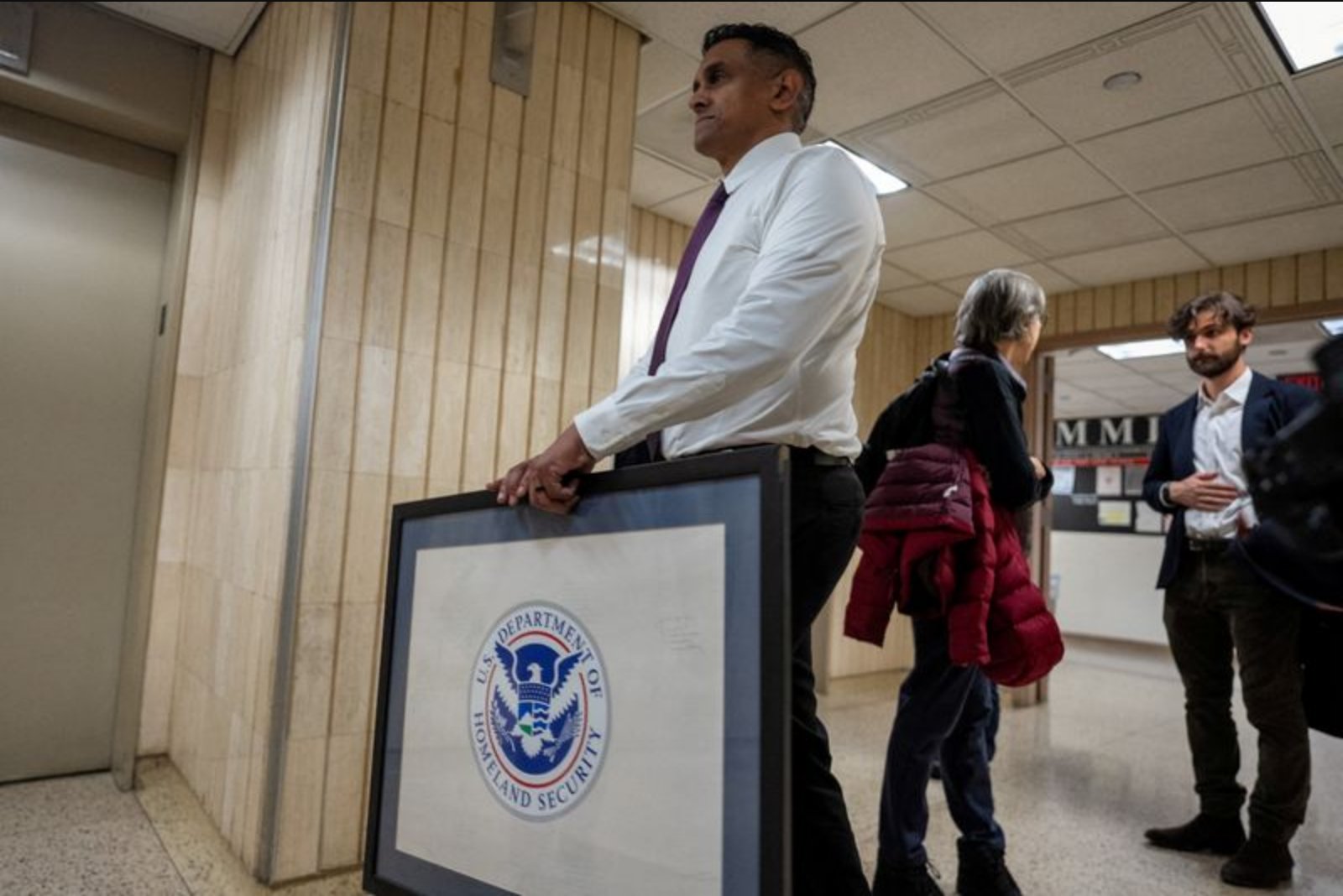
The Department of Homeland Security (DHS) announced on Monday that statements by immigrants applying for lawful permanent residency or naturalization that it characterizes as extremist will be subject to heightened review by immigration officials. The policy clarification comes after reporting that new guidance under the current administration would allow officials to weigh an applicant’s political speech - including expressions tied to pro-Palestinian demonstrations or criticism of Israel - as potentially disqualifying.
In explaining how U.S. Citizenship and Immigration Services (USCIS) personnel should treat certain statements and conduct, a USCIS spokesman, Zach Kahler, said: "Certain behaviors and statements may raise serious concerns for USCIS (U.S. Citizenship and Immigration Services) personnel reviewing an applicant’s file, including espousing terrorist ideologies, expressing hatred for American values, advocating for the violent overthrow of the United States government, or providing material support to terrorist organizations. Such actions warrant closer scrutiny." USCIS is a component of DHS.
According to the reporting that prompted DHS’s response, training materials distributed within the administration include criticism of Israel among the kinds of speech that could be viewed as a negative factor in immigration adjudications. The materials reportedly present as an example a social media post declaring "Stop Israeli Terror in Palestine" accompanied by imagery of the Israeli flag crossed out, and direct officers to consider those factors "overwhelmingly negative."
The guidance and the example cited have spurred immediate concern from civil liberties advocates and some elected officials, who argue the approach risks chilling protected political expression. Defending Rights and Dissent, a civil liberties group, described the policy as "an incredibly disturbing attack on free speech, with the government deciding who can enter the country based purely on their expression of political views."
Democratic U.S. Senator Chris Van Hollen criticized the practice on the social media platform X, asserting: "Trump plans to deny legal residency in the U.S. based on whether he agrees with your speech. Since when did it become ’anti-American’ to criticize the actions of a foreign government?"
Observers note the guidance aligns with a suite of actions by the administration that target pro-Palestinian activism and immigrant speech. The administration has in recent months attempted to deport foreign protesters, threatened to withhold funds from universities where demonstrations were held, and increased scrutiny of immigrants' online statements. Last year, officials indicated they would vet applications for "anti-Americanism" and antisemitism, and the current guidance appears to extend that approach to a broader set of political expressions.
Advocates for Palestinian rights and some Jewish organizations argue the government is conflating legitimate criticism of Israel's military actions and occupation with antisemitism or extremist support. They say advocacy for Palestinian rights can be improperly characterized as support for extremism.
One contested enforcement action cited in public discussion involved a deportation attempt against a Tufts University graduate, Rumeysa Ozturk. Authorities reportedly said an editorial she co-authored in a student newspaper, which criticized Tufts University’s response to the war in Gaza, was the sole basis for the attempted removal.
The DHS statement on Monday framed the guidance as part of USCIS’s review responsibilities but did not add new examples beyond those reported. Critics emphasize that the policy raises both First Amendment and due process questions because it links an applicant’s past political expressions to immigration eligibility.
As this policy and its implementation play out, the contours of which statements and actions will be treated as disqualifying remain tied to the training and adjudicative guidance distributed to immigration officers. Stakeholders who have voiced opposition to the guidance say that conflating political speech with extremist conduct could affect applicants across a range of backgrounds and raise complex legal and civil liberties issues.
Summary
DHS has indicated that past expressions deemed extremist by its guidance will prompt closer review of green card and naturalization candidates. Training materials reportedly list certain political expressions, including criticism of Israel and participation in pro-Palestinian protests, as potentially highly negative factors. Civil liberties groups and some lawmakers argue this could suppress protected political speech and raise due process concerns; the administration has already taken other actions targeting pro-Palestinian activism and immigrant speech.
Key points
- USCIS guidance tells adjudicators to scrutinize past statements and conduct that it identifies as extremist, with a spokesman saying such actions "warrant closer scrutiny." - Sectors affected include immigration legal services, higher education, and entities involved in online speech moderation.
- Training materials reportedly cite criticism of Israel and pro-Palestinian protest participation as examples of speech to be weighed negatively. - This influences how universities and protest-related funding disputes may be assessed by federal authorities.
- Civil liberties groups and Democratic lawmakers warn the guidance risks chilling political expression and may raise constitutional and due process questions. - Legal services and civil rights advocacy sectors stand to be engaged in potential challenges or representation.
Risks and uncertainties
- Free speech concerns - The policy, as described, may deter immigrants and noncitizens from engaging in political expression for fear it could harm immigration prospects. - Markets for legal counsel and advocacy could see increased demand.
- Due process and adjudicative clarity - The guidance places weight on how training materials instruct officers to evaluate speech, creating uncertainty about consistency in decisions and potential legal disputes. - Higher education institutions and students involved in protests may be particularly affected.
- Policy implementation variability - How broadly "extremist" speech is interpreted in practice will determine the real-world impact; current descriptions leave room for divergent application across cases. - This uncertainty could affect immigration services and compliance costs for organizations supporting immigrants.