
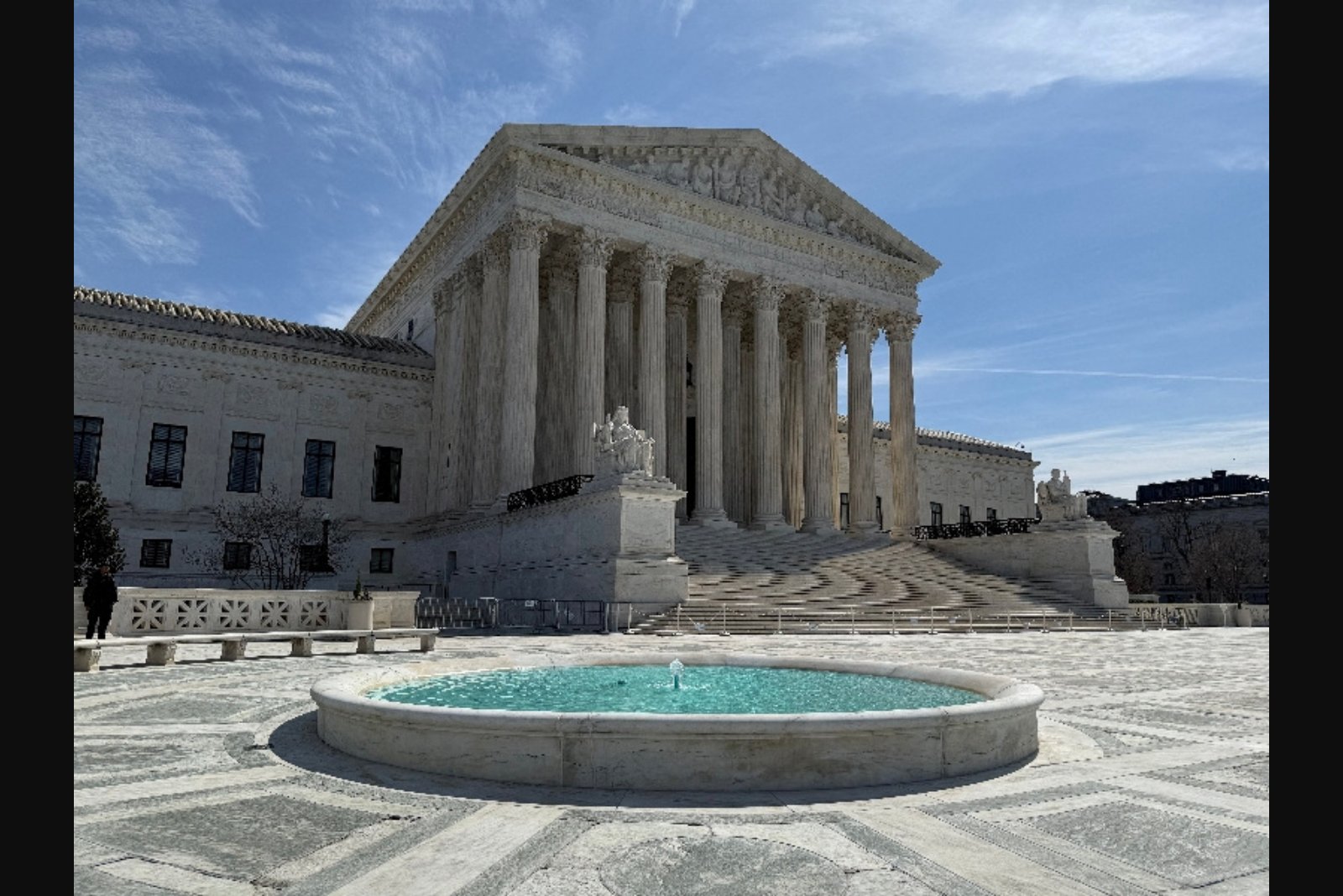
The U.S. Supreme Court on April 27 refused to review an appeal by parents challenging how public school staff handled their child’s disclosure of a nonbinary identity, leaving intact lower court decisions that dismissed the family's lawsuit.
The case arose from the experiences of parents January and Jeffrey Littlejohn and their 13-year-old child, who attended Deerlake Middle School in Tallahassee, part of the School Board of Leon County. According to court papers filed by the Littlejohns, the school created in 2020 what the parents described as a "covert gender affirmation plan" after the student began questioning gender identity. The parents said they did not consent to their child changing names or using the pronouns "they, them."
The Littlejohns sued the school board and certain officials in federal court in 2021, asserting that the board's gender support guide and school officials' actions in withholding information from them violated their fundamental parental rights under the 14th Amendment. They argued that officials treated their child as nonbinary and concealed that information from them, which they said infringed on their constitutional due process rights.
A federal judge dismissed the lawsuit, and the Atlanta-based 11th U.S. Circuit Court of Appeals affirmed that dismissal in 2025. The 11th Circuit concluded that, under Supreme Court precedent, a claim of this nature requires a showing that public officials' conduct "shock the conscience" - a standard the appeals panel found the parents had not met. The court said school officials did not force the child to take any particular action and concluded that "perhaps most importantly, defendants did not act with intent to injure. To the contrary, they sought to help the child."
The school board had adopted a gender support guide in 2018 to address situations when students disclose a transgender or gender non-conforming identity. The guide explicitly acknowledged the risks of outing students and instructed officials to seek the child's consent before notifying parents. The board later updated that guide in response to a Florida law adopted in 2021 that strengthened parental rights; the revised guidance states that officials must not withhold information from parents "unless a reasonably prudent person would believe that disclosure would result in abuse, abandonment or neglect."
The Supreme Court's refusal to hear the Littlejohns' appeal follows a sequence of similar denials. The justices turned away a case from Massachusetts the prior week, and they have previously declined to take up challenges from Wisconsin and Maryland. Those decisions keep in place lower-court rulings rejecting parental claims that school practices supporting transgender or gender non-conforming students violate parental constitutional rights.
Separately, the Supreme Court has been active in reviewing measures touching on transgender rights more broadly. In March, the court temporarily blocked measures in California that could have limited the sharing of information with parents about the gender identity of transgender public school students without the child's permission. That action came in response to an emergency request by Christian parents seeking to reinstate a judge's ruling in their favor. The court's conservative 6-3 majority found that California's policies likely violated due process rights as well as the religious beliefs of those parents concerning sex and gender.
The high court has also decided several other major cases related to transgender rights. In June 2025, the court upheld a Republican-backed Tennessee ban on gender-affirming medical care for transgender minors. Earlier in January, the court appeared poised to uphold state laws that ban transgender athletes from competing on female sports teams.
Legal disputes over policies intended to support and protect the privacy of transgender and gender non-conforming students continue to play out across the United States. The recent string of Supreme Court actions - both denials of review and emergency rulings - has left intact a mix of lower-court outcomes while also signaling the court's willingness to intervene in certain circumstances affecting parental rights, religious claims, and the scope of school policies.
Context and immediate effect
With the Supreme Court declining to hear the Florida appeal, the 11th Circuit's ruling stands. The court's posture in similar matters has been varied: some cases have been left to lower courts to resolve, while others prompted emergency interventions at the high court, such as the temporary order involving California policies in March. The Littlejohns' case, therefore, becomes another point in the evolving legal landscape over school approaches to gender identity and parental notification.