
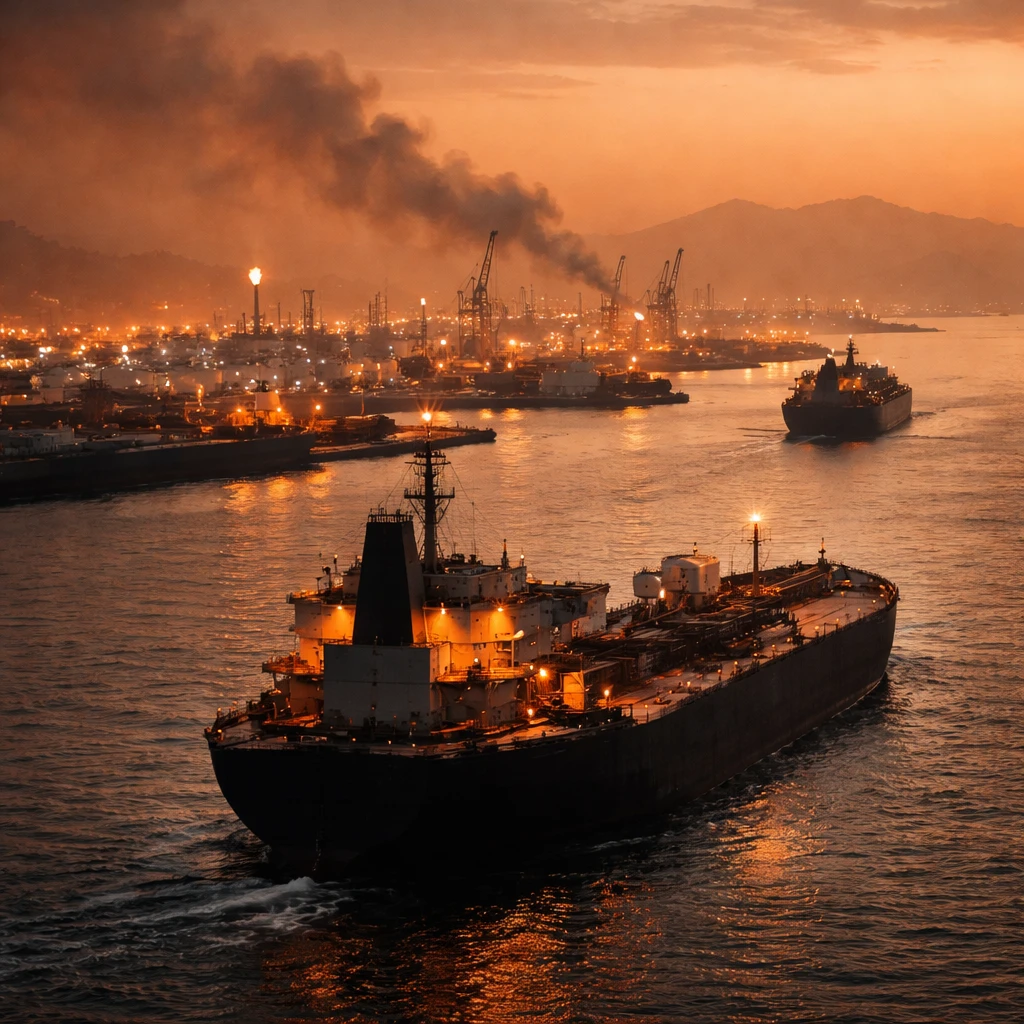
A recent poll indicates that economies across the Gulf Cooperation Council (GCC) are entering their most severe downturn since the pandemic, as hostilities involving the U.S., Israel and Iran have unsettled energy markets and regional stability.
The conflict has produced a supply shock in global energy markets that has pushed oil prices higher. Unlike earlier episodes of rising oil prices that tended to benefit Gulf exporters, widespread infrastructure damage and the near closure of the Strait of Hormuz - a vital route for a fifth of global energy - have sharply curtailed production and exports.
Economists surveyed in the poll have dramatically revised down growth expectations for 2026. Forecasts now show contractions for several countries: Qatar is projected to shrink by 6.0%, Kuwait by 4.4% and Bahrain by 2.9%, reversing prior outlooks for expansion. The United Arab Emirates is now forecast to stagnate in 2026, a marked downgrade from earlier expectations of about 5% growth. Saudi Arabia and Oman are expected to perform relatively better, with growth projections of 2.6% and 2.2% respectively, though both are well under earlier estimates.
Analysts warn that the economic fallout will be protracted. Rebuilding damaged energy infrastructure and re-establishing disrupted supply chains are not expected to be complete until late 2026, according to the poll. The damage is likely to extend beyond the energy sector; key non-oil industries such as tourism and retail are also anticipated to suffer notable losses.
Should the conflict end in the near term, forecasters in the poll anticipate a robust recovery in 2027. Under that scenario, Qatar, the UAE and Kuwait could see strong rebounds of 7.8%, 5.4% and 5.0% respectively, supported by restored energy output and renewed public investment.
Inflation in the region is also expected to pick up alongside elevated oil prices. Bahrain's inflation rate for 2026 is forecast at 2.4%, and other GCC countries are similarly projected to face upward pressure on consumer costs.
Overall, the poll paints a picture of a sharp and uneven downturn across the GCC in the near term, with a medium-term recovery still considered possible but contingent on the cessation of hostilities and the restoration of energy infrastructure.
Key points:
- GCC faces steepest slowdown since the pandemic as conflict disrupts energy markets and regional stability.
- Several countries now forecast to contract in 2026: Qatar -6.0%, Kuwait -4.4%, Bahrain -2.9%; UAE to stagnate after earlier 5% growth expectations; Saudi Arabia and Oman forecast to grow 2.6% and 2.2% respectively.
- Recovery in 2027 is possible if the conflict ends soon, with projected rebounds for Qatar (7.8%), the UAE (5.4%) and Kuwait (5.0%).
Risks and uncertainties:
- Continued damage to energy infrastructure and delays in rebuilding could prolong production and export shortfalls, affecting oil and gas sectors as well as public finances.
- Disruption or near closure of the Strait of Hormuz, a conduit for a fifth of global energy, poses ongoing shipping and supply-chain risks for energy markets and trade.
- Higher oil prices driving inflationary pressures could hit non-oil sectors such as tourism and retail, reducing consumer demand and slowing recovery.