
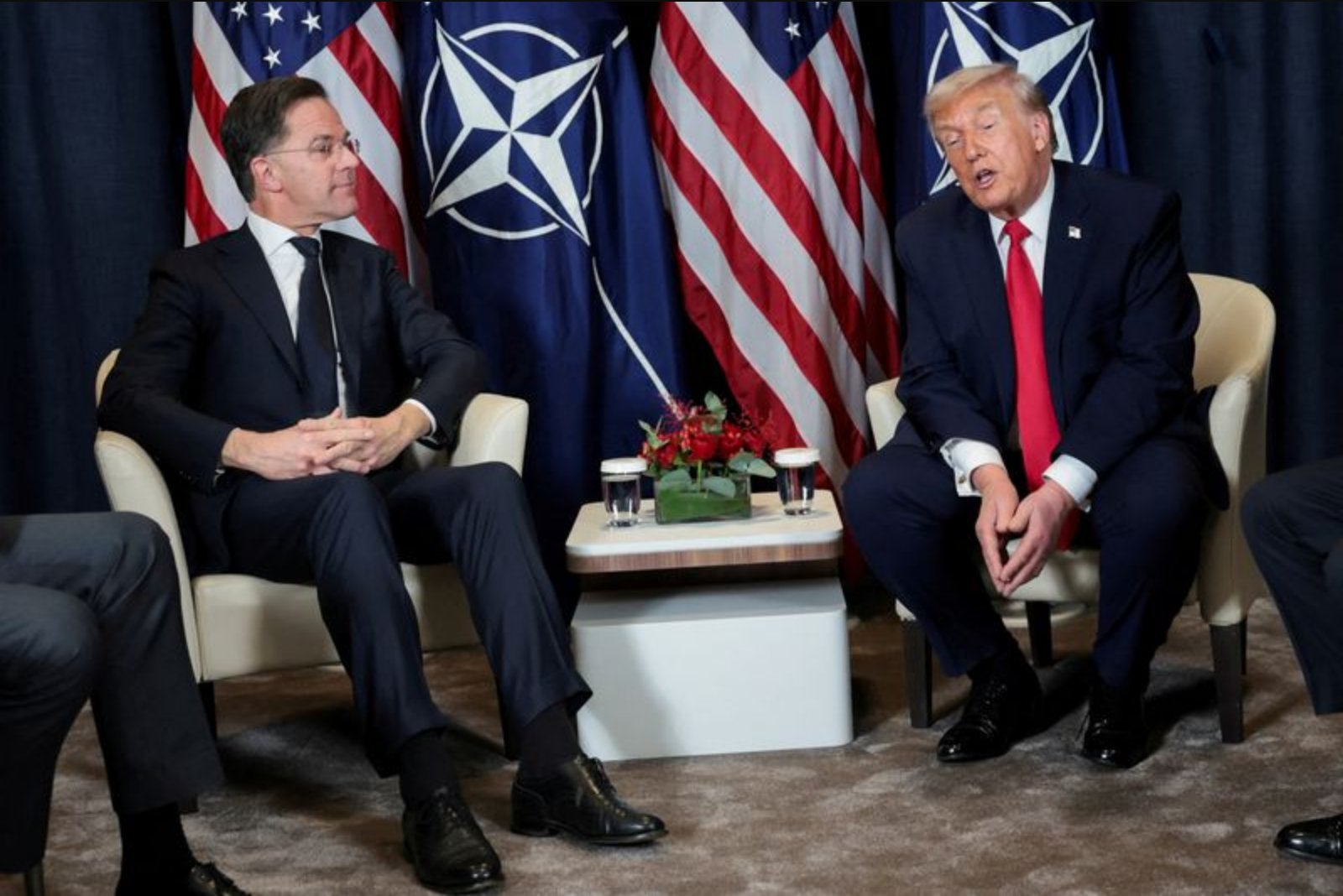
NATO is examining whether to abandon the recent practice of convening heads of state and government every year, according to six officials who spoke about internal deliberations. The proposal to slow the summit cadence has arisen in part because some allies want to avoid a potentially tense encounter with U.S. President Donald Trump during his final full calendar year in office.
Trump's administration has repeatedly leveled harsh criticism at many of the alliance's 31 other members, most recently accusing some governments of not providing more support for U.S. military operations against Iran. The frequency of NATO summits has varied over the alliance's 77-year history, but leaders have met each summer since 2021 and are scheduled to gather in Ankara on July 7 and 8 this year.
Several NATO diplomats and a senior European official told Reuters that a number of member states are now urging a slower tempo. One diplomat said the 2027 summit, slated to be held in Albania, will likely be scheduled in the autumn, and that NATO was considering not holding a summit in 2028 - a year that coincides with the U.S. presidential election and what the sources described as Trump’s final full calendar year in office.
Another diplomat said some countries were advocating for a shift to a biennial summit rhythm, but added that no decision had been taken and that Secretary General Mark Rutte would have the final say. The officials spoke on condition of anonymity so they could discuss internal deliberations.
When asked for comment, a NATO official issued a statement emphasizing continuity in alliance business: "NATO will continue to hold regular meetings of Heads of State and Government, and between summits NATO Allies will continue to consult, plan and take decisions about our shared security."
Two of the sources directly cited Trump as one factor prompting the reconsideration, though several others stressed that broader concerns are also shaping the debate. Diplomats and analysts represented in the discussions have for some time argued that annual summitry can place undue pressure on leaders to produce headline-grabbing outcomes, which may distract from longer-term strategy and implementation.
"Better to have fewer summits than bad summits," one diplomat said, adding: "We have our work cut out for us anyway, we know what we have to do." Another diplomat said the quality of discussions and decisions is the true measure of alliance strength rather than mere frequency of high-profile meetings.
Observers at policy institutes have made similar points. Phyllis Berry, a nonresident senior fellow at the Atlantic Council, wrote that reducing high-profile summitry "would allow NATO to get on with its business and dial down the drama that has marked many recent transatlantic encounters." In a piece published on the think tank’s website, she noted that NATO convened only eight summits during the Cold War decades, and described President Trump's first three summits in his first term as "contentious events, dominated by his complaints about low allied defense spending."
Last year's summit in The Hague was largely shaped by an Israeli demand from the U.S. president that NATO members sharply raise defense spending to 5% of GDP. Allies instead adopted a compromise commitment, agreeing to spend 3.5% on core defence and 1.5% on broader security-related investment. The fact that the summit concluded without major drama was widely seen as an achievement by participants.
The upcoming Ankara meeting also appears likely to be fraught. According to the officials, after NATO partners refused to provide the level of support President Trump sought for the Iran war - a campaign he began without consulting or informing them - he publicly questioned whether the United States should continue to be bound by NATO's mutual defence pact and said he was considering leaving the alliance. Earlier, he had also laid claim to Greenland, an autonomous territory belonging to fellow NATO member Denmark.
At the 2018 summit, the then-president threatened to walk out in protest over low allied defence spending. Jens Stoltenberg, NATO’s secretary general at that time, wrote in a memoir published last year that "Had he made good on his threat to leave in protest, we would have been left to pick up the pieces of a shattered NATO."
As deliberations continue, NATO faces a choice between preserving the recent rhythm of annual, highly visible leaders' meetings and adopting a more restrained calendar that proponents say could yield higher-quality discussions and decisions. Allies have not reached a conclusion, and the final choice will rest with alliance leadership.
Summary
NATO is debating whether to end the pattern of annual summits, influenced in part by tensions with U.S. President Donald Trump and by concerns that yearly summitry can produce headline-driven results at the expense of long-term strategy. Leaders are due to meet in Ankara on July 7-8, 2024, and discussions include moving the 2027 Albania summit to autumn and possibly not holding a summit in 2028.
Key points
- Several NATO members want to reduce summit frequency to avoid high-profile political conflict and improve the quality of decision-making - impacting the defence sector and political risk assessments.
- Leaders have met every summer since 2021; the next meeting is scheduled in Ankara on July 7-8, and there are talks about altering the 2027 and 2028 summit schedule - affecting diplomatic planning and calendar-dependent security coordination.
- The debate is partly driven by tensions with President Donald Trump, who has criticized allies over defence spending and questioned U.S. commitments to NATO - a development relevant to defence procurement, alliance cohesion, and geopolitical risk priced by markets.
Risks and uncertainties
- Unpredictable high-level interactions: The possibility of contentious encounters with President Trump could produce sudden shifts in alliance messaging and commitments, increasing political risk in defence and foreign policy sectors.
- Pressure for headline results: Annual summits can incentivize short-term, attention-grabbing pledges rather than sustained implementation, which may complicate long-range defence planning and investment decisions.
- Decision-making ambiguity: No final decision has been taken on summit frequency, and the question of whether to hold a summit in 2028 remains unresolved, creating uncertainty for diplomatic scheduling and allied coordination.