
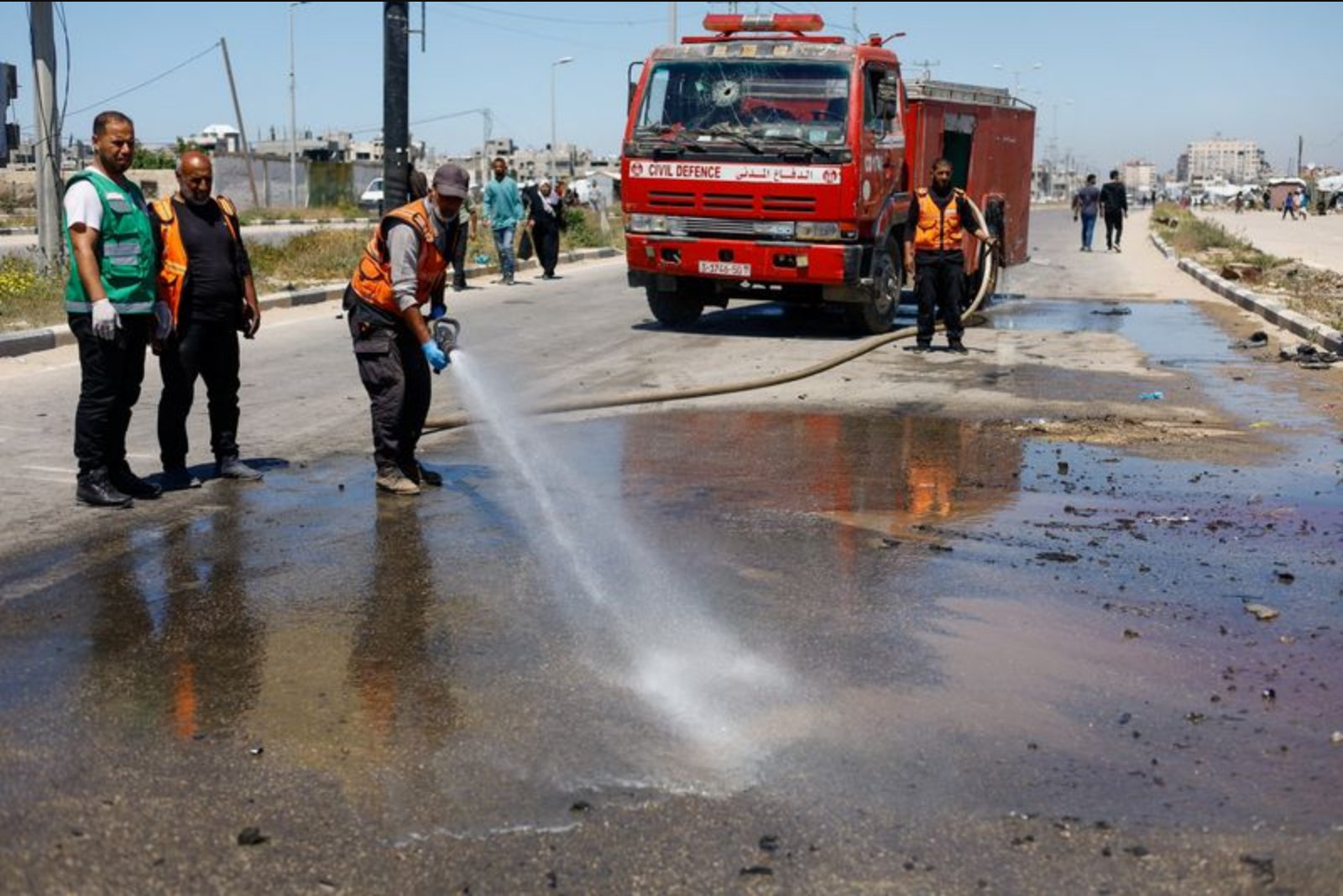
GAZA, April 27 - In Gaza, Palestinians are turning the remnants of destroyed buildings into the raw material for rebuilding transportation links and communal areas, using heavy equipment to crush concrete and twisted steel into pavement. The effort is part of a United Nations Development Programme (UNDP) project intended to begin the slow work of rehabilitating city infrastructure while broader international reconstruction proposals stall.
The UNDP-managed initiative seeks to make use of locally available machinery and labour to remove and repurpose mountains of debris that officials say are obstructing access to water wells, hospitals and other essential services, and hindering economic activity. The operation is intended to clear routes, prepare sites for shelters and open spaces for community kitchens.
Crushing and repurposing rubble
Alessandro Mrakic, head of UNDP’s Gaza office, described the scale of the task as one of the largest post-conflict clearance challenges in recent memory. The territory faces an estimated 61 million tons of rubble. "Beyond the collection (of rubble), we have started sorting, we have started crushing, and, as such, reusing it," Mrakic said. "We have used almost the same amount that we have collected."
UNDP teams, staffed by Palestinian workers, have been engaged in converting cleared material into pavement for roads and for areas designated for shelters and community kitchens. In Khan Younis in southern Gaza, operators of heavy machinery have been working through large swathes of broken concrete, generating dust clouds as labourers pick through the remains of damaged buildings for usable material.
Safety and logistical hurdles
Officials caution that progress is slowed by dangers concealed beneath the debris. Sites must be checked for unexploded ordnance before removal can proceed, a process coordinated with the U.N.’s mine service. For workers, the risks are tangible. "I can’t find any other source of income, that is why I do this work. (You) could get hurt," said Ibrahim al‑Sarsawi, 32. He noted that the site’s proximity to the Israel-Hamas armistice line increases his exposure to stray fire.
Scale, timeline and funding needs
UNDP estimates that, even with accelerated and uninterrupted access for heavy machinery and a steady fuel supply, full clearance could take up to seven years. Fuel availability is generally constrained in Gaza under restrictions cited by Israel on security grounds. UNDP has so far removed about 287,000 tons of rubble - "but that is just the 'tip of the iceberg'," Mrakic said.
A recent joint Gaza Rapid Damage and Needs Assessment, issued by the European Union, United Nations and World Bank, estimates that recovery and reconstruction in the territory will require $71.4 billion over the next decade.
Context and local perspective
The U.N. effort is unfolding as progress on a U.S. plan to rebuild Gaza - intended to build on an October ceasefire by surging aid and reconstructing the enclave - has stalled. The UNDP project represents a bid to begin practical rehabilitation work with resources and equipment that are locally available.
Displaced residents watching the clearance work voiced a sense that physical reconstruction marks the start of a new phase. "The war is over, but (this) is the beginning of a new war," said Sobhi Dawoud, 60, a displaced Palestinian living in a tent encampment in Khan Younis. He described this "new war" as one "of reconstruction, the beginning of removing the rubble, and (fixing) infrastructure, electricity, water, sewage, schools, and streets."
Outlook
The U.N.-led recycling of rubble into road surfacing and site preparation provides an early, tangible step toward restoring mobility and basic services in parts of Gaza. Yet the enterprise faces immediate safety, fuel and access constraints, and the total volume of debris and estimated costs underline the scale of the effort still required to rebuild the territory.