
SpaceX intends to preserve decisive control for founder Elon Musk and a select group of insiders after its planned initial public offering by adopting a dual-class share structure that allocates outsized voting power to existing insiders, according to excerpts from a confidential prospectus reviewed by Reuters.
The filing, submitted confidentially this month, lays out corporate governance arrangements and recent financial results for the combined business after the integration of Musk’s social media and AI company xAI earlier this year. Under the governance plan described in the filing, Musk will remain chief executive officer and chief technical officer and will also serve as chairman of SpaceX’s nine-member board of directors.
Although Musk’s reported cash pay last year was $54,080, the prospectus indicates he stands to receive equity worth billions once the company completes the IPO. SpaceX is aiming for a listing valuation of roughly $1.75 trillion and plans to raise about $75 billion, a combination that would make the offering the largest IPO on record if completed as targeted.
Compensation figures included in the filing show President and Chief Operating Officer Gwynne Shotwell received $85.8 million in total compensation last year, while Chief Financial Officer Bret Johnsen was paid $9.8 million, figures that echo reporting disclosed earlier.
Governance and shareholder rights
The prospectus details a dual-class equity structure in which Class B shares carry 10 votes per share and are slated to be held by Musk and a small number of insiders. Public investors would receive Class A shares with one vote per share. The filing also contains provisions that could restrict shareholders’ ability to influence board elections or to bring certain legal claims, including requirements that disputes be subject to arbitration and limitations on where claims may be filed.
Those features - common among some founder-led technology companies - would maintain strategic control in the hands of current insiders while constraining the voting influence of public investors.
First detailed look at combined financials
The confidential filing offers the first detailed financial snapshot of the combined SpaceX and xAI entity. At the end of 2025 the business held about $24.8 billion in cash and reported total assets of $92 billion against total liabilities of $50.8 billion.
Starlink, the company’s satellite internet operation, produced billions in profit last year and helped offset substantial losses related to the acquisition of xAI, according to the excerpts. On a consolidated basis, the combined company recorded a $4.94 billion loss in 2025 on revenue of $18.67 billion. By contrast, the prior year showed a $791 million profit on $14.02 billion in revenue. The filing also reports a consolidated loss of $4.63 billion on $10.4 billion in revenue in 2023.
Starlink generated $4.42 billion in operating profit while accounting for less than a quarter of the company’s total capital expenditures, the prospectus shows.
AI investment and capital spending
The filing attributes the company’s sizable losses in 2025 primarily to a steep rise in capital spending, which nearly quintupled over two years to $20.74 billion. More than half of last year’s capital expenditures were devoted to AI infrastructure, with capital spending in the AI segment climbing to $12.7 billion from $5.6 billion the previous year.
The documents note that while SpaceX’s AI-related investment is large, it remains below the AI infrastructure capital spending disclosed by some of the largest technology companies; the filing cites a comparable example with capital expenditure of $72 billion at a company with a market capitalization near $1.7 trillion.
Investor outreach and analyst meetings
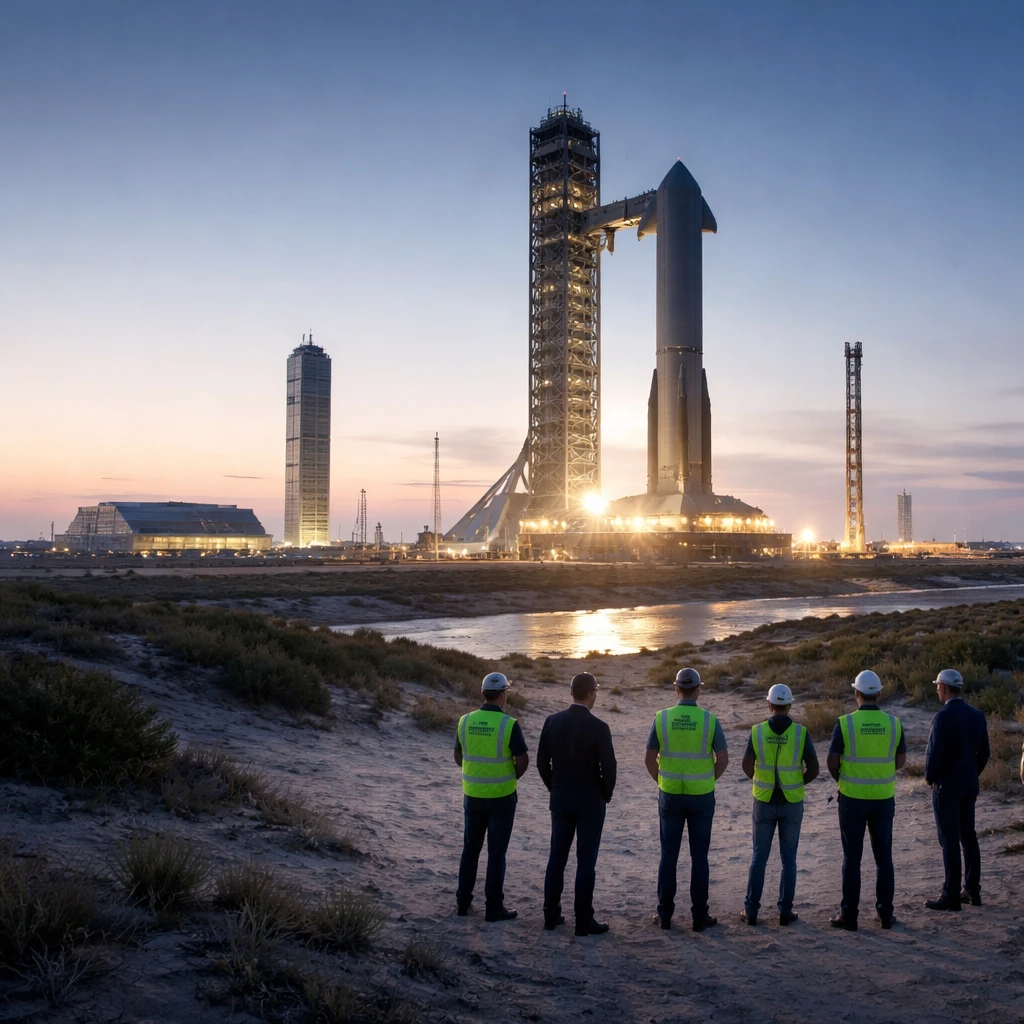
The filing also describes plans for outreach to Wall Street ahead of the offering. Company executives are scheduled to host three days of meetings for analysts, beginning with a tour and briefings at SpaceX’s Starbase launch facility in Boca Chica, Texas.
The excerpts reiterate that aspects of the financial disclosures had been reported previously by other outlets. SpaceX did not immediately respond to a request for comment on the filing.
This article presents the details contained in the confidential prospectus excerpts, including governance structure, executive roles, compensation figures, financial results for 2023-2025, capital expenditure trends, and planned analyst events as stated in the filing.