
Stock Markets April 21, 2026 11:39 PM

Nvidia Seeks 800 V DC Designs from South Korean Power Makers for Data Centers

Company pushes for higher-voltage direct current architecture to cut cable bulk and copper use, while compatibility with existing facilities remains a hurdle

By Leila Farooq NVDA
Nvidia Seeks 800 V DC Designs from South Korean Power Makers for Data Centers
NVDA

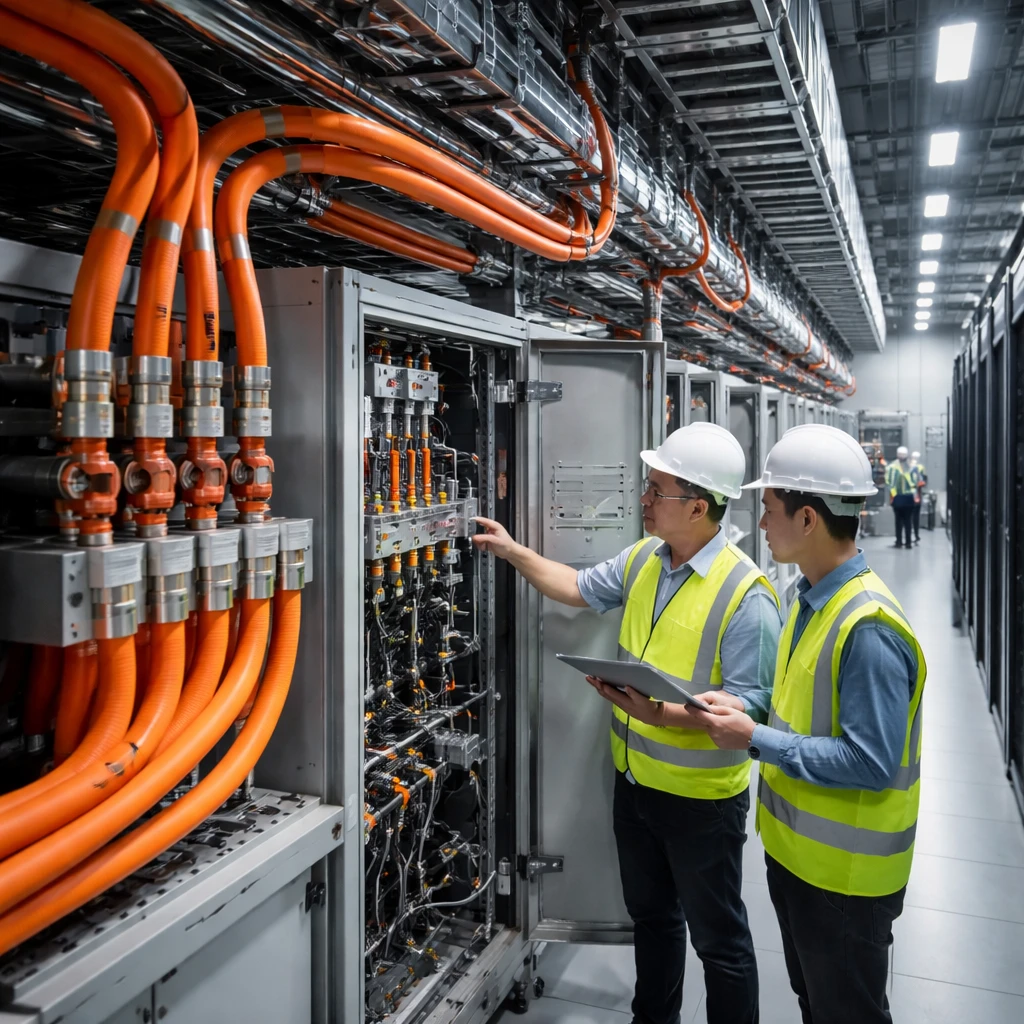
Nvidia has approached major South Korean power equipment firms to explore data center infrastructure built around 800 volt direct current (DC) distribution, part of a broader effort to improve power efficiency in facilities that host its processors. The proposal would replace multiple AC-to-DC conversion stages with a single high-voltage DC feed, reducing current, copper consumption and cable bulk compared with current 54 V systems. South Korean suppliers are potential partners, although it is not clear which companies have been contacted, and compatibility with existing infrastructure is a central challenge.

Key Points

  • Nvidia has requested power equipment makers design data center systems around 800 V DC to improve distribution efficiency.
  • The shift to a single DC conversion is intended to cut current, copper use, and cable bulk compared with existing 54 V systems.
  • Potential South Korean partners include Hyundai Electric & Energy Systems, LS Electric, and Hyosung Heavy Industries; Samsung and SK Hynix remain important memory suppliers to Nvidia.

Nvidia has initiated discussions with leading South Korean manufacturers of power equipment to explore the design of data center electrical systems operating on 800 volt direct current (DC), according to industry accounts reported by a Korean outlet.

The push for an 800 V DC architecture would move away from the multiple-stage grid-to-processor conversion used in many current data centers. Nvidia proposes a single DC conversion point that would distribute higher-voltage power across a facility, a configuration the company says lowers current, reduces copper usage and decreases cable bulk when compared with the prevailing 54 V data center systems.

Company commentary included in public materials highlights those efficiency gains, but industry sources note the primary technical and commercial obstacle is ensuring that any new 800 V approach can operate alongside or replace existing infrastructure without creating prohibitive integration challenges.

It was not immediately clear which specific South Korean equipment makers Nvidia has approached. The story identified several likely candidates that are active in new energy and infrastructure projects, naming Hyundai Electric & Energy Systems Co Ltd, LS Electric, and Hyosung Heavy Industries Corp as potential partners, while noting that direct confirmation of talks was not available.

South Korea figures prominently in Nvidia's supply chain for other reasons as well. The company relies heavily on local memory chip supplies from Samsung Electronics Co Ltd and SK Hynix Inc, underscoring the country’s role in supporting Nvidia’s data center ecosystem.


Context and implications

  • The 800 V DC proposal is presented as part of a wider global initiative by Nvidia to make data center power distribution more efficient by minimizing conversion stages and associated material and thermal burdens.
  • Potential South Korean collaborators are already engaged in building energy infrastructure, though the report did not confirm which firms are in direct negotiation with Nvidia.
  • Compatibility with installed systems is identified as a key issue for any transition to higher-voltage DC distribution in operational data centers.

As discussions reportedly continue, stakeholders in data center design, power-equipment manufacturing, and semiconductor supply chains will be watching developments closely to see whether an 800 V DC model gains traction and how integration challenges are addressed.

Risks

  • Compatibility with existing data center infrastructure - the report identifies integration with current systems as a key issue, affecting data center operators and power-equipment vendors.
  • Uncertainty over which firms are engaged - it was not immediately clear which South Korean companies Nvidia has actually approached, creating ambiguity for suppliers and investors.
  • Supply-chain dependence - Nvidia’s reliance on South Korean memory chip suppliers is noted, highlighting exposure in the semiconductor supply chain.

More from Stock Markets

SK Hynix Commits 19 Trillion Won to New Advanced Packaging Fab to Expand AI Memory Capacity Apr 22, 2026 OpenAI Weighs Up to $1.5 Billion Commitment to PE-Backed AI Deployment Venture Apr 22, 2026 Asian Equities Slip as Tech Pulls Back; Japan's Nikkei Climbs to New Peak Apr 22, 2026 Yesway's U.S. IPO Raises $280 Million, Valuing Convenience Chain at $1.21 Billion Apr 22, 2026 Yesway Prices IPO at $20 a Share for 14 Million Class A Shares Apr 21, 2026