
Introduction
Armed attacks and targeted violence inside Syria have driven many people to seek refuge in Europe, but a marked tightening of asylum decisions in 2025 has left thousands of applicants without protection. Several applicants from minority communities - Alawite, Druze, Kurdish, Christian and Shia - say their claims were dismissed despite accounts of direct threats, theft and killings. Government statements and asylum decision documents show a significant rise in negative outcomes for Syrian applicants this year as European states reassess the security situation in Syria following the fall of the previous regime and the rise of a new administration under President Ahmed al-Sharaa.
Personal Accounts and Initial Applications
One family at the centre of this debate fled after armed men burst into their apartment in the coastal city of Jableh on March 7 last year. The attackers forced the 20-year-old student Mohamad and his father to lie face down while they took cash and belongings. Terrified by that incident and a wider pattern of killings targeting Alawites after the change in national leadership, the family left their home, according to the account provided by Mohamad. After moving between houses for nine months to avoid further targeting, Mohamad and his uncle Salman travelled to Amsterdam on tourist visas and applied for asylum on arrival. Their claim was rejected within weeks, documents showed, on the grounds that they were not individually assessed as being at personal risk.
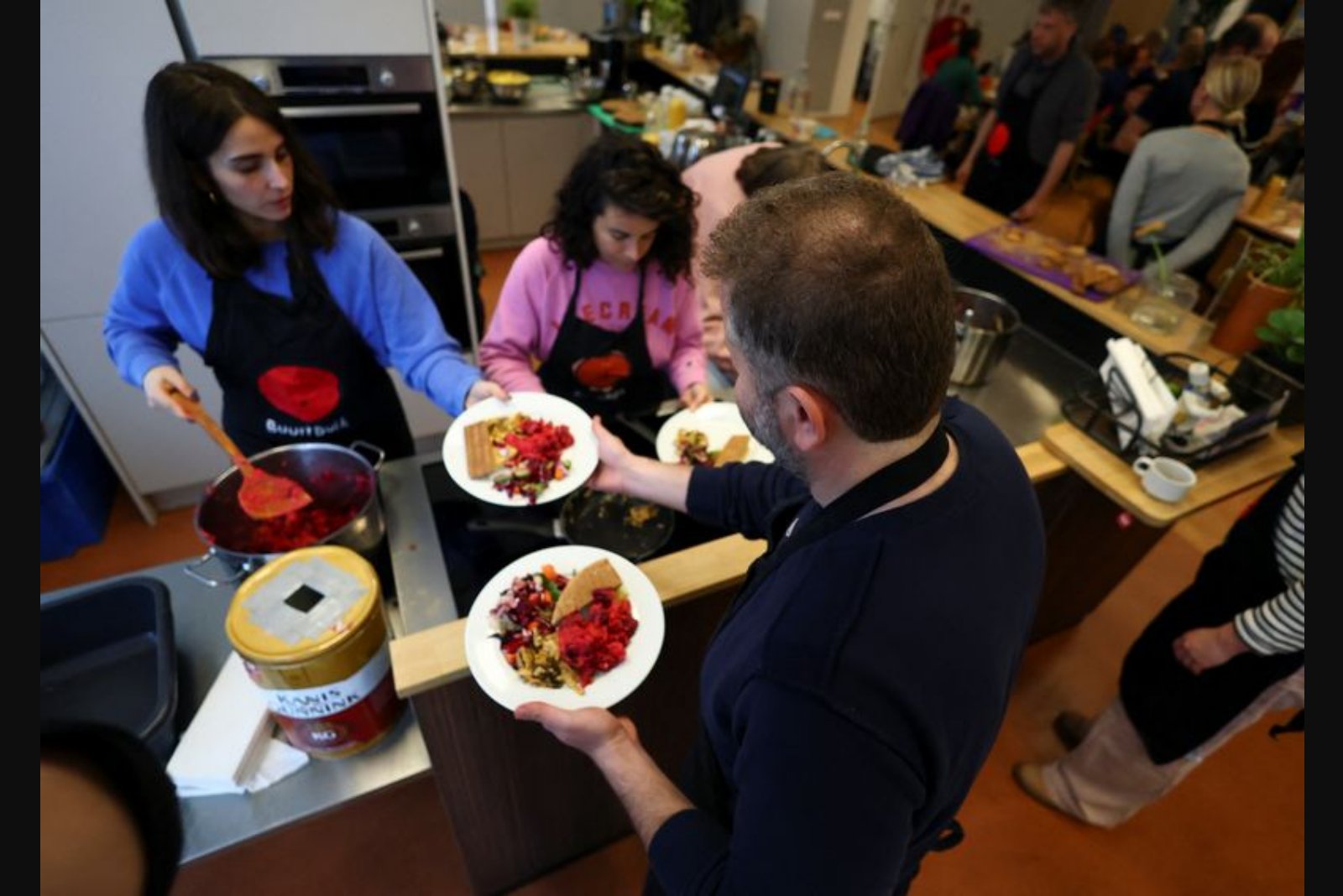
Mohamad, who requested that only his surname be used to avoid possible reprisals against relatives remaining in Syria, described the impact of the attack on his family. His father, a doctor, is unable to work; his 18-year-old sister no longer attends school; and Salman’s wife quit her job and relocated for safety while caring for their nine-year-old daughter who has been having panic attacks. Mohamad has since taken up boxing and both he and Salman volunteer in Amsterdam, preparing and distributing food for people experiencing homelessness while they await the outcome of an appeal against their rejection.
Statistics and Trends in Decisions
Across 2025, asylum decision statistics show a steep rise in negative outcomes for Syrian applicants. The European Union Asylum Agency reported that 27,687 of 38,407 Syrian asylum decisions in 2025 were negative. That results in a roughly 28% success rate for Syrian applicants this year, a sharp fall from about 90% in 2024. At the same time, the success rate for all nationalities at first instance across the EU, Norway and Switzerland dropped to 29% in 2025 from 42% the year before, with the reduction largely driven by fewer positive decisions on Syrian applications. In February 2025, only 19% of Syrian applications were successful.
The drop in approvals has coincided with procedural rationales cited in many decisions - for example, applicants who previously sought asylum in another EU country, withdrawals of claims, or a failure to provide detailed personal evidence of risk. It was not possible to determine how many of the failed claims were from minorities broadly. However, a review of interviews, decision files and claims in Britain, France, Germany and the Netherlands identified 18 specific rejections involving individuals or families from Syrian minority groups that have reported facing persecution since the new government took power. The review also identified cases in which minorities were granted protection, including an Alawite in the Netherlands and a Christian in France.
Policy Shifts and Official Positions
European nations have increasingly signalled that asylum is not automatically justified for Syrians now that a new government is in power. Some countries are preparing or planning for repatriations. Before the change in leadership in December 2024, Syrians were commonly eligible for protection because widespread violence and mandatory military service made return dangerous. New European guidance on Syrian claims, released in December, recognises that Alawites, Druze and Kurds can face persecution, but stresses that each case must be judged individually to determine the level of risk.
"The problem is how (the guidance) is being used. Some governments appear to be translating 'changed circumstances' into a presumption of safety that the evidence does not support - especially for minority groups," said Nando Sigona, professor of International Migration and Forced Displacement at the University of Birmingham. "The speed of the shift suggests this is not just a legal reassessment, but part of a broader move toward a more restrictive reading of refugee protection across Europe," he added, while noting that the EU's guidance on Syria emphasised continued instability.
Domestic politics have shaped this trend. Anti-immigration rhetoric, bolstered by historical migration waves such as the arrival of over a million people mainly from Syria in 2015, has strengthened right-wing and nationalist parties. This has led several governments to pursue stricter migration policies focused on deterrence and returns. In the Netherlands, Ulysse Ellian, a lawmaker with the right-wing VVD party in the governing coalition, told officials that certain Syrians from minority groups can now safely return. "To create space in the asylum system again, and to reduce the need for emergency shelters in the Netherlands, it is therefore crucial that Syrians return," he said.
Legal and Administrative Reasons for Rejections
Authorities have frequently cited a lack of specific personal evidence of risk or inconsistencies in accounts as reasons for denial. Lawyers and advocates representing applicants say that broad descriptions of threats without detailed corroborating evidence are often judged inadequate. In the cases reviewed, rejections commonly referenced insufficient proof that an applicant would be singled out for persecution, general or inconsistent accounts, or that the applicant came from areas deemed not to be affected by targeted violence against their minority group.
Claire Mayne, lawyer for the Mohamad family, said that even groups the Dutch asylum system currently recognises as at risk, such as Alawites and LGBTQ+ people, are increasingly being refused protection. "We see authorities trying to find enough reasons to reject people," she said.
In Germany, the Federal Office for Migration and Refugees rejected the asylum claim of Rana Izouli, a Kurdish woman who fled fighting in northeastern Syria in 2023 and applied for asylum in Germany in April 2024. Her claim was denied in December on the basis that there were insufficient reports about how the new government treated Kurdish men and women, and because her region remained under Kurdish administration at the time of assessment. While minorities in Germany received protection at higher rates than Syrians overall, the majority of minority applicants were also refused: success rates for Alawites were 20%, for Druze 9.1% and for Kurds 11.8% in Germany last year.
Officials in several countries have provided limited commentary. Germany's interior ministry did not issue a statement on the rejection rates but confirmed that the Federal Office had resumed interviewing Syrians. Britain's Home Office said it had resumed processing Syrian applications and that decisions are made on a case-by-case basis. The interior ministries in France and the Netherlands did not respond to requests for comment for these specific cases. A spokesperson for the French asylum agency OFPRA said about 85% of Syrian applicants were granted protection in 2025. The Dutch Immigration and Naturalisation Service declined to comment on individual cases but noted that roughly 7% of Syrian asylum seekers were granted protection in 2025.
Frozen Claims and Family Consequences
Some applicants have had their claims put on hold as authorities reassess the broader situation in Syria. One such case is Emad Obeid, an illustrator from Sweida and a member of the Druze community who arrived in the Netherlands in 2023 and filed for asylum in February 2024. His case was frozen while officials reconsidered the situation after the change in power. In July last year, maternal cousins of Obeid were killed during clashes between Druze and Bedouin fighters. Obeid said he felt betrayed, describing his disappointment and anger that the revolution he supported had given way to violence that had destroyed his city and taken the lives of family and friends. He also said his wife and two children in Sweida limit their movements after 6 p.m., and that his 18-year-old son cannot attend university because of fear of discrimination.
In its reasoning for freezing his claim, the Dutch immigration authority noted that Druze were not automatically regarded as a risk group in the same way as Alawites, and concluded that Obeid had not demonstrated he would face personal risk if returned. The agency declined further comment on his specific case.
Official Syrian Statements and Human Rights Observations
Syria's Ministry of Information has responded to international scrutiny by asserting that the government is committed to protecting all communities and does not condone attacks on civilians. The ministry also said it is working to bring all armed forces under central control and that officers responsible for violations are held accountable, while rejecting claims of sectarian discrimination, including in education. It acknowledged that abuses by state-affiliated individuals did occur in the context of long-standing local tensions and external interference.
Fionnuala Ni Aolain, commissioner on a U.N. inquiry regarding Syria, said that while some progress has been made on human rights reform under President Sharaa, significant tensions persist. "There’s still significant insecurity and the eruption of violence last year, the coastal violence, Sweida, the northeast - all of this is indicative of some structural questions, like does the state control all of its forces and will it hold commanders accountable?" she said.
Broader Consequences and the Path Ahead
Rights organisations and academics have warned that the failure of so many Syrian asylum claims has left many people in legal limbo. Many applicants fled Syria before the fall of the previous leader and have since established lives in European countries. These rejections create uncertainty for families and may curtail opportunities for work, education and integration. Officials argue that individual assessments remain the standard and that decisions are not arbitrary but based on case-by-case evaluations. "These decisions are not arbitrary. They are based on case-by-case evaluations," European Commissioner Magnus Brunner said, while also describing the situation in Syria as "highly challenging."
For applicants like Mohamad and Salman, the human consequences are immediate. Both men said they feared returning to Syria - Salman called the prospect "like committing suicide" - and they hold on to the hope that an appeals judge will reverse the initial decision. Meanwhile, some governments continue to push for returns as a way to alleviate pressure on asylum systems and emergency shelters, while lawyers and rights advocates argue that such policies risk overlooking continued instability and targeted threats within Syria.
Conclusion
The shifting approach to Syrian asylum claims in Europe highlights the tension between national migration policy priorities and the complex, uneven realities on the ground in Syria. While official guidance recognises particular vulnerabilities among some minority groups, the application of that guidance and the evidentiary standards used by states are shaping outcomes that leave many applicants - including those who recount harrowing personal experiences of violence and loss - without recognized protection. As appeals proceed and policies continue to evolve, the fate of thousands of Syrians in Europe remains uncertain.
Reporting includes review of decision files, interviews with asylum seekers and legal representatives, and related documentation.