
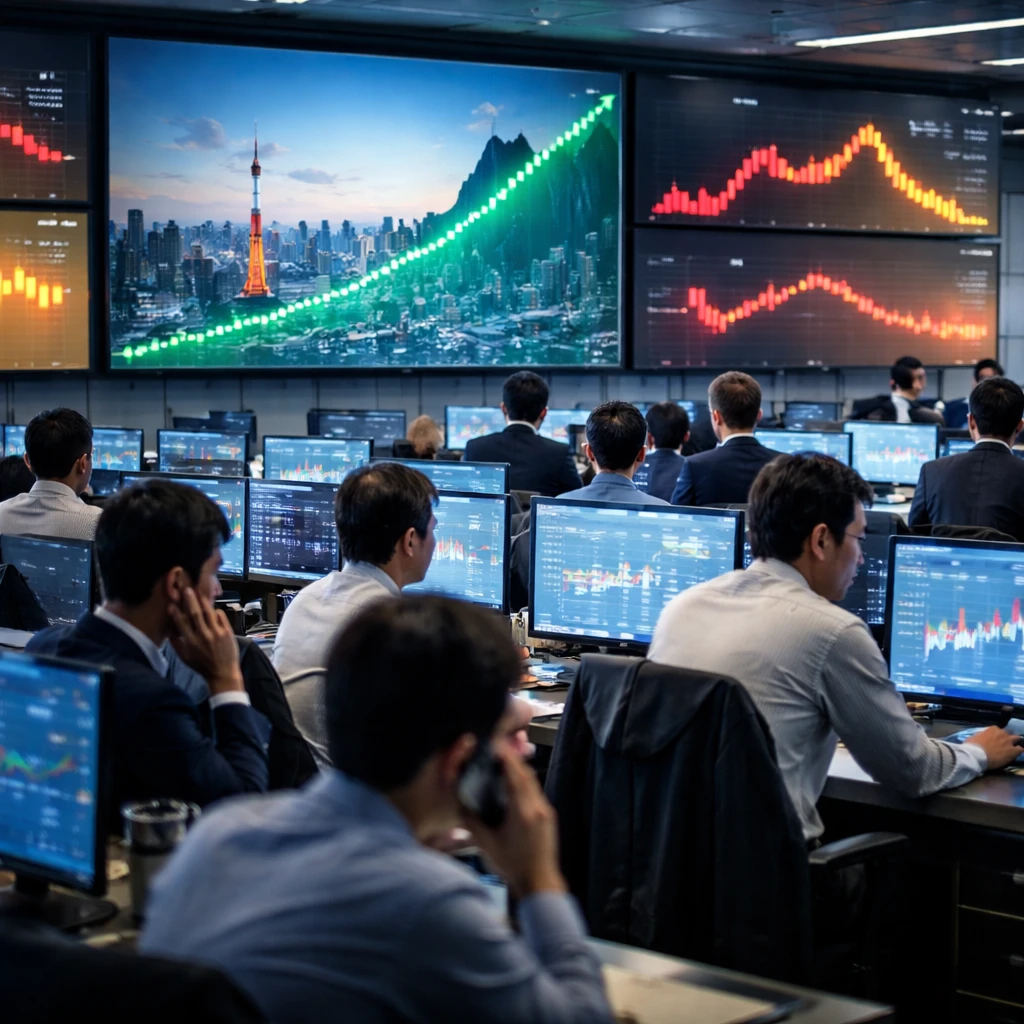
Asian stock markets were subdued on Wednesday as weakness in technology shares offset a record-setting session in Japan, while investors assessed the market implications of U.S. President Donald Trump extending a ceasefire with Iran.
Market snapshot
In Asian trading, U.S. stock index futures moved higher following the announcement of the ceasefire extension, although Wall Street had ended lower overnight. Technology sectors took the brunt of selling pressure after overnight softness on U.S. exchanges and profit-taking in high-growth areas.
South Korea's KOSPI slipped 0.3% after having reached record highs in the previous session. Hong Kong's Hang Seng fell 1.4%, with the Hang Seng TECH sub-index dropping 2% amid sector-wide weakness.
Japan posts record Nikkei while other benchmarks diverge
Japan's Nikkei 225 rose 0.5% to a record 59,708.21 points, even as the broader TOPIX index eased 0.7%. Official trade data for March showed exports increased 11.7% year-on-year, marking a seventh straight month of expansion and surpassing expectations for an 11% rise. Imports climbed 10.9%, also beating forecasts, a reflection of resilient domestic demand and higher energy costs.
Regional performance and drivers
China's Shanghai Composite and the blue-chip Shanghai Shenzhen CSI 300 each advanced 0.2%. Elsewhere in the region, Australia's S&P/ASX 200 fell 1%, Singapore's Straits Times Index edged 0.4% lower, and India's Nifty 50 dropped 0.5%.
Analysts noted the market reaction to the U.S. decision to extend the ceasefire was limited, as many investors had anticipated the move. That muted response left markets cautious while participants awaited clearer signals on whether Iran would accept the extension, whether negotiations would resume, and when critical energy routes such as the Strait of Hormuz might see reduced disruption.
Policy and political attention
Investor attention also shifted to Washington, where Federal Reserve chair nominee Kevin Warsh testified before lawmakers. In his remarks, Warsh stressed the importance of central bank independence and stated he had made no promises to President Donald Trump about cutting interest rates.
Together, geopolitical developments in the Middle East and testimony from a key U.S. central bank nominee helped keep sentiment in check across Asian bourses despite pockets of strength, most notably in Japan's market.