
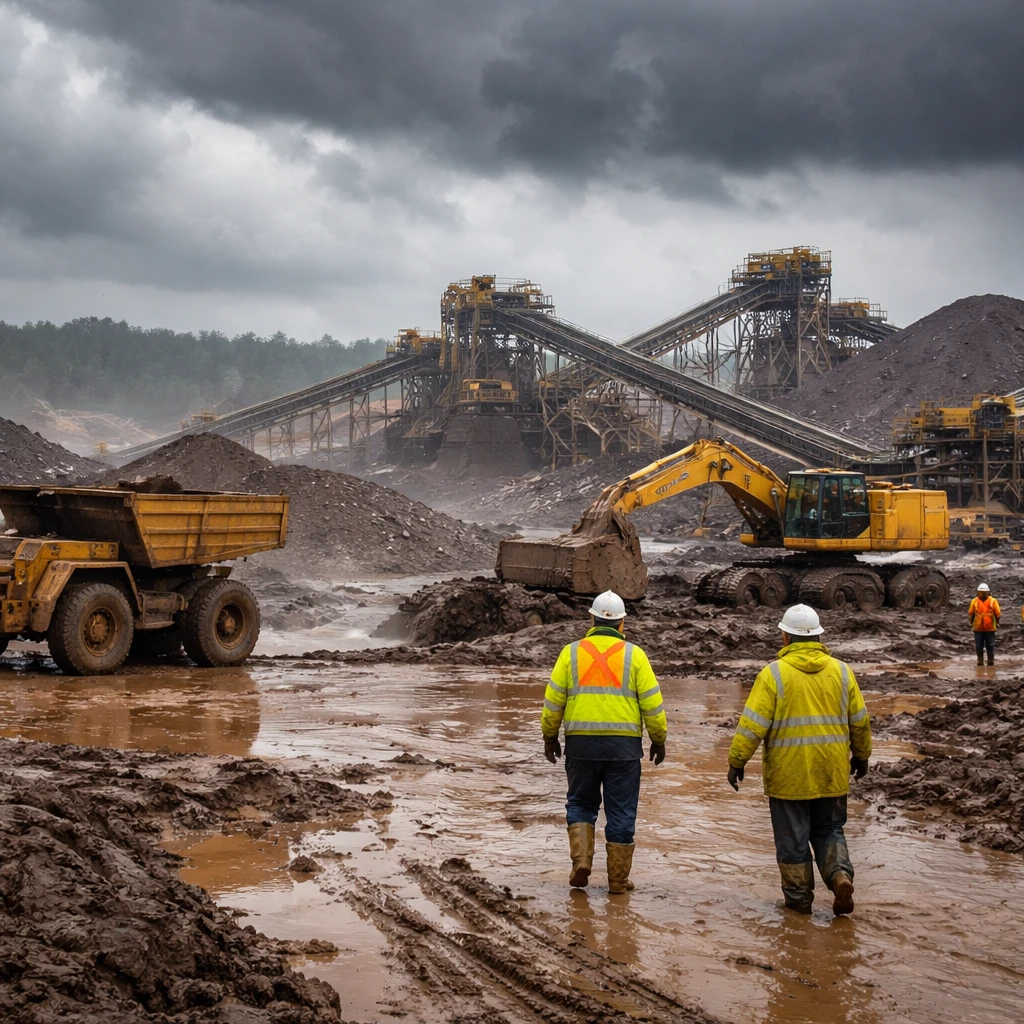
South32 announced a reduction to its full-year production forecast for its Australia Manganese business, citing disruption from wet-season rainfall and the impact of Tropical Cyclone Narelle on operations.
The diversified miner now projects fiscal 2026 production for the Australia unit at 3 million wet metric tons (wmt), a decline of more than 6% compared with its prior forecast. The company pointed to the combination of seasonal rainfall and cyclone-related interruptions as the reasons for adjusting guidance.
In March, Tropical Cyclone Narelle affected activity at the Gemco manganese mine in the Northern Territory, contributing to the operational challenges that prompted the downgrade. South32 identified the cyclone as a cause of disruption at that site, which is part of its Australia Manganese operations.
Despite the disruption that led to the lowered annual outlook, third-quarter production showed increases on a year-on-year basis. Australia Manganese reported output of 589,000 wmt in the March quarter, up from no production in the same quarter a year earlier. At the same time, South African manganese production rose to 500,000 wmt in the March quarter from 476,000 wmt a year earlier.
The company’s revision reflects the direct operational effects from weather events on the Australia unit, while performance in other manganese-producing regions, such as South Africa, recorded modest quarterly gains.
Summary of reported figures and operational notes:
- Revised fiscal 2026 guidance for Australia Manganese: 3 million wmt, down more than 6% from the previous forecast.
- Operational disruption at Gemco mine in the Northern Territory linked to Tropical Cyclone Narelle in March.
- March quarter output: Australia Manganese 589,000 wmt (up from zero in the prior-year quarter); South African manganese 500,000 wmt (up from 476,000 wmt).
The information reported by the company highlights how seasonal weather patterns and cyclonic events have an immediate operational impact on mining output, which in turn can necessitate revisions to annual guidance. Where production is affected by adverse conditions, companies may adjust their outlooks to reflect the reduced throughput recorded during the period of disruption.