
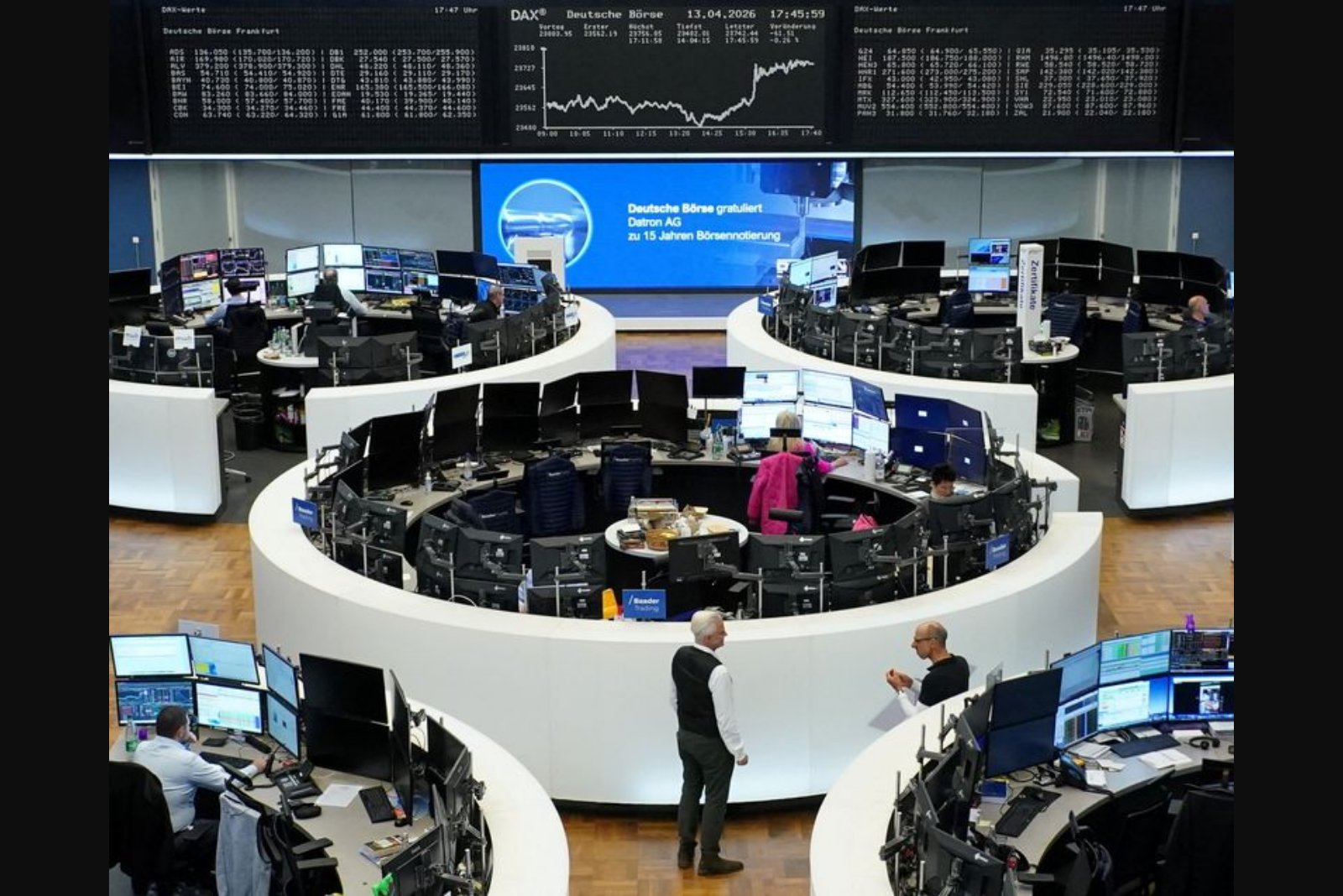
European stock indices edged up on Thursday as markets responded to signs of progress in Middle East diplomacy and parsed a stream of corporate earnings across the region.
By 0711 GMT the pan-European STOXX 600 was trading 0.3% higher at 618.96 points. Major national benchmarks also advanced, with France's CAC up 0.2% and the FTSE 100 in London adding 0.3%.
Investor optimism about a possible easing of hostilities increased after U.S. President Donald Trump said talks between Israel and Lebanon would take place on Thursday. In addition, the Financial Times reported that a ceasefire could be announced soon, citing Lebanese officials. Those developments supported a cautious pickup in risk appetite across European markets.
At the same time, the corporate earnings season remained a central focus for traders and analysts. Companies reporting results this week are providing fresh data points on revenue and demand trends as geopolitical uncertainty persists.
Sectors and movers
- Technology stocks led the sector performance, rising 1.3% overall.
- The travel and leisure sector underperformed, slipping 1% as the conflict and energy cost concerns likely weighed on the segment.
- Telecommunications names fell 0.5% for the session.
On an individual basis, Barry Callebaut registered a sharp decline of 8.2% after the Swiss chocolate manufacturer said it sold fewer cocoa products in the first half of its financial year, attributing the drop to weak demand and an oversupplied market.
Overall, the STOXX 600 is on track to recover all of the declines it suffered since the outbreak of the conflict, supported by improving investor sentiment tied to the diplomatic developments. However, market participants remain mindful of how higher oil prices could influence European economies that depend heavily on energy imports - a factor that has contributed to European equities underperforming their U.S. counterparts.
Outlook
Markets entered Thursday balancing the potential positive impact of diplomatic progress with the ongoing readout from company earnings. Sector performance was mixed, reflecting both renewed risk appetite and persistent economic vulnerabilities linked to energy costs.