
Summary
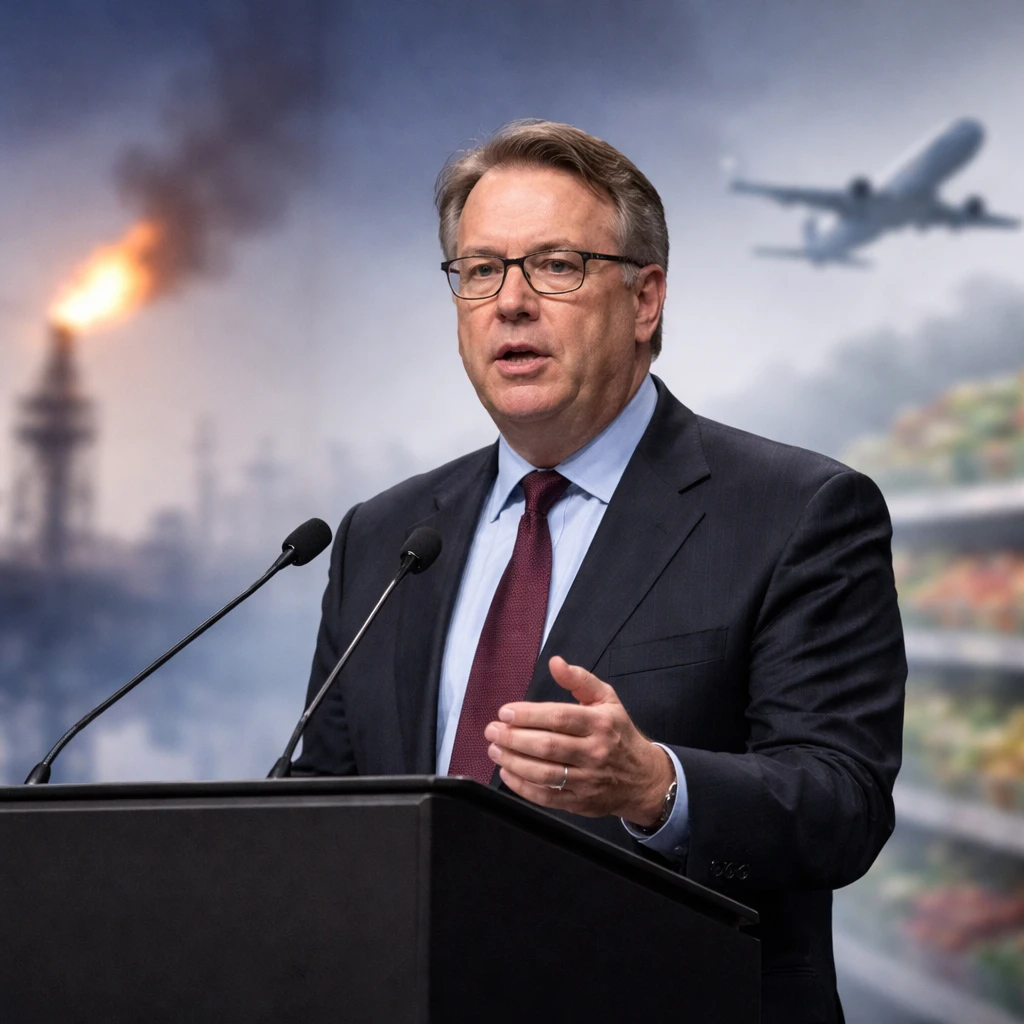
Federal Reserve Bank of New York President John Williams said the conflict in the Middle East is exerting upward pressure on inflation and that those effects are already becoming visible in prices across the economy.
Speaking at the Federal Home Loan Bank of New York 2026 Member Symposium, Williams said, "Developments in the Middle East are driving significant increases in energy prices, which are already lifting overall inflation." He outlined channels through which higher fuel costs and disruptions are arriving in consumer-facing prices.
Williams highlighted evidence that supply-chain problems and elevated fuel prices are filtering through to a range of items. He pointed to rising airfares, grocery bills, fertilizer costs, and other consumer products as examples where the pass-through is apparent.
"If the disruptions end swiftly, energy prices should wane," Williams said. "But if the war continues for longer, the conflict could also result in a large supply shock with pronounced effects that simultaneously raises inflation - through a surge in intermediate costs and commodity prices - and dampens economic activity."
On the outlook, Williams provided numerical projections that keep to the Fed's view of a temporary uptick in inflation. He said inflation is likely to rise to between 2.75% and 3% this year, before easing back to the 2% target in 2027. His labor market and growth forecasts call for unemployment to remain between 4.25% and 4.5% this year and for economic growth to come in between 2% and 2.5%.
Williams reiterated the Fed's determination to return inflation to target, saying monetary policy is well positioned to navigate the trade-offs between maximum employment and price stability amid an unusual combination of risks.
The Fed maintained its policy rate target at its mid-March level of between 3.5% and 3.75%. The central bank's next policy meeting is scheduled for April 28-29, and the Fed is not expected to change its interest rate setting at that meeting.
Key takeaways
- Williams attributes a recent rise in inflationary pressure to the Middle East conflict and associated energy price increases.
- Supply-chain disruptions and higher fuel costs are appearing in prices for air travel, groceries, fertilizer, and other consumer goods.
- Projections given by Williams: inflation 2.75%-3% this year, returning to 2% in 2027; unemployment 4.25%-4.5% this year; growth 2%-2.5%.
Context on policy
Williams emphasized the Fed's commitment to bringing inflation back to target and said the central bank's current interest rate stance is positioned to weigh the competing risks to employment and price stability. The Fed's target range for its policy rate remains 3.5%-3.75% following the mid-March meeting.
Note: This report reflects the remarks and projections provided by John Williams at the stated symposium. It does not introduce additional data or speculation beyond those comments.