
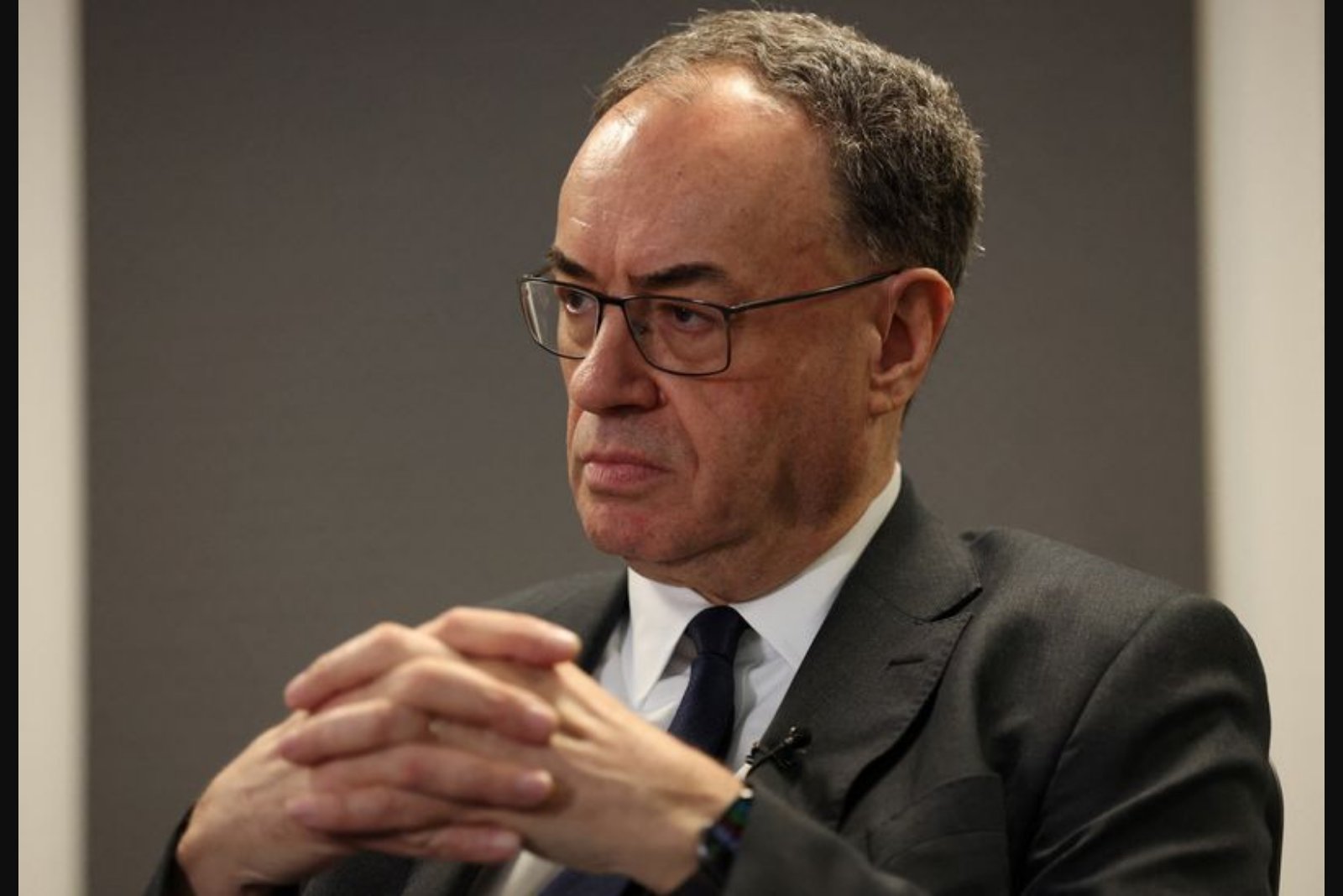
LONDON, April 16 - Bank of England Governor Andrew Bailey told BBC News that the central bank will not rush into decisions about raising interest rates, citing significant uncertainty around how recent increases in oil and gas prices will feed through to inflation and the wider economy. Bailey made the remarks while attending the International Monetary Fund's spring meetings in Washington.
Bailey said higher oil and gas prices would "certainly feed through to prices," but he added that a range of other considerations made a decision on policy "very, very difficult," according to the BBC report. "There’s really difficult judgements to be made," he said. "We’re not going to rush to judgements on those things, because there are a lot of uncertainties around this, not just how it’s going to play out, but also how it’s going to pass through into the UK economy."
The IMF on Tuesday lowered its global growth forecast, attributing the downgrade to energy price spikes and supply disruptions stemming from the Iran war. The fund warned that a wider conflict, combined with oil sustaining levels above $100 per barrel through 2027, could drive the global economy close to recession. Among advanced economies, Britain experienced the sharpest downgrade in the IMF's assessment.
Bailey's caution was mirrored by European Central Bank policymaker Alexander Demarco, who also urged patience and warned that policymakers should not rush decisions. Demarco acknowledged that the euro zone economy may be drifting towards the ECB's adverse scenario, underscoring how energy-related shocks have tilted assessments of near-term prospects.
The remarks from both central bankers underline a broadly cautious stance at a time when policymakers must weigh competing signals. The IMF recommended that central banks convey an objective to "protect price stability, but don’t rush," a line echoed in the public comments by Bailey and Demarco.
Separately, Bailey noted that in March, when the Bank of England left rates unchanged, financial markets appeared to be pricing in prospective rate increases ahead of the central bank. The Bank of England's next formal interest rate decision is scheduled for April 30.
Summary
Bank of England Governor Andrew Bailey said he will not hasten decisions on interest rate rises as rising oil and gas prices from the Iran war create uncertainty about inflation pass-through to the UK economy. The IMF has cut its growth outlook and cautioned that sustained high oil prices could push the global economy to the brink of recession. An ECB policymaker made similar remarks urging patience.
Key points
- BoE Governor Andrew Bailey said he will not "rush to judgements" on rate increases amid uncertainty over energy-driven inflation.
- The IMF reduced its global growth forecast, citing energy price spikes and supply disruptions tied to the Iran war, and warned about risks if oil remains above $100 per barrel through 2027.
- ECB policymaker Alexander Demarco also urged patience, noting the euro zone may be moving toward an adverse economic scenario.
Risks and uncertainties
- Unclear inflation pass-through from higher oil and gas prices - affects consumer prices and monetary policy decisions in the UK and euro zone.
- Possibility of a wider Iran war coupled with sustained oil above $100 per barrel through 2027 - poses downside risk to global growth and could pressure energy-exposed sectors.
- Market expectations that have priced in rate increases ahead of central bank moves - could lead to volatility if policymakers choose to delay hikes.