
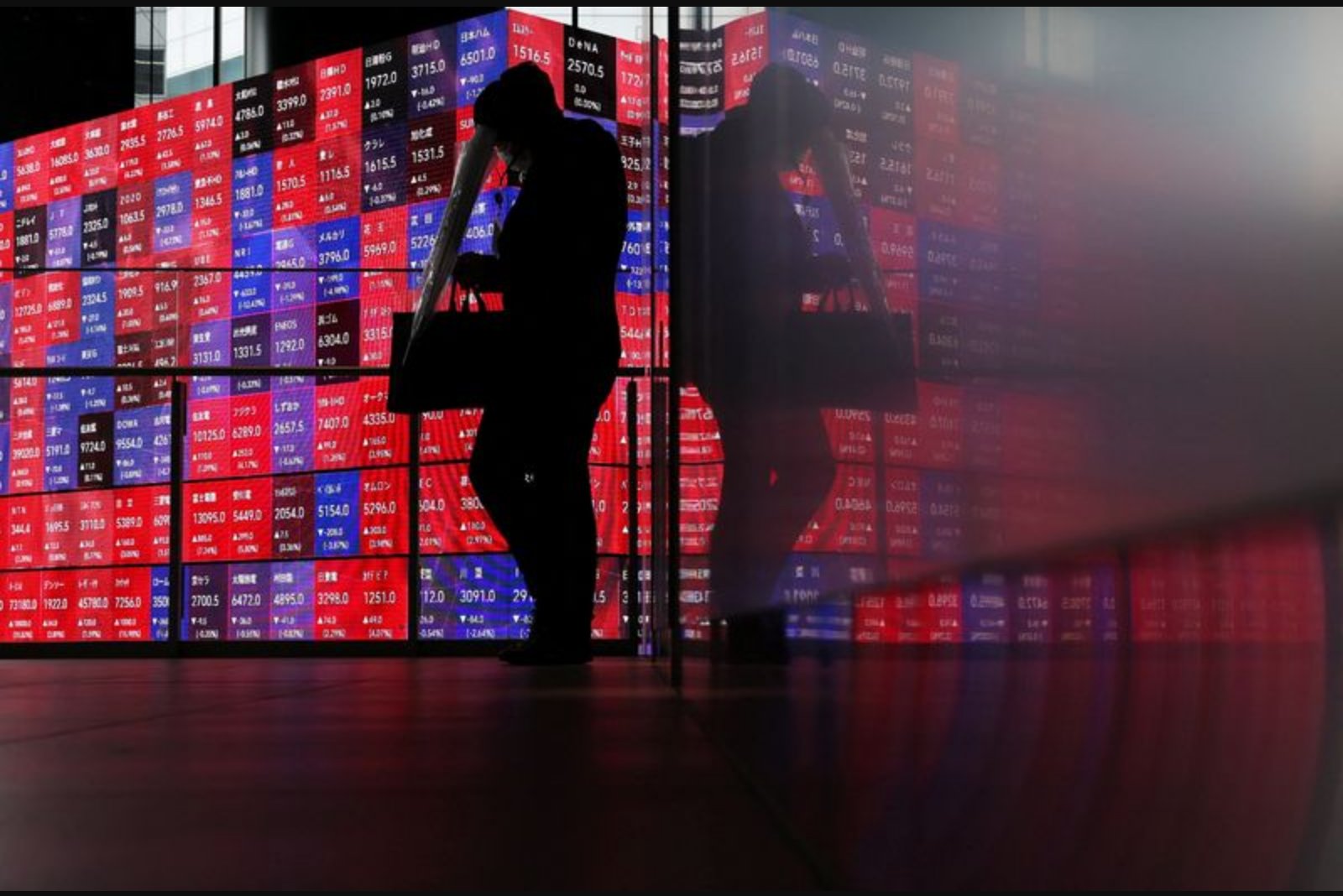
Asian equities traded near recent peaks on Tuesday while the dollar showed little movement as market participants digested continued geopolitical tensions in the Middle East and prepared for a week heavy with corporate results and central bank decisions.
U.S. officials continued to assess Tehran's most recent proposal to end the conflict, but a U.S. official said President Donald Trump was unhappy because the proposal did not address Iran's nuclear program. With that sticking point unresolved, the two-month-long confrontation remains in a stalemate and has left energy and other shipments through the strategically important Strait of Hormuz effectively stalled.
MSCI's broadest index of Asia-Pacific shares outside Japan slipped 0.12%, remaining close to the record high it reached on Monday. The index is set for a 17% increase in April after falling 13.5% in March.
In Japan, the Nikkei eased 0.5% after hitting a fresh record high in the prior session. In the United States, the S&P 500 recorded modest gains on Monday and was positioned for roughly a 10% advance for the month. U.S. stock futures were 0.1% higher during Asian trading on Tuesday.
Central banks in focus
This week brings a lineup of major policy meetings, with the Bank of Japan, the U.S. Federal Reserve, the Bank of England and the European Central Bank all scheduled to announce decisions. Market consensus is for policymakers to keep rates unchanged, but investors will scrutinize commentary for signals on how the war in the Middle East could influence inflation and future rate trajectories.
The Bank of Japan is widely expected to refrain from raising interest rates on Tuesday while softening its hawkish language to preserve optionality for future hikes if inflationary pressure stemming from the Middle East conflict intensifies. Attention is concentrated on the BOJ's quarterly outlook report and comments from Governor Kazuo Ueda for indications of how a drawn-out Iran conflict might alter the central bank's path for tightening.
The yen was quoted at 159.33 per U.S. dollar, keeping it close to the 160 level that has raised intervention concerns in Tokyo, as a move past that threshold might prompt authorities to act. The currency has largely traded around 159 since early March.
"The BOJ is likely to stay highly sensitive to market volatility," said Fred Neumann, chief Asia economist at HSBC. "Our base case remains one single 25 basis point hike this year in July, but a June rate rise becomes more likely if the Strait of Hormuz is still effectively closed after mid-May."
Currency and commodity moves
The euro held at $1.1725 while the dollar index, which measures the U.S. currency against six major peers, was at 98.452. The dollar benefited from safe-haven flows in March as the war began but relinquished most of those gains on hopes for a peace deal this month; it has steadied in recent days after U.S.-Iran negotiations stalled.
Oil prices continued to move higher on concerns over supply disruptions. Brent crude futures rose to $108.13 a barrel, approaching a three-week high, while U.S. West Texas Intermediate traded at $96.48. Oil remains significantly above levels prior to the outbreak of the war, though it has eased from the recent peak on hopes for a diplomatic settlement.
Analysts and traders note that the closure of the Strait of Hormuz - which normally carries about a fifth of global oil and gas shipments - poses a clear downside risk to supply and is a key driver of the elevated commodity prices and the inflationary pressure weighing on the outlook for global growth.
Tech earnings loom
Investors are also focused on an earnings stretch that will test whether heavy corporate investment in artificial intelligence is translating into commercial results. Results from major technology companies - Microsoft, Alphabet, Amazon, Meta Platforms and Apple - are due this week. The reports will be viewed as a real-time assessment of the AI-driven rally that helped lift markets in April.
Anthony Saglimbene, chief market strategist at Ameriprise, said the upcoming earnings will show whether AI spending is producing measurable revenue and profit outcomes. He added that the split between bullish equity momentum and more cautious signals from bond and oil markets underscores the importance of geopolitical developments in ongoing risk management.
Market commentary and trading signals
As markets await concrete directional cues from central banks and corporate earnings, traders remain sensitive to geopolitical headlines and commodity price swings. The combination of a narrow set of positive equity drivers and ongoing external risks has left investors balancing optimism on technology-led gains against the potential for renewed market volatility if the Middle East situation deteriorates further.
In the near term, central bank communications - particularly from the BOJ and comments from Governor Ueda - and the incoming tech results will likely set the tone for regional risk appetite, currency flows and commodity-linked inflation expectations.
Summary
Asian shares are near record levels while the dollar is subdued as investors weigh the stalemate in the Middle East, monitor central bank meetings and await earnings from major technology firms. The BOJ is expected to hold rates but provide forward guidance that keeps the option of future hikes open. Oil prices remain elevated amid supply concerns stemming from disruptions to shipments through the Strait of Hormuz.