
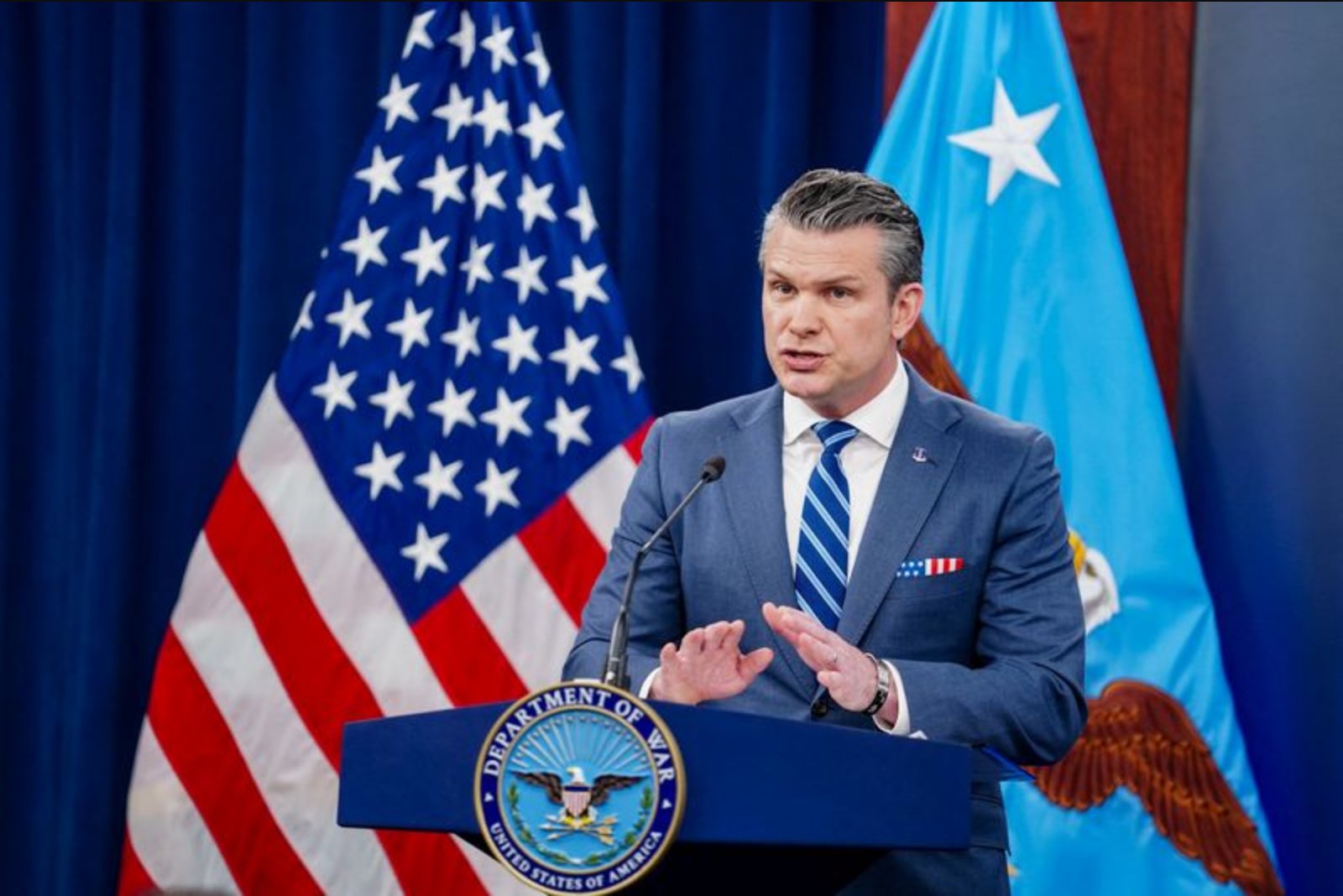
WASHINGTON, April 16 - U.S. military forces deployed in the Middle East are positioned to restart combat operations should Iran decline to accept a peace deal, Defense Secretary Pete Hegseth said at a Pentagon briefing on Thursday.
Addressing Tehran directly, Hegseth said: "You Iran, can choose a prosperous future, a golden bridge, and we hope that you do for the people of Iran," and added a cautionary note on the consequences of refusal: "But if Iran chooses poorly, then they will have a blockade and bombs dropping on infrastructure, power and energy."
As part of a campaign to pressure Iran into agreement, U.S. forces have implemented a maritime blockade covering all ships attempting to enter or leave Iranian waters, officials said. The measure is aimed at preventing movement of material support to Iran by sea.
At the briefing, General Dan Caine, chairman of the Joint Chiefs of Staff, described enforcement intentions in stark terms. "(We) will actively pursue any Iranian flagged vessel or any vessel attempting to provide material support to Iran," he said.
General Caine added that ships attempting to breach the blockade will be intercepted and given a warning: "If you do not comply with this blockade, we will use force." He stated that enforcement actions would take place both inside Iran's territorial seas and in international waters.
Key points
- U.S. forces are prepared to resume combat operations if Iran does not accept a negotiated peace agreement.
- A maritime blockade has been established to intercept any vessel entering or leaving Iran, with interception and potential use of force as enforcement measures.
- Officials warned that refusal by Iran could lead to strikes on infrastructure, including power and energy systems, elevating risks to those sectors.
Risks and uncertainties
- Potential for military escalation if Iran declines the proposed deal - a development that could affect regional security and military planning.
- Disruption to maritime traffic due to the blockade and interdiction activities - a risk to shipping and logistics in the region.
- Threats to infrastructure, power and energy assets if strikes are carried out as warned by U.S. officials - a risk to the energy sector and associated markets.
The statements from senior U.S. defense leaders frame the current posture as conditional: diplomatic acceptance would avert further military action, while rejection carries the risk of intensified operations, including maritime interdiction and strikes on specified targets. Officials emphasized both the geographic scope of enforcement - within territorial seas and on the high seas - and the explicit readiness to use force against vessels that ignore blockade orders.
Details on the terms of the proposed peace agreement were not provided at the briefing. Officials limited their comments to the conditions under which military measures would be continued or accelerated and the mechanics of enforcing the maritime blockade.