
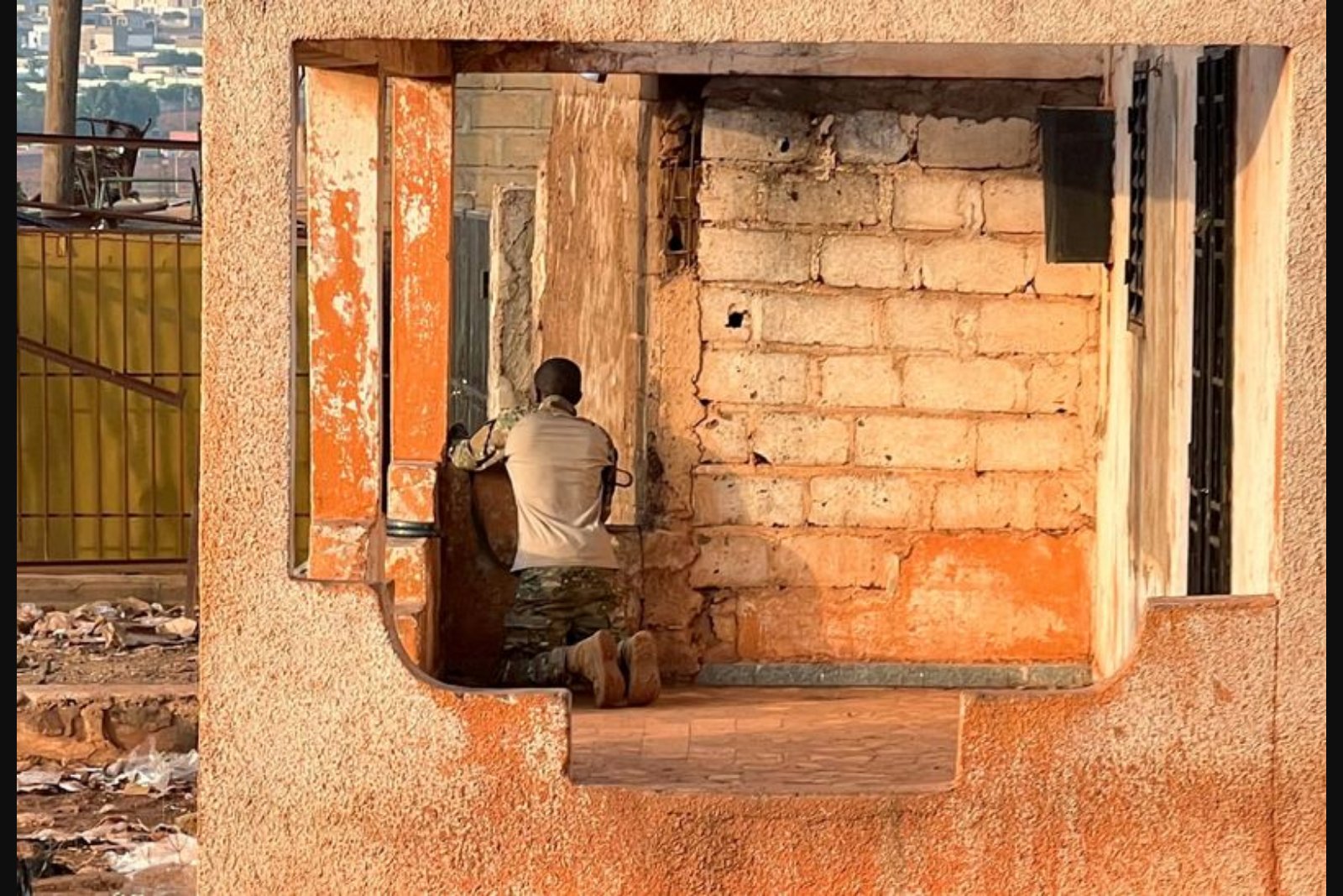
Sustained gunfire echoed through the garrison town of Kati, near Mali's capital, on Sunday, indicating that clashes were continuing into a second day despite official statements that the military had reasserted control, a witness said.
The outbreaks of violence followed a large set of coordinated strikes on Saturday attributed by insurgent groups to an al Qaeda affiliate and a Tuareg-dominated rebel movement. The United Nations responded by urging an international reaction to the surge of attacks and the broader pattern of terrorism affecting the West Africa Sahel region.
"The Secretary-General is deeply concerned by reports of attacks in several locations across Mali. He strongly condemns these acts of violence," a U.N. spokesperson posted on X.
The assaults were reported in and around the capital, in gold-producing zones and in multiple other parts of the country, and have been described by insurgent voices as among the most extensive operations mounted by militants in recent years. Exact numbers of casualties and injuries from the weekend's violence remained unclear on Sunday, and the status of the contested northeastern city of Kidal was disputed.
Government officials said the security situation was under control in all affected areas and that 16 people had been injured. Authorities also announced an overnight curfew that will last for three days.
On Sunday, the Azawad Liberation Front (FLA) - a Tuareg-dominated rebel group that has been active in uprisings against the central government for decades - said it had regained control of Kidal. An FLA spokesperson wrote on X that a deal had been reached to allow Russian mercenaries to depart from a besieged camp outside the city where Malian forces remained positioned.
The FLA said it had conducted the large-scale operation in coordination with Jama'at Nusrat al-Islam wal-Muslimin (JNIM), an organization linked to al Qaeda. JNIM also issued a statement claiming responsibility for attacks in Kati, at Bamako's airport and in northern and central areas including Mopti, Sevare and Gao. The claims by JNIM and the FLA could not be independently verified.
Saturday's raids follow other high-profile attacks in recent months that have highlighted the government's difficulty in restoring widespread security. In September 2024, JNIM struck a gendarmerie training school near Bamako airport, an assault that killed about 70 people. More recently, JNIM imposed a blockade on fuel imports that has left the capital's residents and businesses short of power and supplies.
Observers and officials have pointed to the broader strategic context in which Mali's current government, installed after coups in 2020 and 2021, has shifted security partnerships. The administration led by Assimi Goita has pursued closer ties with Washington, which has sought to rebuild cooperation on security and to explore mining-related opportunities.
Mali's foreign minister said on Monday that neighbouring states and unspecified foreign powers were supporting terrorist groups, but declined to identify the countries he had in mind.
As the situation develops, the persistence of fighting in towns close to the capital, contested claims over control of strategic locations such as Kidal, and the involvement of both local rebel formations and international fighters or mercenaries underscore multiple dimensions of uncertainty for security, civilian life and economic activity in Mali.