
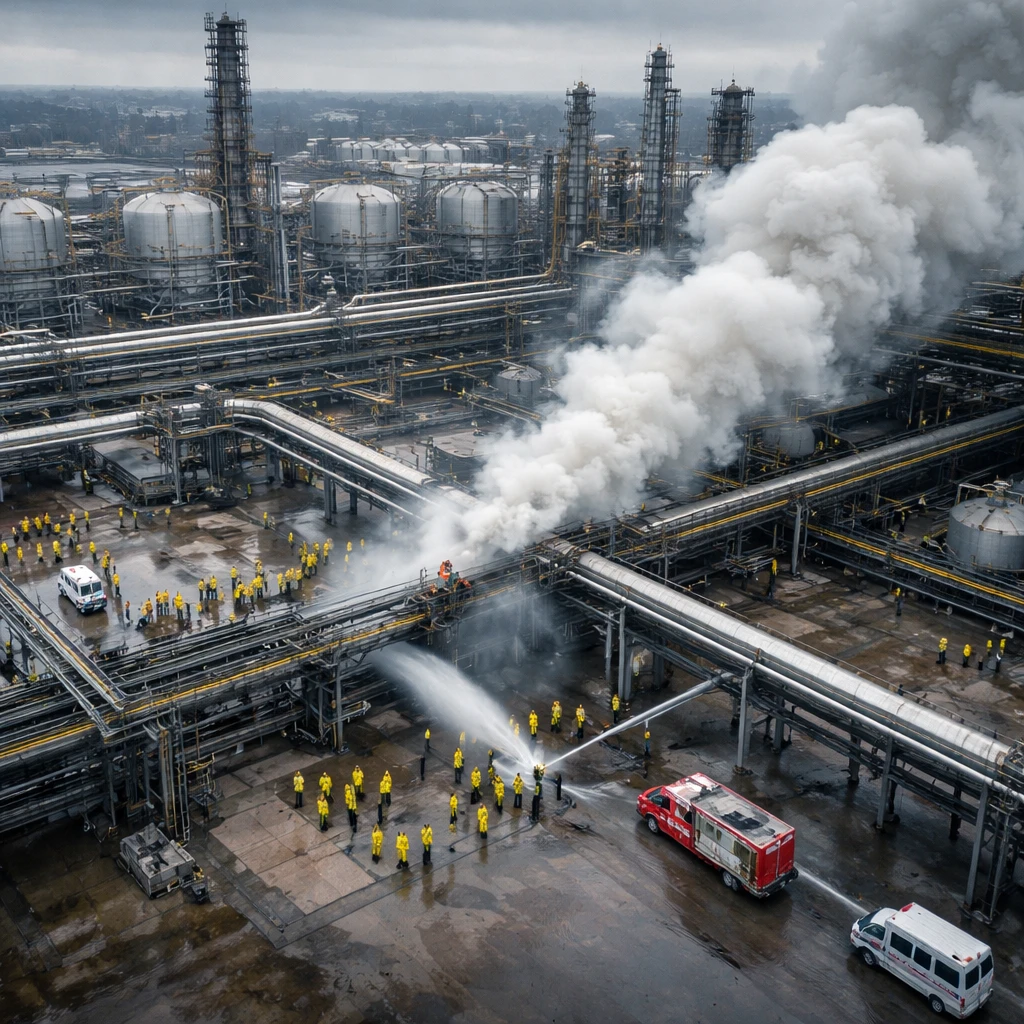
Ukraine has struck the Apatit JSC fertilizer complex in the Vologda region of northwest Russia, marking a second attack on the facility this month and drawing renewed attention to vulnerabilities in global fertilizer supply chains. The complex, owned by PhosAgro PJSC, sustained damage to a high-pressure sulfuric acid pipeline, regional officials said.
Georgy Filimonov, the regional governor, reported that the leak from the damaged pipeline was quickly controlled and that no hazardous chemicals escaped into the environment. The incident nevertheless left five workers injured; they were hospitalized following the attack.
The strike fits within a broader pattern of operations aimed at Russian production infrastructure. Ukrainian authorities have focused on exporters and industrial sites that underpin Moscow’s capacity to benefit from elevated commodity prices. By striking facilities linked to lucrative export sectors, Kyiv appears to be exerting pressure on elements of Russia’s commodities-driven economic resilience.
Market dynamics have already tightened noticeably. Global fertilizer prices have effectively doubled since the onset of the war in the Middle East, a development the article links to the continued closure of the Strait of Hormuz. The strait functions as a critical maritime chokepoint for approximately one-third of global seaborne fertilizer trade, and its effective shutdown has heightened sensitivity across markets to any additional supply disruptions.
Ukraine has also alleged that the Apatit plant provides materials that support Russian military operations by producing raw inputs for explosives. These claims have not been independently verified.
Beyond the single-site attack, the General Staff of Ukraine reported a large-scale overnight drone engagement that involved the launch of over 140 munitions across multiple locations. Such coordinated strike activity underscores an escalation in the use of unmanned systems against industrial and energy targets.
Industry observers and market participants face a more persistent layer of risk as strikes against energy and fertilizer infrastructure become more commonplace. The normalization of these attacks adds pressure to global food security considerations by threatening supply continuity for key agricultural inputs.
At the same time, policy measures by major exporters are shaping the supply picture. Russia and China maintain export curbs intended to preserve domestic availability. With restrictive export policies already in place, any further escalation at production hubs such as Vologda is likely to amplify price volatility across the agricultural commodities complex.
The incident at the Apatit complex therefore both reflects and reinforces the fragility of current fertilizer supply channels, with immediate human impacts at the site and broader implications for commodity markets that are already operating under strain.