
Until recent weeks Democrats largely kept a unified, economy-focused message heading into the midterms. That cohesion frayed after a series of public actions by President Donald Trump - including threats toward Iran, social media posts portraying himself in religious terms, and barbs directed at the pope - prompted a surge of concern within the party and a push to bolster the constitutional mechanisms for removing a president.
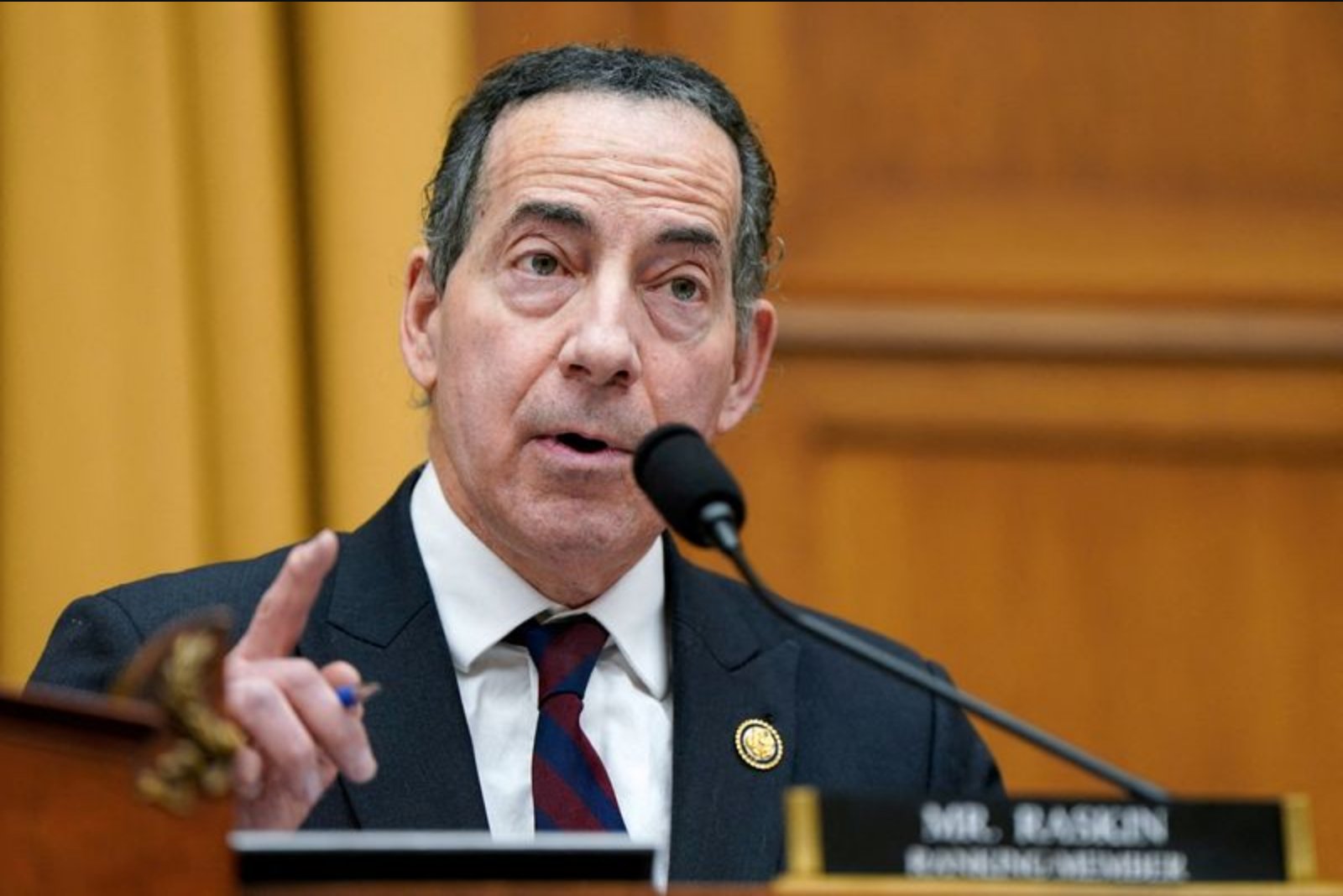
Representative Jamie Raskin has put forward legislation to strengthen the 25th Amendment by creating a special commission to evaluate a president’s capacity to perform the duties of the office. Nearly 40% of House Democrats - 84 members as of last week - have added their names to Raskin’s effort.
“I think the Raskin effort is matching where people (voters) are at,” Representative Mark Pocan of Wisconsin said in an interview. “They can’t believe what Donald Trump’s saying.”
But other Democratic lawmakers and strategists warn that centering the campaign season on moves to remove or impeach the president could dilute a message they believe is resonating with voters: that Democrats are focused on making America more affordable.
The political calculus
Some Democrats worry that raising removal or impeachment will alienate voters who saw two impeachments in Trump’s first term end with acquittals in a Senate controlled by Republicans, and who then voted him back into office in 2024. The concern is that reopening those battles now could revive memories of partisan fights that delivered little practical result.
That calculation is reinforced by recent electoral signals. Democrats have posted strong showings in a run of special elections since the beginning of last year, and polling on cost-of-living issues gives the party a potential advantage. A Reuters/Ipsos poll conducted this month found 77% of registered voters saying Trump bears at least a fair amount of responsibility for rising gas prices since the United States and Israel launched a war on Iran. Other polls consistently place Democrats ahead on handling cost-of-living concerns.
Kyle Kondik, managing editor of Sabato’s Crystal Ball at the University of Virginia, noted that Democrats running in more conservative states are unlikely to emphasize impeachment. “I doubt, for instance, that Mary Peltola and Sherrod Brown are going to be talking a lot about impeaching Trump,” he said, referencing competitive Democratic campaigns in Alaska and Ohio.
Republican strategists expect to capitalize on any pivot by Democrats toward removal-focused messaging. Alex Conant, a Republican strategist and former aide to Senator Marco Rubio, said Republicans will portray Democrats as distracted by Trump rather than concentrating on economic issues. “They will say that Trump is focused on the economy and Democrats are focused on Donald Trump,” he said.
Democratic caution and competing views
Not all Democrats have joined Raskin’s initiative. Representative Rosa DeLauro, a Connecticut liberal, said she recognizes problems with the president’s conduct - “there is something unbelievably wrong” - but has not signed on. “Let’s get to what the needs are of the country. The economy, healthcare, grocery prices, that’s where I concentrate,” DeLauro said as she seeks a 19th term in Congress.
Representative Henry Cuellar of Texas, often counted among the more centrist House Democrats, emphasized local priorities: “I think we need to focus on what’s important to our districts: the affordability, the ICE raids.” Cuellar pointed to a recent increase in nationwide Immigration and Customs Enforcement activity, noting that the administration has dispatched thousands of ICE agents in an intensified effort to deport migrants - a development that could complicate Republican gains with Hispanic voters. Cuellar’s district borders Mexico.
On the mechanics of the 25th Amendment, some Democrats say the path is constrained by constitutional requirements. Senator Elizabeth Warren of Massachusetts, a prominent progressive voice, acknowledged that “It is appropriate to look at the 25th Amendment,” but added: “But it’s going to take Republicans standing up and doing that. The Democrats cannot do it by themselves.” Under the Amendment, the vice president acting with Cabinet members would need to initiate a move to temporarily strip presidential powers.
Pressure from the left and varied approaches in competitive races
Some Democrats with strong progressive valuations or facing left-wing primary challenges have moved in the opposite direction from centrist caution. Representative John Larson of Connecticut introduced 13 articles of impeachment against Trump on April 6. The articles allege a range of offenses, including usurping Congress’ power to declare war, committing war crimes, and breaching the Constitution’s emoluments clauses that prohibit presidents from using the office to enrich themselves. A Larson spokesperson emphasized that the congressman has a long record of adopting liberal positions, including his votes against the U.S. war in Iraq.
For now, many Democratic campaigns are wary of an explicit impeachment message. With special election wins stacking up since January, 2025, Democrats are weighing the benefits of attention-grabbing actions against the risk of feeding Republican narratives about partisan animus.
Republicans have seized on that risk in targeted messaging. “Democrats are Once Again Gearing Up For Impeachment, and Other Than Trump Derangement Syndrome, They Can’t Articulate Why,” read a press release issued April 10 by House Speaker Mike Johnson. Such attacks could have traction in key states where Democrats hope to win over independents, including Ohio, Alaska and North Carolina.
How candidates are responding
In Ohio, Democratic former Senator Brown is seeking to regain the Senate seat he lost in 2024 after previously enjoying blue-collar support. Brown’s campaign has largely ignored the Washington-level discussion about the 25th Amendment and impeachment. Instead, campaign messaging centers on affordability and what Brown characterizes as a “rigged system” that disadvantages workers from blue-collar laborers to farmers. One of his proposals includes capping utility rate increases.
Polling shows economic issues loom largest for voters as campaigns intensify. The U.S. inflation year-over-year rate was 3.3% in March, up from 2.4% in February, and just 25% of respondents in a late March Reuters/Ipsos poll approved of Trump’s handling of the cost of living. Those figures encourage Democratic strategists who argue that emphasizing affordability makes political sense, particularly in off-presidential-year midterms where the party out of power often performs well.
Whether Democrats will amplify rhetoric about impeachment or the 25th Amendment, most agree that linking the Iran war and its consequences to household expenses is a politically effective approach. “I had 11 town halls with (constituents’) tremendous frustration around gas prices” during Congress’ spring break, Senator Ron Wyden of Oregon said in an interview. “What I’m focused on now is showing that we’re involved in concrete results.”
Bottom line
Democrats are divided between a segment urging institutional action to assess presidential fitness and a larger group prioritizing an economic message aimed at persuading voters on affordability and daily costs. The debate reflects competing calculations about political opportunity and risk in a midterm environment where special election gains and polling on economic management are central to the party’s electoral prospects.