
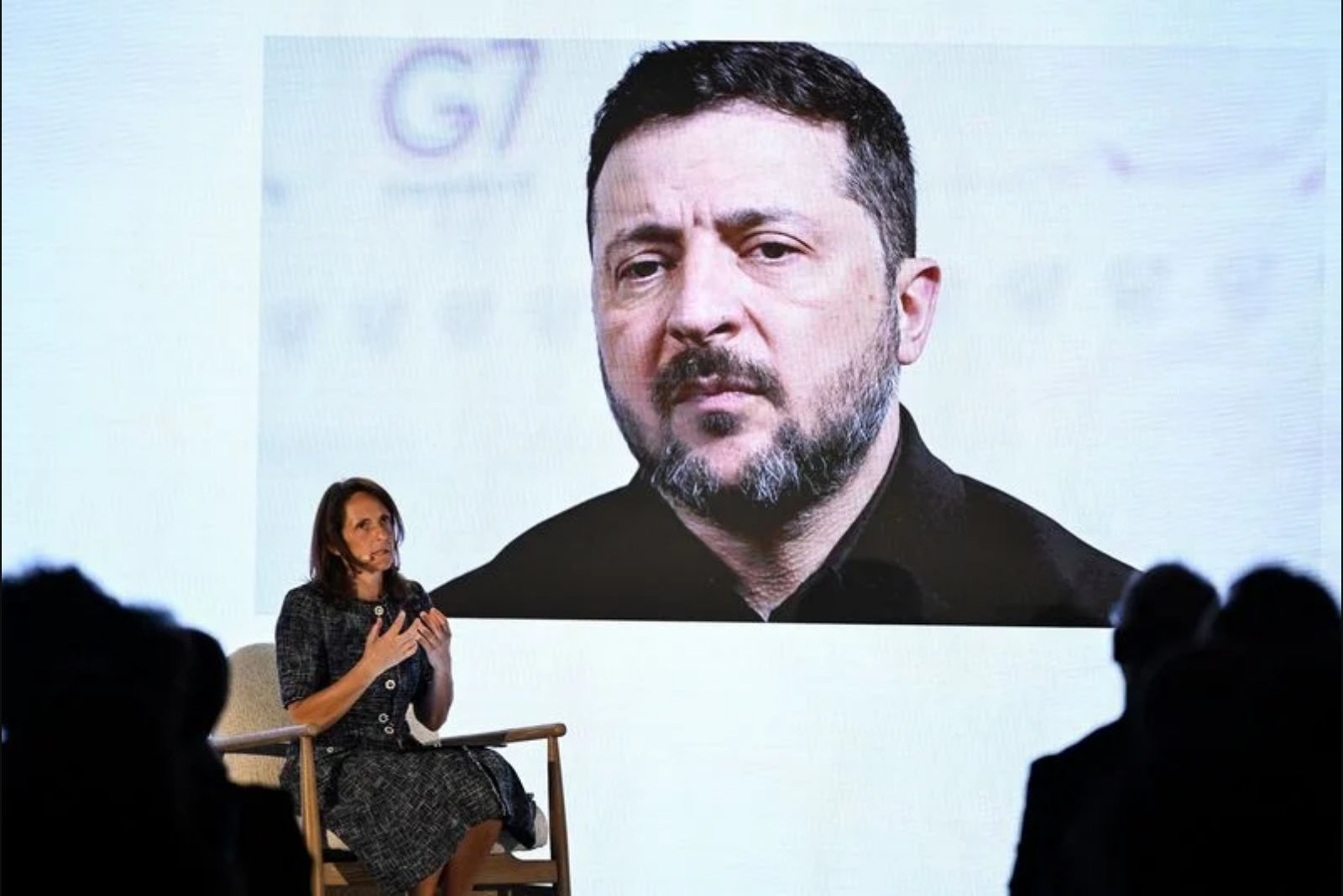
Kyiv, June 16 - Ukrainian President Volodymyr Zelenskiy said on Tuesday that leaders of the Group of Seven at a summit in France had concluded Russia was not winning its war in Ukraine and that they had discussed imposing further sanctions intended to press Moscow to enter negotiations.
Speaking by video link during an interview at the NEXT Europe summit in London, Zelenskiy outlined a conditional warning about the coming months. He stated that, unless a peace agreement was secured before winter, Russia would confront a very difficult winter - a prospect he tied to escalating Ukrainian attacks on Russian energy infrastructure.
Zelenskiy also reported that U.S. President Donald Trump had responded very positively to a direct Ukrainian request to increase deliveries of air defence missiles. He presented the reception from the U.S. leader as a constructive step in addressing Ukraine's urgent defence requirements.
Analytical perspective
The statements recounted by Zelenskiy establish three principal factual points: a G7 assessment that Russia is not winning, discussion among G7 leaders of additional sanctions aimed at compelling Moscow to negotiate, and a warning that the trajectory of the conflict could produce a difficult winter for Russia if no peace deal is reached. These points were made public in a remote interview conducted at the NEXT Europe summit in London.
For sectors closely tied to the developments Zelenskiy described, the implications are immediate in tone if not yet definitive in outcome. Energy infrastructure is explicitly referenced by Zelenskiy as a focus of intensified Ukrainian strikes, creating the potential for heightened volatility in energy markets and for supply disruption risks where cross-border flows or regional power networks may be affected. The defence sector is also in focus given the reported positive U.S. response to requests for increased air defence missile supplies, which could influence procurement, production and logistics activity within defence manufacturing and its supply chains.
Zelenskiy framed these comments as part of diplomatic efforts to build pressure on Moscow through coordinated international measures and military assistance requests. The remarks do not, however, specify timelines for new sanctions or for any additional arms deliveries, nor do they provide operational details of the strikes on energy infrastructure beyond indicating escalation.
What remains unclear
- No timetable or detailed content for additional G7 sanctions was provided by Zelenskiy.
- No delivery schedule or quantities were specified regarding the reported favourable U.S. response on air defence missile supplies.
- The precise scale and expected duration of the intensified attacks on energy infrastructure were not quantified in the remarks.