
Baghdad/Dubai, Sept 9 - Iraqi Prime Minister Ali al-Zaidi has placed his political standing on the line with an ambitious pledge to disarm Iran-aligned Shi’ite militias by September 30, a deadline he announced after meeting U.S. President Donald Trump at the White House in July. The date coincides with the planned withdrawal of the remaining U.S.-led international coalition forces from Iraq, a linkage that underscores the security and political stakes involved.
Zaidi’s promise confronts entrenched resistance from armed factions that have supported Tehran and carried out attacks on U.S. targets during the wider Middle East conflict. If the militias refuse to hand over their arsenals, analysts say the prime minister risks a serious credibility crisis at home.
Obstacles to enforcement
For now, the pathway to disarmament looks narrow. In 2025 several powerful Iranian-backed militia groups signaled they were prepared to lay down arms to reduce the prospect of an escalating confrontation with the Trump administration, but those commitments did not translate into action. Since Zaidi assumed office in May, he has been tasked with trying to integrate or disband these factions, many of which answer to Iran’s elite Revolutionary Guards.
While Zaidi has received notable backing from the U.S. president - support that exceeds what many of his predecessors obtained - his political survival still depends on maintaining working relations with Tehran. Iran’s influence in Iraq has grown through long-standing ties to Shi’ite militias and allied politicians, creating a narrow corridor in which Zaidi must operate.
Tensions were laid bare on August 17, when prime ministerial special forces detained the intelligence chief of Harakat al-Nujaba, an Iran-aligned group designated as a terrorist organisation by the U.S., on accusations of involvement in drone strikes against U.S. interests. A security document and three government sources reviewed by reporters said the detention lasted 48 hours and triggered threats of retaliation from Harakat al-Nujaba. Senior Shi’ite politicians intervened to calm the situation.
About a week after that incident, Iraqi special forces arrested four militia members, including a local commander, on allegations they had facilitated attacks on U.S. targets. Those arrests underscored both the willingness of the prime minister’s security apparatus to act and the political and security limits that constrain broader disarmament efforts.
Senior Shi’ite political figures have warned that a forceful crackdown on militias will render disarmament impossible and could provoke instability. They assert that it is unrealistic to expect armed groups to surrender their weapons while they remain engaged in supporting Tehran in its confrontation with the United States. Historically, some militias have also resisted giving up arms while U.S.-led coalition forces were present on Iraqi soil.
Militias’ stated position
According to multiple Shi’ite political and security sources familiar with disarmament talks, five Iran-aligned armed groups have explicitly rejected the government’s September 30 deadline. In August, Kataib Hezbollah - the most powerful of the militias cited - issued a statement criticizing Zaidi and set out conditions for dialogue. Those conditions include guarantees that American forces would never return to Iraq and broader measures aimed at removing U.S. influence over Iraqi political and economic decision-making.
Scale and capability of the armed groups
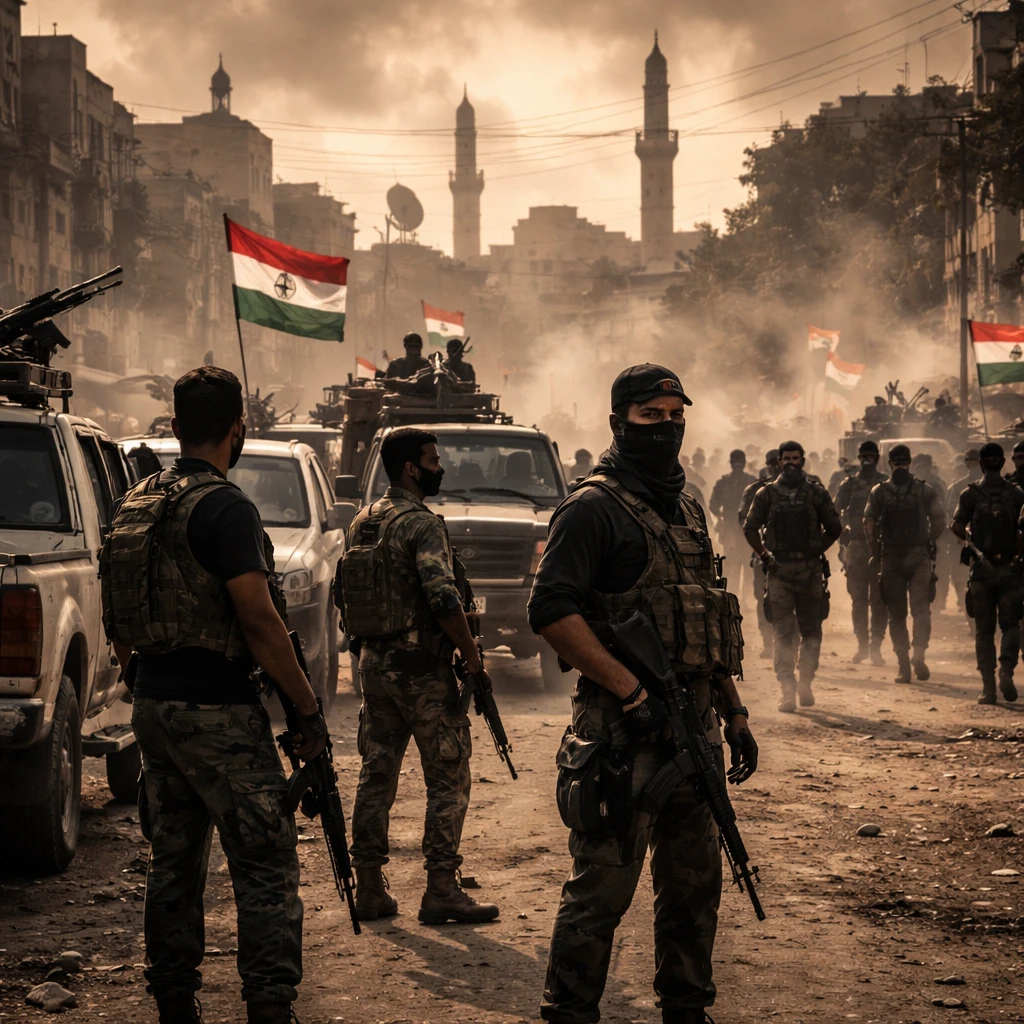
The militias are organized under the Islamic Resistance in Iraq umbrella, a grouping of around 10 hardline Shi’ite armed factions that, according to two security officials who monitor their activity, collectively control roughly 50,000 fighters. Their arsenals reportedly include long-range missiles and anti-aircraft systems. The Resistance has claimed responsibility for dozens of missile and drone strikes on Israel and U.S. targets in Iraq and Syria over recent years and has demonstrated growing sophistication in executing precise drone attacks.
Beyond battlefield capabilities, these groups maintain commercial interests in sectors such as construction, real estate and currency exchange houses, tying them into parts of the domestic economy and complicating efforts to sever their autonomy.
What this means now
Zaidi’s public commitment to disarm powerful militias places him at the intersection of U.S. expectations and Iran-aligned domestic forces. The recent short detentions and subsequent political interventions illustrate the tightrope Baghdad must walk between asserting state authority and avoiding a backlash that could deepen instability. With core militia groups refusing the government deadline and linking disarmament to the presence of U.S. forces and the removal of American influence, the prospect of a complete weapons handover by September 30 appears uncertain.