
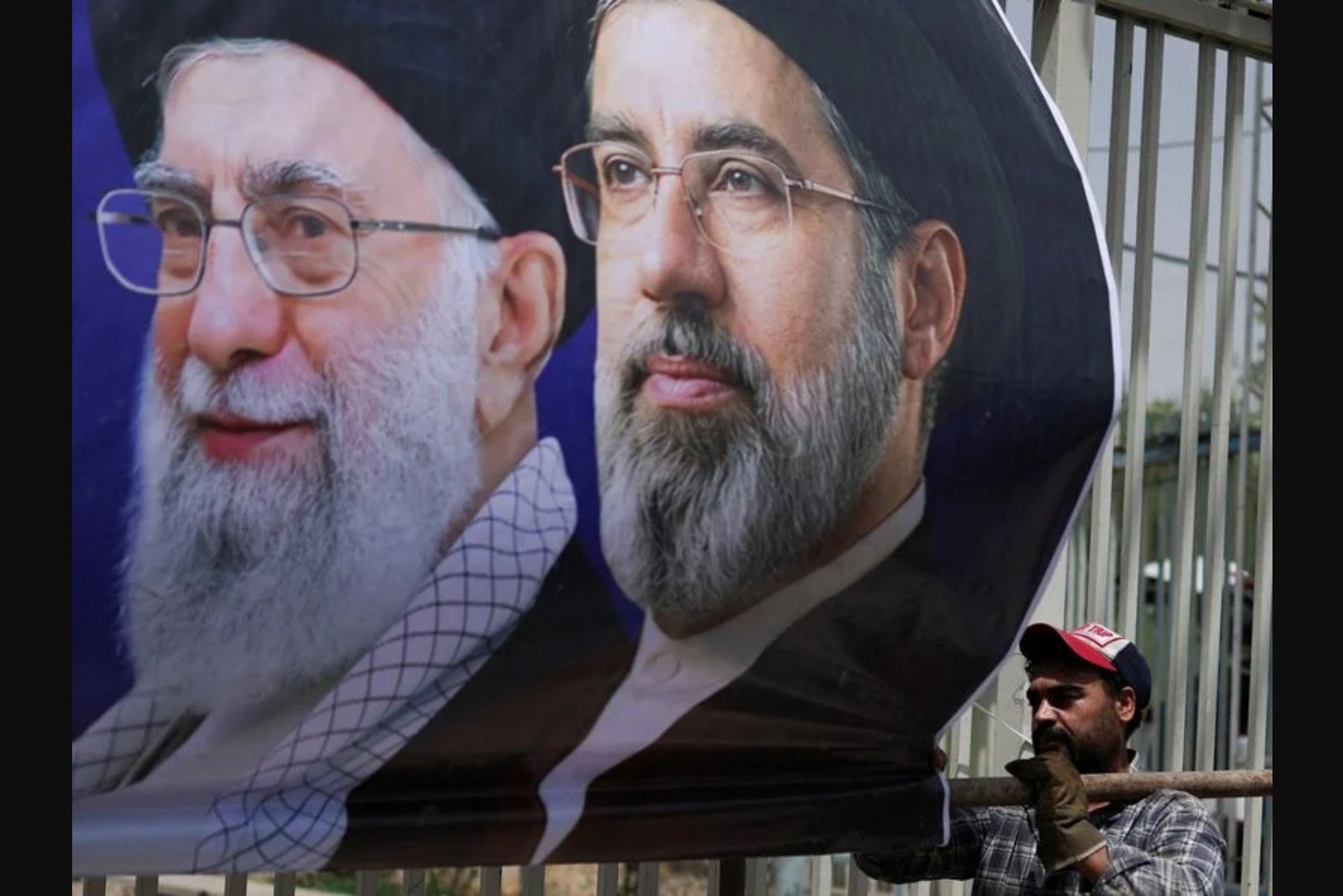
The man appointed to lead Iran after the strike that killed his father has remained out of public view at a time when visibility matters most. Mojtaba Khamenei was named supreme leader a week after that attack at the end of February, but since his confirmation by a clerical assembly on March 8 there has been no photograph, recorded message or public appearance that would normally accompany such a transition.
Senior sources cited by officials say Mojtaba sustained facial disfigurement and other injuries in the strike and has been recuperating. Those sources also say he has been involved in decision-making behind the scenes but has not been fit enough to appear in public. That limited visibility has become a focal point for concern in Iran, particularly after a renewal of hostilities with the United States this week that has sharpened the need for a clear symbol of national leadership.
Public unease over an unseen leader
For many Iranians the absence is more than symbolic. On the streets of major cities, people interviewed in recent weeks have voiced unease about what prolonged silence from the supreme leader might mean for governance and stability. Taghi, a 47-year-old shop owner in Isfahan who declined to give his family name, voiced that sentiment directly.
"I understand that, from a security standpoint, he should not appear in public. But the country is going through a very difficult time,"
"There is a need for the Supreme Leader to be seen. Even if he has been injured, people need to see that there is a leader and that he is running the country."
Those concerns have been heightened by a conspicuous lack of formal communication at moments when the public would traditionally expect reassurance. When Ayatollah Ali Khamenei was buried, there was not even a written message from Mojtaba, leaving observers to puzzle over how the new leader would project authority when his presence is so constrained.
Family roles and clerical choreography
The burial arrangements for the late leader underscored how familial and clerical ties remain central to Iran’s system of governance. Prayers were performed over the coffin at what is regarded as the country’s holiest shrine by his three other sons, who have all emerged as senior clerics. None of those brothers are widely seen as major political actors, but their roles at the ceremony highlighted how family relationships are used to demonstrate continuity within the clerical hierarchy.
In addition, Ali Khomeini, a grandson of the 1979 revolution’s founder, is scheduled to speak on Mojtaba’s behalf at a mourning ceremony on Friday. That decision was widely interpreted inside Iran as another signal of continuity, relying on family networks and trusted religious figures to stand in when the supreme leader is not able to do so publicly.
Speculation had swirled that the burial might produce at least a recorded message or new photographs of Mojtaba. Senior sources within Iran attribute the absence of any new imagery or audio since his March 8 appointment to a combination of health and security considerations.
Security and legitimacy pressures
The security calculus is complex. The very strike that killed his father was carried out at the outset of a conflict that began with unannounced attacks by the United States and Israel during a period when diplomatic efforts were underway. In that context, the risk of further targeted violence is judged to be substantial, and officials have evidently concluded a low profile serves protective purposes.
But Iran’s supreme leader is not merely a political functionary; the office is bound up with the country’s official ideology and religious legitimacy. The holder is recognised as the representative on earth of Shi’ite Islam’s 12th imam. Historically, that role has depended on a combination of clerical credentials, political standing and the ability to embody authority in public.
Modern history professor Ali Ansari summed up the dilemma succinctly:
"How do you have a charismatic succession when the successor isn’t there? It’s going to be a problem for them even if they ride it out for the time being. It’s not sustainable in the long run,"
For now, the Revolutionary Guards appear to exercise strong influence across the state’s institutions. Mojtaba Khamenei’s own background suggests he built close ties with the Guards while managing his father’s expansive office and its nationwide network of contacts. He lacks the religious standing that once defined past occupants of the office and was not a political heavyweight in his own right prior to his appointment. That combination makes his public absence more acute: his authority, opinions and governing capability remain largely untested and unknown to the public.
Voices of concern inside Iran
Reuters contacted more than 20 Iranians in recent weeks; a plurality expressed concerns about the effect of the supreme leader’s absence on the country’s cohesion. Mohammadreza, a 51-year-old teacher in Tehran, framed the worry in stark terms.
"The supreme leader’s absence, now that the war is over, will lead to growing uncertainty and disorder in the country, especially after the burial of the late leader,"
How long a theocratic system can function credibly with a leader who remains out of sight is an open question inside Iran. The first supreme leader, Ayatollah Ruhollah Khomeini, derived authority from his status as the revolution’s founding figure and a pre-eminent religious scholar. Ali Khamenei, who ruled for 37 years, began without comparable religious stature but gradually consolidated control - often with the close support of the Revolutionary Guards - to assert near-absolute authority over the political system.
Mojtaba’s path appears different. He ran his father’s office and cultivated the Guards as a core partner, but he does not possess the established religious credentials that historically underpinned the leadership role. How that background will translate into effective leadership when Iran confronts external hostilities, economic strain and the potential for renewed domestic unrest is not yet evident.
Economic and political backdrop
Iran remains enmeshed in conflict despite intermittent truces, and its economy continues to suffer under foreign sanctions. The state also faces the lingering consequences of mass unrest earlier in the year, instances of which were met with violent suppression in January. All of these pressures heighten the need for visible stewardship from the office of the supreme leader - a need that is not currently being met in a conventional way.
The last public update on Mojtaba’s condition came from President Masoud Pezeshkian, who said in May that he had met the leader and that Mojtaba’s condition was improving. Beyond that assurance, information about his day-to-day role and capacity remains limited.
What remains uncertain
What is clear is that for the time being the Revolutionary Guards are central to the mechanisms of control within the republic. What is not yet clear is how sustainable the current arrangement will be if Mojtaba’s public absence continues. The combination of security threats, an economy under strain from sanctions, and the risk of further social unrest creates a set of challenges that will test the limits of governing arrangements in the months ahead.
Until Mojtaba Khamenei’s health and public role are clarified with greater transparency - whether through images, messages, appearances or other forms of communication - both domestic audiences and outside observers will continue to view Iran’s top leadership as opaque and uncertain during a fraught period for the country.