
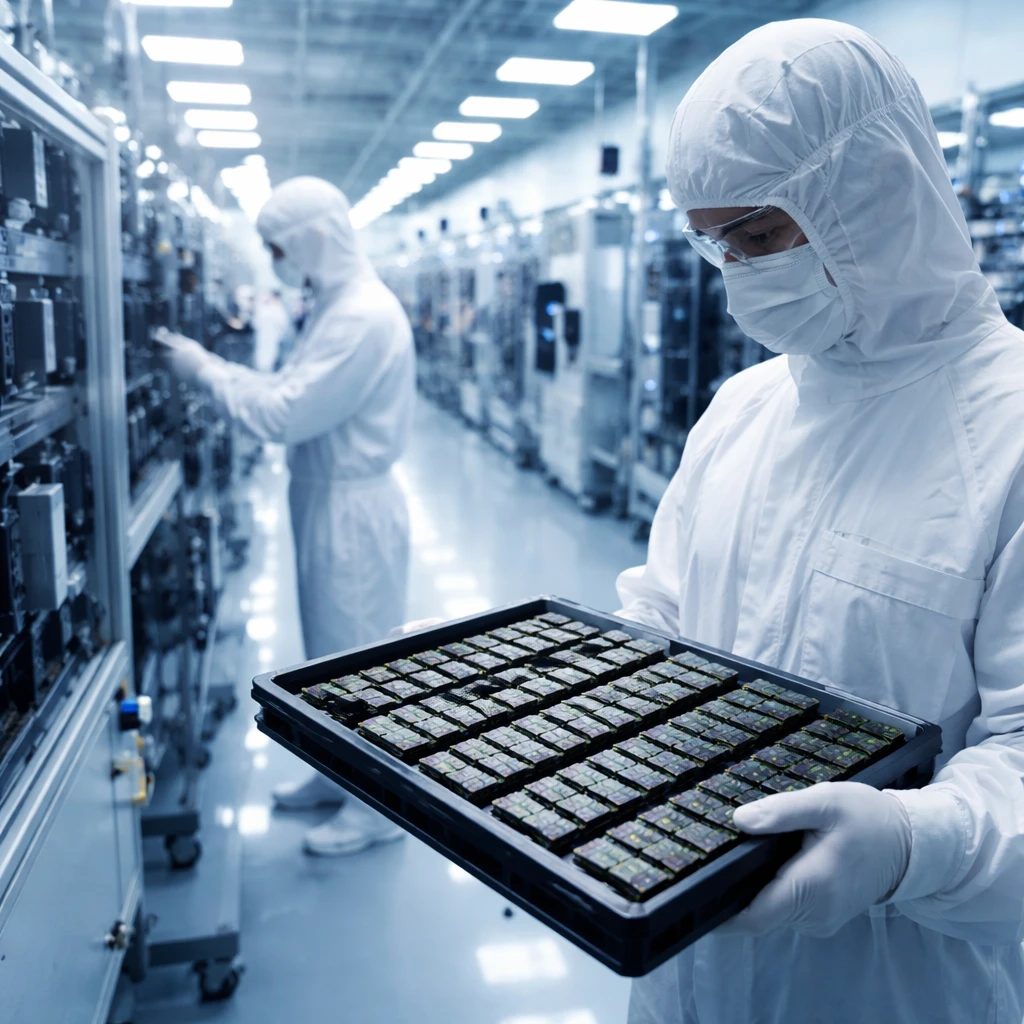
SK Hynix's chief executive, Kwak Noh-jung, cautioned investors and customers on Friday that the global memory market faces an exceptionally tight supply environment in 2027, and that demand will remain higher than the company's supply capacity into the next decade.
Speaking in an interview on the day the company started trading on the Nasdaq, Kwak said the group expects 2027 to be "the worst year in the industry's history from the supply perspective." He emphasized the disparity between rising customer orders and the limitations of current production capacity.
"Our customer demand continues to go up, while our capacity has limitations. We still forecast that customer demand will remain higher than our supply capacity even beyond 2030. But we are doing our best to solve the problem," Kwak said, outlining the company's view that elevated demand will persist for years despite efforts to expand capacity.
Market reaction coincided with SK Hynix's headline-grabbing initial public offering. The company sold 177.9 million American depositary shares at $149 each, raising $26.5 billion in what was described as the world's second largest listing ever, trailing only SpaceX in scale. The stock opened on Nasdaq at $170, 14% above the IPO price, and was trading roughly 14.8% higher at around $171 on Friday afternoon.
Beyond the short-term market moves, the company has positioned itself as an important supplier to the artificial intelligence hardware ecosystem through its high-bandwidth memory products, which are used in Nvidia chipsets. That positioning underscores the strategic importance of the memory supply outlook to AI infrastructure providers and broader technology supply chains.
For customers and market participants, the message from management was straightforward: demand is climbing and capacity is constrained. SK Hynix indicated it is taking steps to address those constraints, but the company projects a multi-year period in which demand will exceed available supply.
Investors will be watching whether SK Hynix's plans to expand capacity can keep pace with the demand trajectory the company described, and how pricing and allocation dynamics evolve in memory markets should the projected imbalance materialize.
While the IPO delivered a significant capital infusion and a strong market debut, the comments from Kwak underscore an operational challenge that could influence supply chains for data centers, AI hardware, and semiconductor-dependent sectors if demand continues to outstrip capacity through 2030.
As the industry digests the warning and the company's public listing, stakeholders from chip buyers to infrastructure operators will likely monitor capacity investments, production ramp schedules, and customer allocation policies for signs of how tightness in memory markets may unfold in the years ahead.