
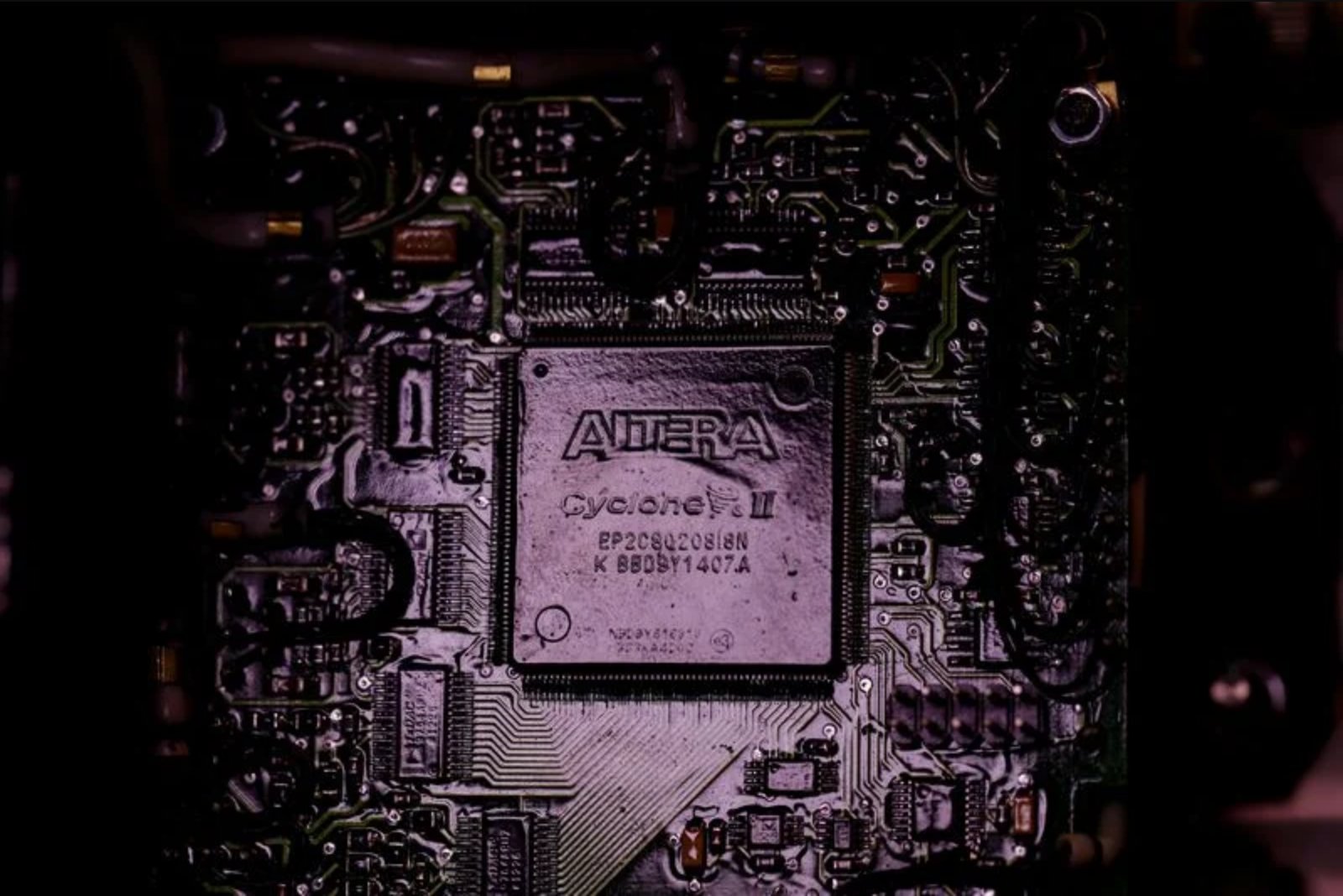
Altera, the programmable-chip business carved out of Intel, has returned to growth and is boosting profitability as it prepares for an eventual listing, Chief Executive Raghib Hussain told Reuters.
The company is increasing revenue at a pace of roughly 20% a year while more than doubling operating income, Hussain said. Altera became a fully independent entity last September, when Intel agreed to sell a 51% stake to private equity firm Silver Lake for $4.46 billion, a deal that valued Altera at $8.75 billion. Intel continues to hold a 49% ownership position.
Hussain, who previously held an executive role at Marvell Technology and assumed the chief executive role at the time of the spin-out, said Altera expanded more than 20% in the prior year and anticipates mid-20% growth again in the current year. As a private company, Altera does not publish detailed financial figures.
Engineering-led customer engagement
"I believe in an engineer-to-engineer type of a discussion," Hussain said, noting that the company has brought its engineering teams closer to customers to deepen engagement. He described FPGAs as complementary to GPUs, positioning the programmable devices for connectivity, data pre-processing and sensor fusion alongside graphics processors.
Hussain used an analogy to position the technology in robotics and AI applications: "If GPU is the brain, the FPGAs are the nervous system." He projected that FPGA content per robot, ranging from $100 to several hundred dollars, could create a market opportunity of "100 billion to several hundred billion dollars" over a decade.
Revenue trajectory and competitive pressures
Intel reported Altera revenue of $1.5 billion for 2024, a sharp decline from $2.9 billion in 2023. The drop reflected two dynamics identified in the interview: customers shifting purchases toward GPU chips for AI workloads during 2023, and Altera losing market share to its largest competitor, AMD-owned Xilinx.
Product development and operational moves
On execution, Hussain said Altera produced working prototypes of six new chips last year. The company has also reduced its reliance on transition service agreements with Intel, bringing that count down from 125 agreements to 15.
Hussain stated that Altera is the only programmable-chip supplier in full production using DDR5 memory for mid- to high-programmable chips, and that the firm accumulated a memory stockpile intended to shield it from current shortages.
Manufacturing is split between Intel Foundry and Taiwan Semiconductor Manufacturing Co. Hussain added that Altera is developing products on TSMC’s 2-nanometer and 3-nanometer process technologies.
Context and implications
The account from Altera's chief executive highlights a company recalibrating its product mix and supply posture as demand from AI and robotics applications evolves. Product prototyping, memory inventory management and a narrower set of transition agreements with Intel are among the operational changes Hussain cited as supporting the company’s renewed growth and improved operating performance.