
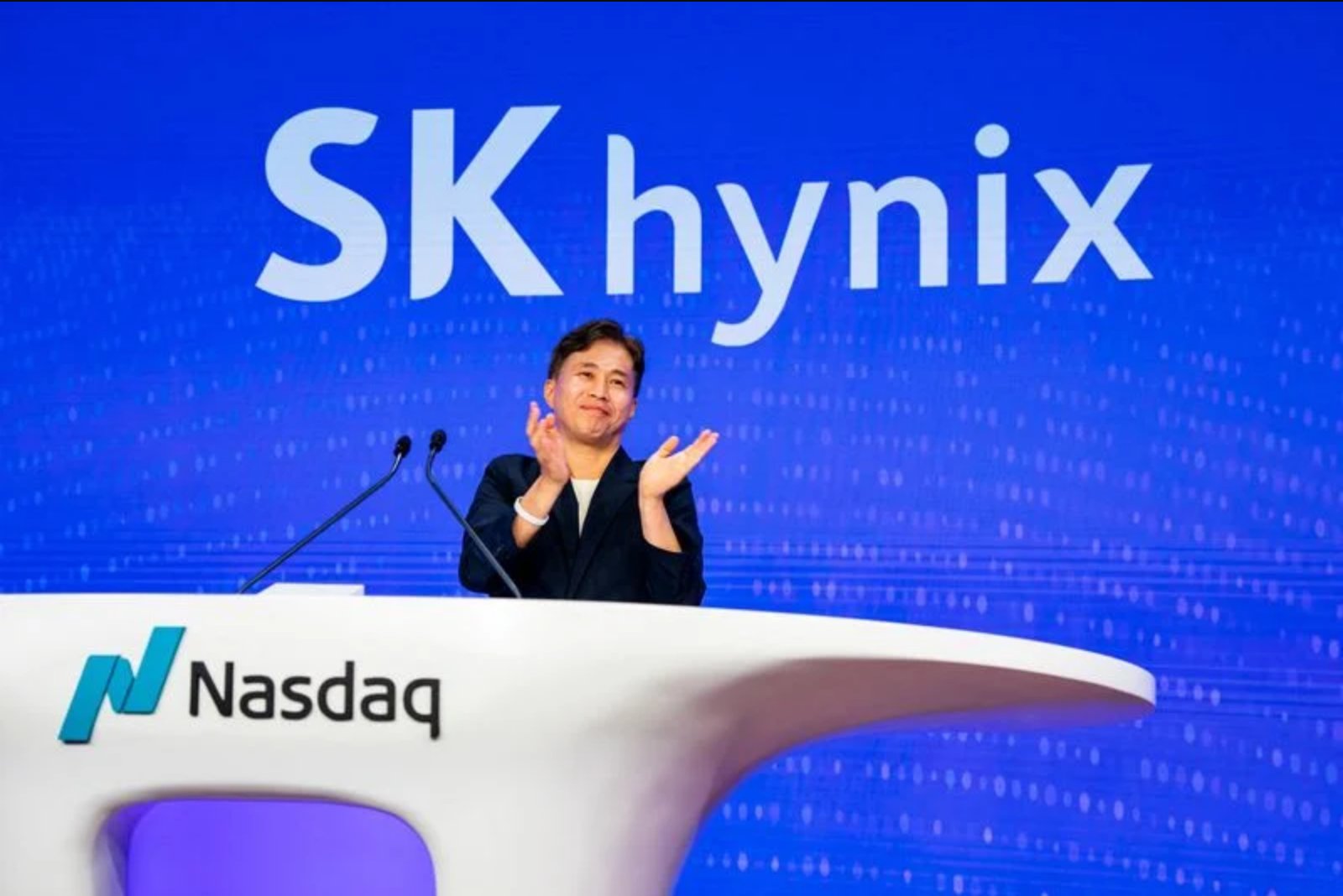
SK Hynix's CEO has issued a stark forecast for the memory-chip industry, saying next year will deliver the worst supply shortage the market has ever seen and that demand will continue to outstrip the company's production capacity into the next decade.
Speaking in an interview the same day the South Korean memory maker began trading on the Nasdaq, Chief Executive Kwak Noh-jung said his firm expects 2027 to be "the worst year in the industry’s history from the supply perspective." He emphasized that customer demand is rising while capacity faces constraints, and repeated the company's longer-term outlook that demand will remain above supply even beyond 2030.
"We forecast that next year will be the worst year in the industry’s history from the supply perspective," Kwak said. "Our customer demand continues to go up, while our capacity has limitations," he added. "We still forecast that customer demand will remain higher than our supply capacity even beyond 2030. But we are doing our best to solve the problem."
The comments came as the company’s American depositary receipts climbed following its Nasdaq listing. Shares of SK Hynix ADRs were up 14.8% at $170.94 on the Nasdaq on Friday afternoon, reflecting investor reaction to the stock's market debut and the firm's role in advanced memory markets.
Industry observers have highlighted SK Hynix's leading role in providing high-bandwidth memory - a specialized type of DRAM used in high-performance computing - and the company has been prominent in supplying HBM used in Nvidia chipsets. That position ties SK Hynix to components of the AI supply chain as demand for compute-heavy applications grows.
Clear summary
SK Hynix warns of an extreme supply shortage in 2027 and expects demand to remain higher than its capacity beyond 2030 despite active efforts to address the imbalance. The remarks coincided with the company beginning trading on the Nasdaq and a notable rise in its ADR price.
Key points
- SK Hynix forecasts 2027 will be the worst year on record for memory supply shortages from the supply perspective.
- The company projects customer demand will continue to exceed its supply capacity even beyond 2030, signaling a prolonged imbalance.
- SK Hynix is a leading supplier of high-bandwidth memory, including HBM used in Nvidia chipsets, linking it closely to the AI supply chain. Its ADRs rose 14.8% to $170.94 on the Nasdaq following the start of trading.
Risks and uncertainties
- Capacity limitations - SK Hynix notes constraints on production capacity that could prevent the company from meeting rising customer demand, affecting the memory sector and firms reliant on advanced memory.
- Prolonged demand-supply imbalance - The firm forecasts demand outstripping supply beyond 2030, an uncertainty that could influence planning for customers in the AI and high-performance computing segments.
- Execution risk in addressing the shortage - While SK Hynix says it is working to "solve the problem," there is uncertainty around the effectiveness and timeline of those efforts, with potential implications for markets and technology supply chains.
SK Hynix's outlook underscores the memory industry's tightness even as manufacturers pursue capacity expansion. The firm’s prominence in supplying high-bandwidth memory for advanced chipsets places it at the center of demand dynamics tied to AI and other compute-intensive applications. How effectively SK Hynix and other suppliers can add capacity or otherwise reconcile demand and supply will shape the trajectory for memory markets in the coming years.