
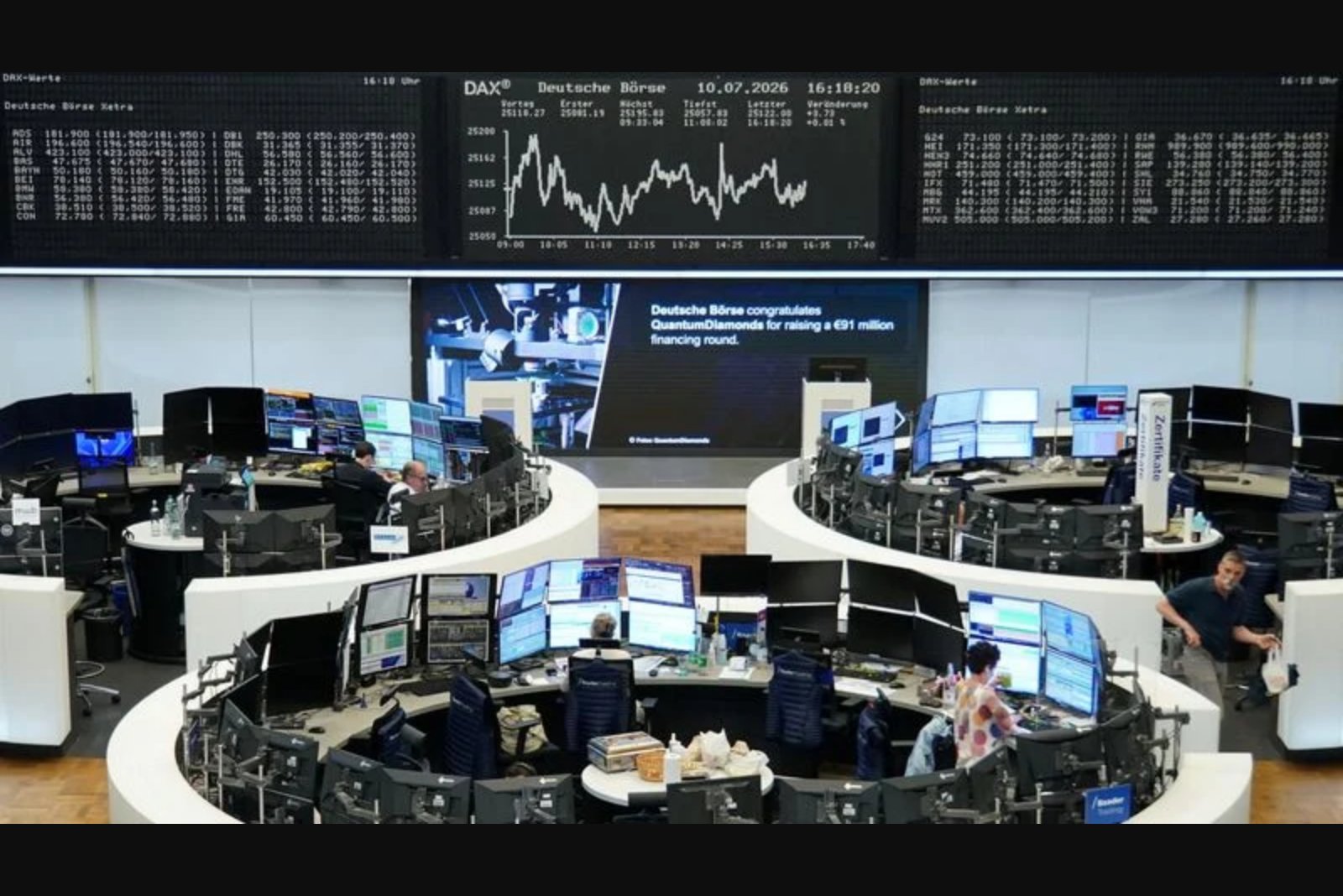
European equities snapped a four-week winning streak on Friday, punctured by weakness in technology shares and renewed geopolitical frictions that pushed energy market concerns back to the fore.
The pan-European STOXX 600 finished the week 1.8% lower as market participants pared back earlier assumptions that the region could avoid a sustained shock to energy supply. The standings reflected a mood of caution after the United States and Iran exchanged strikes and Washington announced the re-imposition of sanctions on Iranian oil.
Heightening the political uncertainty was the NATO summit in Turkey, where U.S. President Donald Trump publicly described Spain as a "terrible partner" and warned he might stop trade with the country, though his tone was reportedly softened later in discussions. Together, the developments underscored that geopolitical risk remains a key determinant of investor sentiment.
"There was a certain complacency that the war is no longer an issue. And we’re reminded this week that it is, in fact, still an issue," said Marta Norton, chief investment strategist for Empower Investments.
Alongside geopolitics, markets witnessed an ongoing rotation out of large global technology names and into other market segments as investors sought broader diversification beyond the biggest beneficiaries of artificial intelligence. That repositioning contributed to the weaker tone.
Sector and market moves
The technology sector declined 1.3% on Friday and fell 1.8% over the week. Chip equipment and semiconductor-related names were among the laggards: Soitec dropped 5.9% and ASML slid 2.1% on the day.
"The large swings we’re seeing in technology stocks... suggest investors remain under stress amid elevated valuations," said Ipek Ozkardeskaya, senior market analyst at Swissquote Bank.
Telecom stocks outperformed the broader market, advancing 1.3% on the week. Vodafone jumped 12.6% after UAE telecom group e& announced it would sell its stake in Vodafone to the family group of French billionaire Xavier Niel, lifting investor sentiment in the sector.
Travel and leisure names also posted gains, rising about 1% overall and buoyed by airline strength. EasyJet surged 14.3% after agreeing in principle to a £5.7 billion takeover offer from Apollo Global. Ryanair, which had traded up as much as 2.9% during the session, settled 0.9% higher.
St. James’s Place was the biggest individual decliner on the STOXX 600, tumbling 8.5% after reports suggested Sovereign Wealth, one of the money manager’s largest partner firms, was considering an exit from the group.
Brokerage moves and industrials
J.P. Morgan adopted a more constructive view on the European steel complex, upgrading ArcelorMittal to "neutral" from "underweight" and sending its shares up 6.4%. Voestalpine and Salzgitter each gained more than 6% after receiving double upgrades from the brokerage, moving from "underweight" to "overweight."
Meanwhile, Volkswagen shares fell for a third straight day after the company’s labour representatives reportedly blocked a comprehensive restructuring plan. The automaker also disclosed an 8.6% decline in global vehicle deliveries in the second quarter, marking its steepest quarterly fall in four years.
Safety, sentiment and the path ahead
Investors signalled a renewed appetite for selective sector exposure as they rotated away from richly valued technology names and toward areas benefiting from corporate news, takeover activity and upgrades. But the week’s developments also renewed focus on geopolitical risk and energy market dynamics, factors that could keep sentiment fragile heading into the forthcoming corporate earnings season.
Markets will now look to the upcoming earnings calendar for fresh fundamental cues that might restore momentum to equities or cement the recent caution.