
Abuja - The United States has removed the bulk of the troops it temporarily deployed for a recent operation targeting Islamic State militants in Nigeria, but will keep providing intelligence assistance at the request of Nigeria's government, the commander of U.S. Africa Command (AFRICOM) said.
The move follows a May operation in Nigeria's Lake Chad Basin region conducted jointly by U.S. and Nigerian forces that resulted in the death of Abu-Bilal al-Minuki, who was described as the second-in-command of Islamic State globally. That action came after a separate U.S. strike on Christmas Day, which President Donald Trump said targeted militants who had been focusing attacks on Christians in Nigeria.
AFRICOM assessment and next steps
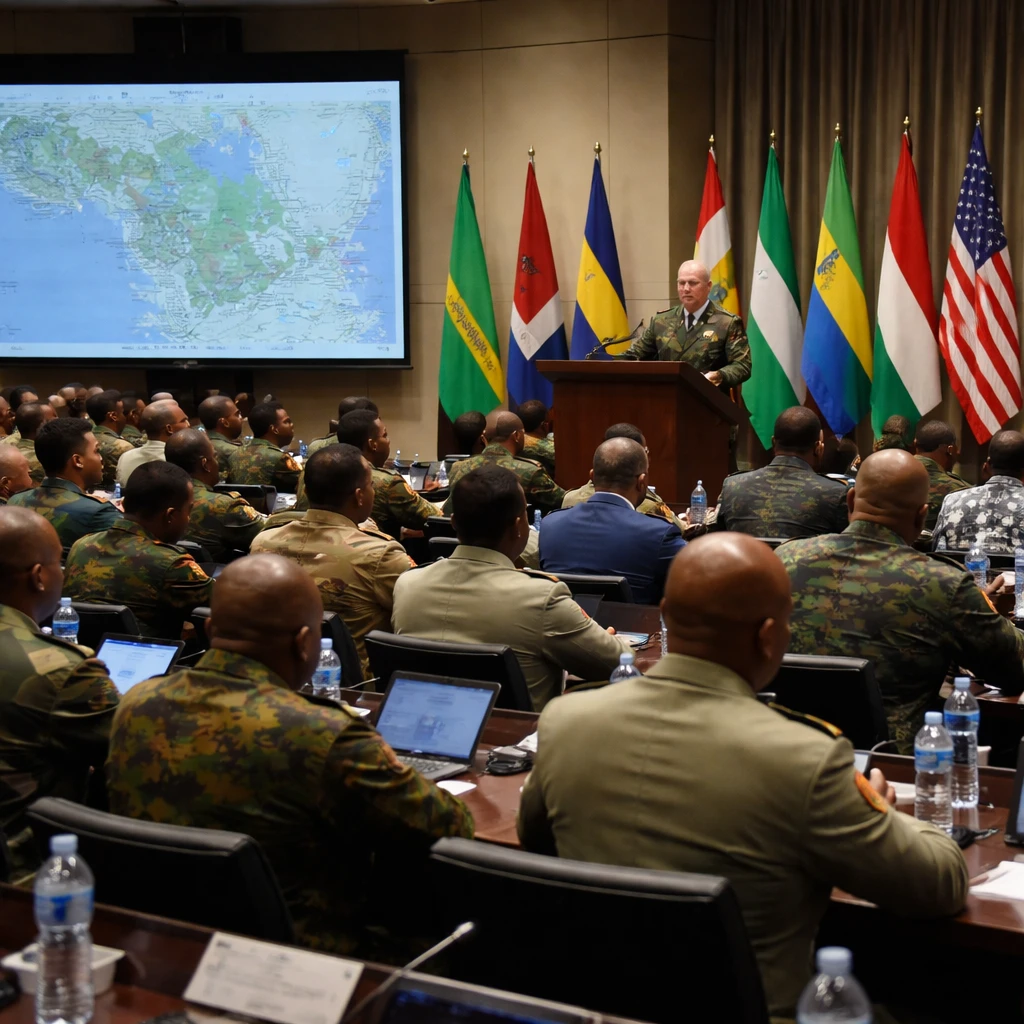
Addressing a gathering of African defence chiefs in Luanda, Angola, AFRICOM Commander General Dagvin Anderson characterized the May mission as an example of how Washington intends to partner with African militaries - supplying specialised capabilities while allowing local forces to lead operations.
"We have withdrawn much of our forces that were just there for that operation, but are continuing the partnership that Nigeria has asked for to help continue with the intelligence sharing," Anderson told journalists during a U.S. State Department-hosted briefing after the conference.
Anderson said the joint operation significantly degraded Islamic State's leadership in the region and disrupted not only local commanders but also wider communications and operational networks tied to the militant group. He noted that the operation's effects were felt beyond West Africa because of ISIS's international network.
Role of Nigerian forces and regional response
According to Anderson, Nigerian forces have remained active since May, taking the lead in pursuing remaining targets. "Nigeria has been very active since that operation in May," he said. "They continue to prosecute targets themselves."
He also reported that Nigerian military pressure, coupled with efforts to publicise the operation, has helped prompt additional defections and surrenders among Islamic State fighters in northeastern Nigeria.
The comments were made at the conclusion of a three-day defence chiefs conference held in Luanda that brought together military leaders from 35 African countries, along with representatives from the United States and Brazil.
Note - The United States has shifted from a forward deployed presence tied to the operation to an intelligence-support role at the invitation of Nigerian authorities, while Nigerian forces continue ground operations in the affected region.