
DUBAI, July 3 - The body of Iran’s slain Supreme Leader Ayatollah Ali Khamenei lay in state on Friday in an expansive hall in Tehran, where clerics, officials, foreign dignitaries and large numbers of mourners filed past to pay respects following his 37-year rule. The leadership has scheduled a week of mass funeral processions for Khamenei - who was killed in February by U.S. and Israeli airstrikes at the start of a four-month war - in an effort to stage a public demonstration of devotion to the Islamic Republic and its revolutionary foundations.
The coffins were unveiled late on Thursday to a crowd that responded with loud lamentation. Supporters, many visibly distraught, swayed and beat their heads to a sung elegy while flowers were thrown from the bier into the assembled mourners. On Friday the coffin of Khamenei and those of family members killed with him were placed in the great prayer hall erected to honour Ayatollah Ruhollah Khomeini, his predecessor.
The authorities have said the remains will make a ceremonial circuit - scheduled to include the religious cities of Qom, Najaf and Kerbala in Iran and Iraq - before a burial set for Thursday in Mashhad, the site of Iran’s holiest pilgrim shrine.
Public display amid a fraught political moment
The funeral comes at a fraught juncture for the Islamic Republic. The clerical establishment, reinforced by the Islamic Revolutionary Guard Corps, presents the recent conflict as an existential contest they have survived against powerful adversaries. Yet, nearly five decades after the 1979 revolution, the state faces significant internal strains. Analysts quoted by officials and commentators note that public support for the clerical leadership is thin and that the domestic political landscape is deeply fractured.
Those fissures are compounded by years of debilitating sanctions that have, according to official and public commentary, left the economy paralysed. Authorities have also faced large-scale nationwide protests, which were met by increasingly forceful measures from security forces and culminated in the killing of thousands of demonstrators in January. This week the state has sought to overshadow those domestic challenges by mounting a tightly controlled program of mourning, mobilising what it hopes will be millions of participants.
Security and logistics on a large scale
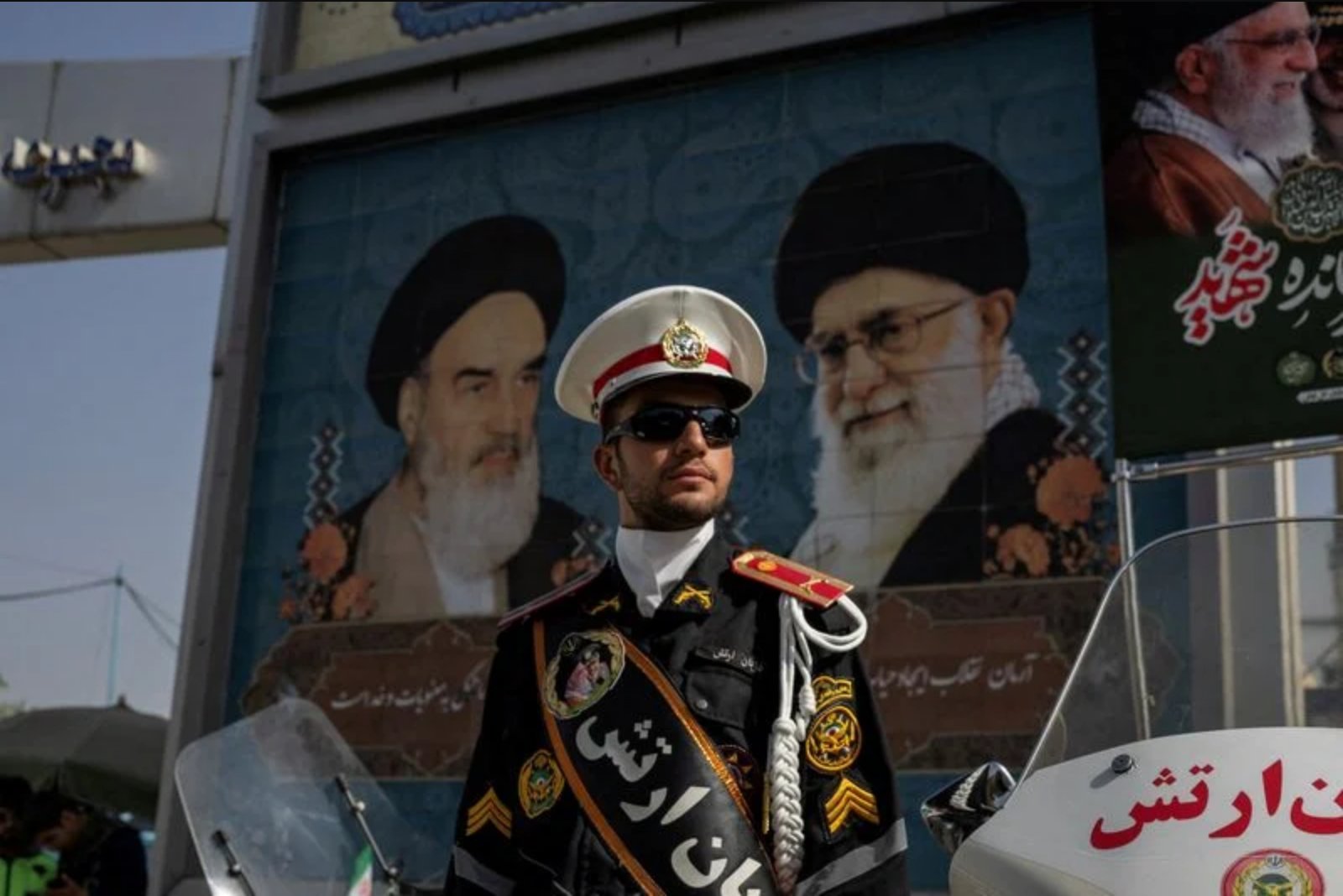
Streets in Tehran have been subject to tight controls throughout the funeral events. Military and police vehicles were positioned along major thoroughfares and police, together with the black-shirted volunteer Basij paramilitary force, patrolled on motorbikes. Officials issued warnings to the United States and Israel against any attacks during the ceremonies.
Organisers arranged substantial logistical support for mourners. Hotels offered 50% discounts, and schools, mosques and sports halls were prepared to house attendees. Bus and rail services were diverted to accommodate movements to the main events. After a major procession in central Tehran scheduled for Monday, the remains are due to be taken to the seminary city of Qom for Tuesday ceremonies, with subsequent events planned for Najaf and Kerbala on Wednesday before the burial in Mashhad on Thursday.
Ritual, symbolism and regional alliances on display
When the coffins arrived on Friday, they were borne on upraised hands across the crowd and placed on a white, stepped dais inside the prayer hall, positioned beneath a high, intricately tiled arched recess and flanked by national and black mourning flags. A black turban - a symbol associated with clerics claiming descent from Islam’s Prophet Mohammed - rested on the coffin atop a folded chequered scarf, a visible emblem in Iran of militant revolutionary ideals and solidarity with Palestinians.
Delegations entered the hall in sequence. Representatives from Lebanon, Iraq and Yemen - countries hosting some of the strongest elements within Iran’s regional network of proxies - paid respects, and delegations from Russia and China were expected. Iraqi President Abdul Latif Rashid, Armenian Prime Minister Nikol Pashinyan and Pakistan’s Interior Minister Syed Mohsin Naqvi arrived in Tehran to attend the events. Families of Hezbollah leader Hassan Nasrallah and of senior commander Imad Mughniyeh - Lebanese allies killed in Israeli strikes and close to Iran - were among those present.
Shi’ite mourning practices and the narrative of martyrdom
Within Iran’s theocratic system, Khamenei occupied not only a political leadership role but a symbolic religious one, presented by the state as the earthly representative for Shi’ite Islam’s twelfth imam. His death in an attack by foreign powers taps into a potent Shi’ite tradition of martyrdom and mourning, in which public processions, chest-beating and self-flagellation form part of ritual expression.
Black funeral flags referencing the seventh-century martyrdom of Shi’ism’s third imam, Hossein, have been prominent over city streets since Khamenei’s death. In central Tehran overnight, crowds chanted and sobbed while Basij members led remembrances and supporters distributed posters of the late leader. As the coffins were displayed, many chanted “O Hossein” - invoking the third imam whose killing at Kerbala is a central wellspring for Shi’ite devotion and a recurring motif in Iranian revolutionary rhetoric.
Killed alongside the Supreme Leader were close family members displayed in coffins next to his: his daughter, son-in-law, a baby granddaughter, and the wife of his son Mojtaba. The juxtaposition of these deaths with Khamenei’s own has been presented by organisers as an intentional echo of the historical deaths of Hossein’s family and companions.
One mourner, 18-year-old student Mobina Razaaghi from Isfahan, attending the events with classmates, said: "God willing, only by avenging his blood, demanding justice for it, and ensuring that our leader’s blood is not left unavenged, can this sorrow of the people be somewhat alleviated."
Timing and postponement
Islamic practice ordinarily stipulates burial within a day of death. In this case, burial was postponed because of the security risks associated with holding large public ceremonies during the war. That decision followed an interim truce deal reached last month. The extended timetable has allowed authorities to organise the multi-city procession and to marshal transport and accommodation for an expected large turnout.
The sequence set by organisers begins with a major Tehran procession on Monday, followed by ceremonies in Qom on Tuesday, then in Najaf and Kerbala on Wednesday, and concludes with the burial on Thursday in Mashhad near the Imam Reza shrine.
Conclusion
The public rites for Ayatollah Ali Khamenei are being presented by Iran’s authorities as a unifying, revolutionary moment. The events bring into public view a combination of ritualized mourning, choreographed state mobilisation and international diplomatic attendance. At the same time, the funeral occurs against a backdrop of pronounced internal division, economic strain from sanctions and recent large-scale domestic unrest, circumstances that organisers appear intent on sidelining through a show of mass participation and tightly managed security.