
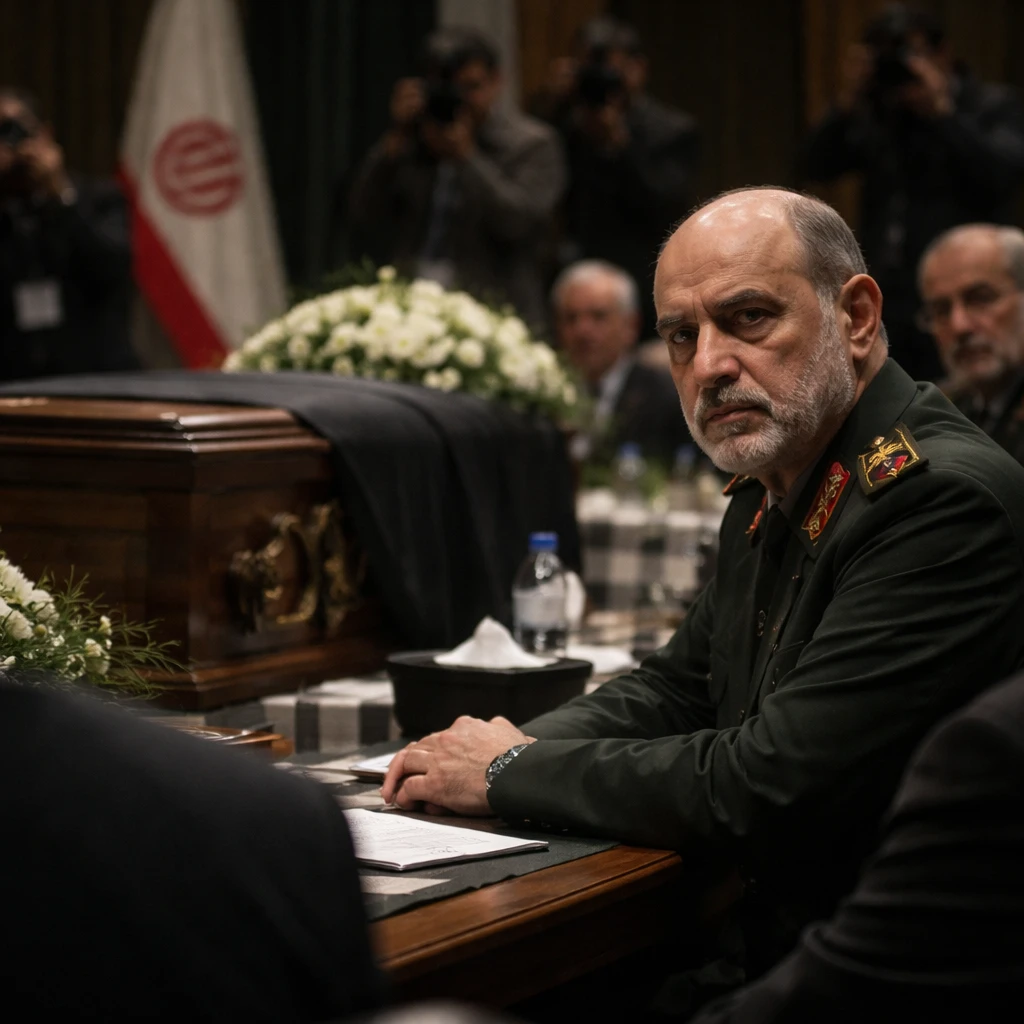
Photos published online by Iranian state media show Gen. Ahmad Vahidi, a senior commander of the Islamic Revolutionary Guard Corps, reappearing in public as Tehran moves to hold a dayslong funeral for the slain former Supreme Leader Ayatollah Ali Khamenei. The images depict Vahidi at a meeting about the funeral and seated next to what is believed to be Khamenei's casket at a smaller service held on Thursday night.
Observers who have followed the country's diplomatic posture say Vahidi has been a central figure in shaping Iran's firm negotiating stance in discussions over a permanent peace agreement with the United States. Those same observers also indicate he is believed to maintain close contact with Iran's new Supreme Leader, Ayatollah Mojtaba Khamenei, who has reportedly been in hiding since his father's killing at the start of a joint U.S.-Israeli assault in late February.
Prior to these recent images, Vahidi's last public sighting was on February 8, several weeks before the conflict that resulted in the deaths of multiple senior military and government figures. His reappearance now coincides with preparations for an official funeral scheduled to begin on Saturday and continue until July 9, with Iranian authorities estimating attendance across events could reach between 15 million and 20 million people.
The large-scale commemorations have implications beyond ceremony. Delegates from the United States and Iran have held separate discussions with mediators in the region this week, and mediators from Qatar and Pakistan have indicated that the next round of meetings between U.S. and Iranian diplomats will be arranged at the "earliest possible time" following the end of the funeral events. U.S. President Donald Trump characterized the recent discussions as "very good meetings" and later stated that Tehran has "agreed to just about everything we need." Qatar and Pakistan have described the talks as showing "positive progress," though official uncertainty about the negotiations remains.
At the same time, Iran's joint military command issued a statement warning that any oil tanker attempting to pass through the Strait of Hormuz must use approved routes or face a "forceful response." The announcement revives concerns over the narrow waterway off Iran's southern coast, through which roughly one-fifth of global oil and liquefied natural gas transit. The conduit was effectively closed after the outbreak of the war, a move that pushed oil prices higher and stoked fears of broader inflationary pressures internationally.
Market and shipping indicators have shown some easing since the early days of the conflict. After a brief skirmish in the strait late last month, crude oil prices have declined back toward levels seen before the conflict began, which has alleviated a portion of the earlier inflation concern. Ship movements have also been rebounding: data from maritime analysis indicate at least 258 vessels transited the Strait of Hormuz last week, up from 138 ships in the prior week.
Vahidi's return to public view during the funeral preparations underscores the interconnection between Iran's domestic political events and broader regional and global economic concerns. The coming days are likely to be closely watched by diplomats and markets as the funeral unfolds, preparations continue, and officials on all sides signal intentions about the next steps in diplomacy and maritime operations.