
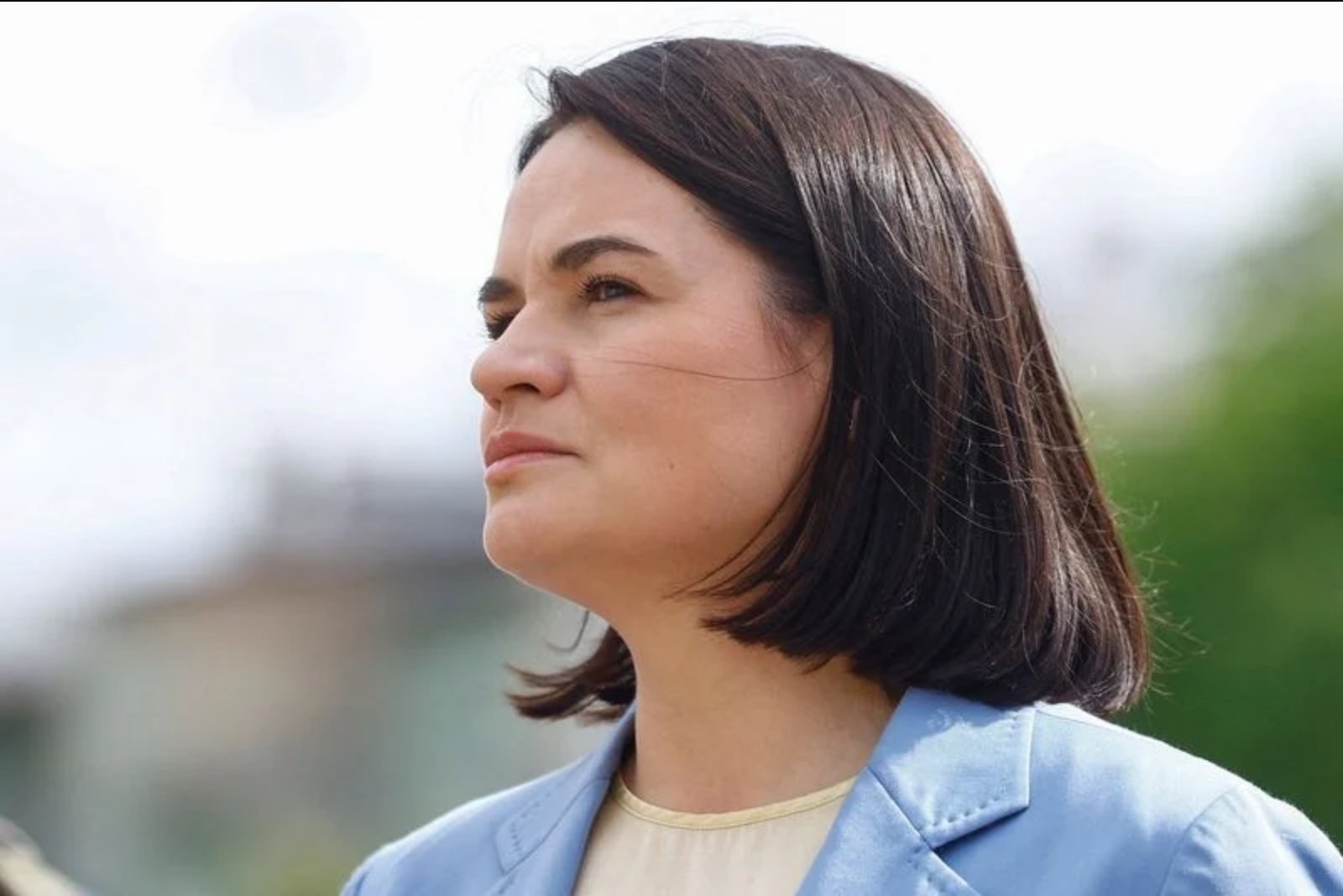
LONDON, June 9 - The Trump administration has told exiled Belarusian opposition figures that further planned releases of political prisoners are temporarily on hold, opposition leader Sviatlana Tsikhanouskaya said in an interview. Her remarks represent the first public admission from the opposition that momentum in talks that have secured the freedom of more than 400 detainees has slowed.
Human rights group Viasna reports that nearly 870 people remain in custody in Belarus, including at least 170 who are considered "particularly vulnerable" because of their age, health issues or harsh detention conditions. Tsikhanouskaya said she was informed by the U.S. side that "the next releases were postponed for a while," but she did not disclose the reason.
"Knowing the reason, it doesn’t worry me. Of course, we want more people to be released as soon as possible, and any delay, it ruins health for many of them," she said in English. "But it’s not the end of the process." She pointed to optimistic public remarks by U.S. envoy John Coale, who posted on X on June 3: "We are not finished. Keep hope alive!"
Requests for comment to Coale and to Belarusian presidential offices were made but went unanswered.
A change in Western engagement
The United States' decision to enter into direct talks with Belarusian President Alexander Lukashenko - long a close ally of Russian President Vladimir Putin - marked a marked change from earlier Western policy. For years, Lukashenko had been largely isolated, subjected to U.S. and EU sanctions in response to his record on human rights and his alignment with Moscow's war in Ukraine.
Tsikhanouskaya, whom Western governments regard as the rightful winner of the disputed 2020 Belarusian presidential election, has described U.S. engagement as an important humanitarian initiative, even as she has cautioned against actions that could confer political legitimacy on Lukashenko. She has also expressed unease with President Trump's public praise of Lukashenko - whom he has called "the Highly Respected President of Belarus" - yet acknowledged that the U.S. initiative has yielded tangible results.
"Neither President Trump nor those around him are naive, they understand who they are dealing with, and they can make some tactical moves to free people," Tsikhanouskaya said.
Sanctions relief and limited economic impact
In December, the United States lifted sanctions on Belarusian potash fertiliser, a notable policy shift intended in part as an incentive for prisoner releases. However, that U.S. move has not translated into a significant revenue windfall for Minsk, because European Union sanctions remain in effect. Those EU measures have forced Belarus to route exports through Russia rather than using the more direct and efficient path via the Lithuanian port of Klaipeda.
Lithuania has said it would not discuss restoring Belarusian access to Klaipeda while EU sanctions remain in force through February 2027, even as Washington has reportedly pressed Vilnius on the issue. Pavel Slunkin, a former Belarusian diplomat and now an independent analyst in Warsaw, suggested that Lukashenko's frustration over the U.S. inability to secure European backing was a likely explanation for the pause in release talks.
"Probably the Americans delivered a promise (to Lukashenko) that they could not fulfil," Slunkin said. "The American sanctions have never been the biggest problem for the regime in Minsk. The toughest sanctions are the European ones."
Coale's role and the human element
John Coale, 79, was appointed last year by President Trump to lead negotiations with Lukashenko. According to accounts of his efforts, Coale has spent long hours cultivating a rapport with the Belarusian leader, including social sessions that involved vodka drinking, during which Coale reportedly discretely emptied his glass onto the floor to remain sober.
Among the hundreds freed during the course of the talks were Nobel Peace Prize laureate Ales Bialiatski and prominent opposition figures such as Siarhei Tsikhanouski, husband of Sviatlana Tsikhanouskaya. On April 28, Coale said he expected additional releases within a month; however, six weeks later those expected follow-up releases had not occurred. On June 4, Coale publicly disputed a claim on X by opposition politician Valery Tsepkalo that Lukashenko had refused to meet with him in May.
Rising tensions and continued repression
The apparent stalling of negotiations has coincided with heightened tensions between Minsk and Western capitals. Belarus has conducted joint nuclear exercises with Russia, and Ukrainian President Volodymyr Zelenskiy has said he believes Moscow is trying to draw Belarus deeper into the war. Arrests of Lukashenko critics have continued despite instructions conveyed by the U.S. to Coale that they should cease.
Tsikhanouskaya said arrests occur "every day," but she noted that precise tallies are difficult because relatives of detainees often fear reprisals. Rights group Viasna has recorded at least 50 prison sentences since December that it regards as politically motivated, and added 32 names to its list of political prisoners last month alone.
Tsikhanouskaya expressed concern that Lukashenko is managing a "revolving door" system - freeing some detainees while detaining others - to preserve leverage in negotiations. While praising Coale for doing a "fantastic job," she said she has warned U.S. interlocutors that Lukashenko may be attempting to exploit the process.
"He wants to get a Lamborghini for the price of a bicycle. Take a lot while giving a little," she said. "And now if the Americans and the Europeans don’t maintain a principled position, we will repeat the same cycle again: Lukashenko will deceive, the sanctions will be removed, and the regime will still be there, without systemic changes."
Implications
The unfolding diplomatic sequence highlights the complex interplay between humanitarian objectives and broader geopolitical and economic pressures. The U.S. tactical engagement has secured the release of many detainees but the pause underscores how interdependent such outcomes have become on wider international alignment - particularly the stance of European partners whose sanctions remain in place.