
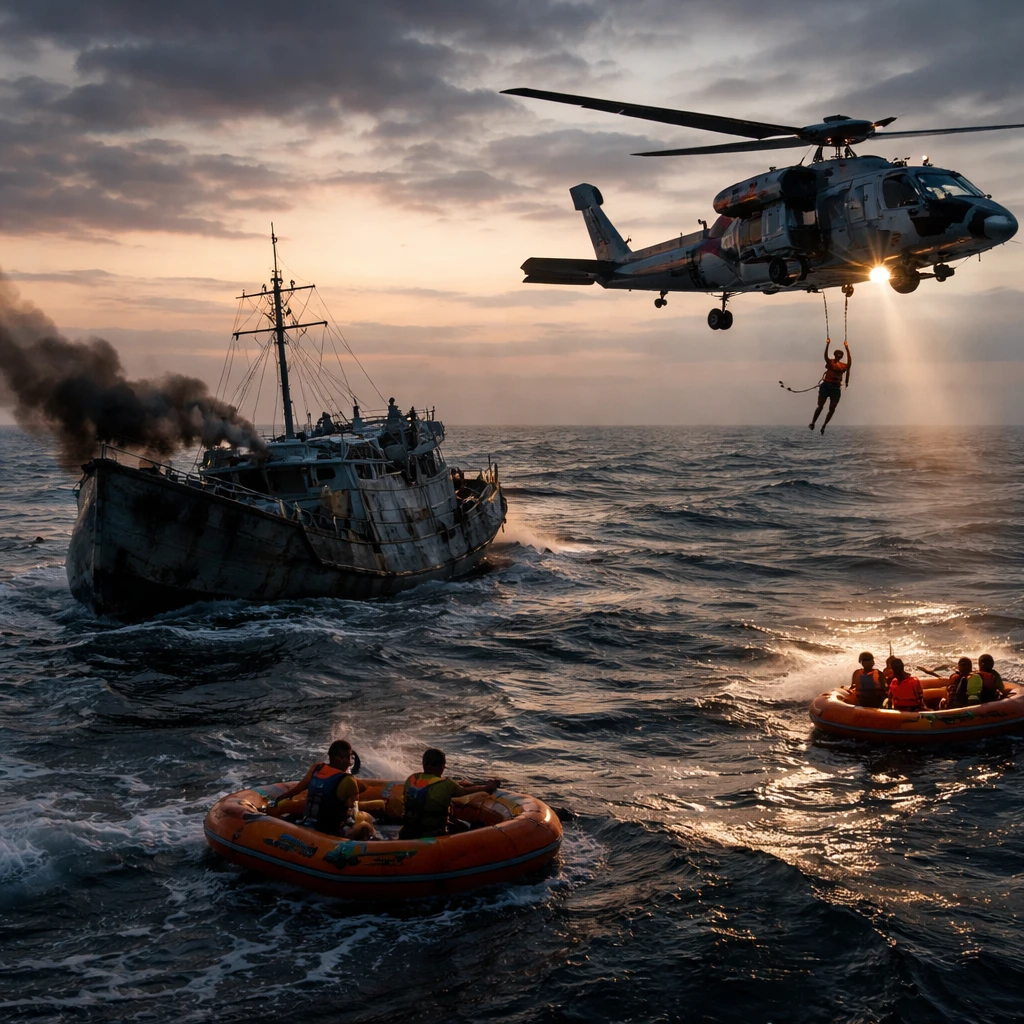
WASHINGTON, June 16 - The U.S. military reported on Tuesday that a strike in the Eastern Pacific on a maritime vessel killed one person and left two others alive. The command that announced the operation said the incident resulted in one male fatality and two male survivors.
The U.S. Southern Command posted the initial details on X, noting that the U.S. Coast Guard had been informed to conduct search-and-rescue measures. Officials emphasized that survivors were located, an outcome the military said is uncommon in similar operations.
According to the Southern Command, the vessel targeted in Tuesday's action was being operated by what it described as "Designated Terrorists Organizations" and was "transiting along known narco-trafficking routes." The command did not name the organizations involved, did not identify the individuals aboard, and did not provide additional supporting details for those assertions.
U.S. policy in recent months under President Donald Trump's administration has included strikes against vessels accused of carrying narcotics. The military frames these operations as actions against "narco-terrorists." Civil society groups and some experts, both in the United States and internationally, have raised questions about the legal basis for such strikes.
Human Rights Watch and Amnesty International have each characterized the strikes of this kind as unlawful extrajudicial killings. Independent observers and rights advocates have repeatedly questioned whether the operations comply with international legal standards.
Officials have noted that since September, U.S. military actions targeting similar vessels have resulted in the deaths of more than 200 people. Specific details about the identities of those targeted, the groups allegedly responsible, or corroborating evidence for individual strike claims have not been provided by the Southern Command in this announcement.
The notification of the U.S. Coast Guard for search-and-rescue underscores the operational coordination that accompanies these maritime strikes. Outside observers point to the rarity of survivors as a notable pattern in the record of such operations.
Context limitations: The Southern Command's statements did not include identifying information for the organizations or individuals it cited, and it did not disclose further evidence supporting its characterizations of the vessel.