
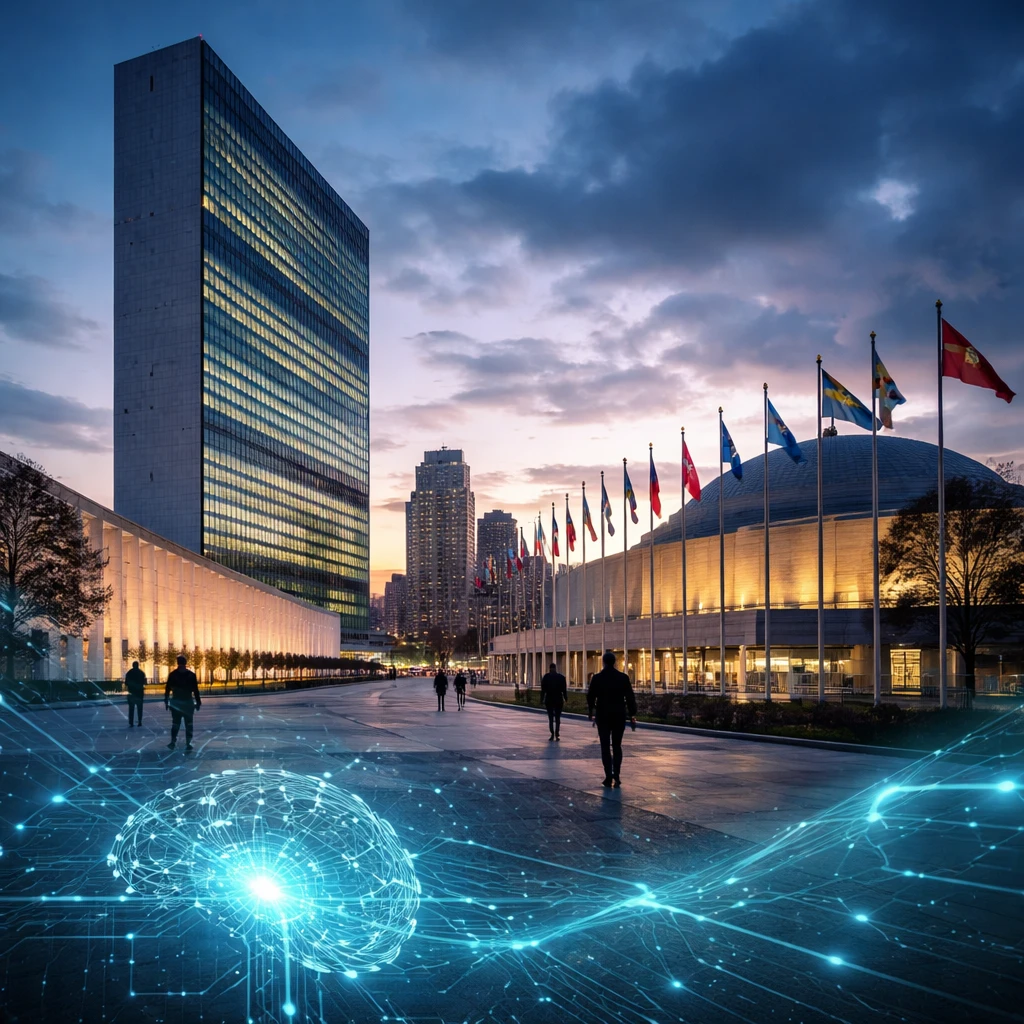
United Nations Secretary-General Antonio Guterres on Wednesday told reporters that the accelerating pace of artificial intelligence development raises risks that cannot be overlooked and that stronger oversight will be a central focus of his meetings with global leaders arriving for next week’s U.N. General Assembly in New York.
"We cannot afford to ignore concerns that have been raised, especially by those on the front lines of the development of AI," Guterres said, emphasizing the need to address those concerns ahead of the international gathering. He added: "It’s the first responsibility of any government to protect its citizens - including from the threats of artificial intelligence."
Public unease about AI’s potential dangers has increased in recent days following the resignation of Anthropic researcher Jacob Coxon, who cited among his reasons the belief that "people building AI earnestly believe that it could kill us all by the end of the decade." That statement contributed to heightened calls from some industry leaders for a slower pace in developing the technology.
President Donald Trump, however, sought to play down those concerns, saying on Monday that the United States already has guardrails in place to regulate and, where necessary, prosecute AI companies. His remarks stand in contrast to the U.N. chief’s call for tighter international oversight.
Guterres has been an advocate for coordinated global governance of AI. In 2023 the United Nations established a 39-member advisory body on artificial intelligence. That panel includes technology company executives, government officials and academics from countries such as the U.S., Russia and Japan.
Diplomats indicated that the U.N. Security Council may also hold discussions on AI next week during the annual assembly of world leaders in New York. The Security Council convened on the subject of artificial intelligence for the first time in 2023.
On the geopolitical front, President Trump has warned that criticism of AI development could advantage China. He is scheduled to meet Chinese President Xi Jinping next week in Washington. In addition, the two countries were planning a separate, lower-level meeting in mid-September to discuss AI risks, to be led by lower-level government officials.
Guterres framed his appeal in terms of shared international responsibility, saying on Wednesday that "we need a shared understanding of how to advance the safe, secure and responsible development of AI - while identifying when increasingly powerful systems may require stronger safeguards, or additional measures to manage potential risks."
Context and implications
The statements from the U.N. secretary-general and the U.S. president underscore a growing divergence in tone between international calls for collective oversight of AI and assertions by some national leaders that existing domestic measures are adequate. The coming days of diplomatic engagement at the U.N. General Assembly, possible Security Council attention to the issue, and bilateral meetings between top officials are likely to shape whether and how international approaches to AI governance evolve.