
TEHRAN, July 5 - In a high-profile mourning event on Sunday, three sons of the slain Ayatollah Ali Khamenei stood beside the coffins of the late leader and four other family members in Tehran, while Mojtaba Khamenei - the son reported to have taken on the role of supreme leader - remained absent from public view.
State television images showed Mostafa, Meysam and Masoud Khamenei performing funeral prayers behind the coffins that had been laid out in the wide courtyard of the Imam Khomeini Grand Mosalla, a large religious complex in the capital. The event formed part of a sequence of public ceremonies the authorities have organized to mark the leader's death.
Officials have framed the gatherings as an expression of public devotion to the theocratic state and revolutionary fervour, and the government is conducting a week of mass funeral processions that include taking the remains to Shi'ite religious sites in neighbouring Iraq.
The coffins were first displayed indoors for senior Iranian officials and visiting dignitaries to pay respects. On Saturday they were shown outdoors beneath glass, together with the caskets of Khamenei's daughter, son-in-law, daughter-in-law and a 14-month-old granddaughter.
Mojtaba Khamenei has not been publicly seen since the attack on February 28 that killed his father and the other family members, an event the article links to strikes by Israel and the United States at the outset of the war. People close to Mojtaba's inner circle have said his face was disfigured in the attack and he sustained a significant injury to one or both legs.
Iranian authorities have described a ceasefire that has halted the four-month conflict under an agreement with Washington, and they claim the pause will eventually deliver substantial economic benefits, presenting it as a victory over a superpower.
U.S. President Donald Trump told the Axios news website that peace talks were being paused for a week in light of the funeral events.
On Sunday, Iranian President Masoud Pezeshkian and Parliament Speaker Mohammad Baqer Qalibaf were present and prayed behind the coffins. Video footage showed Masoud Khamenei visibly emotional, wiping away tears with a keffiyeh - the checkered scarf that has become a symbol in Iran of militant revolutionary ideals and of solidarity with Palestinians - as an imam led funeral prayers.
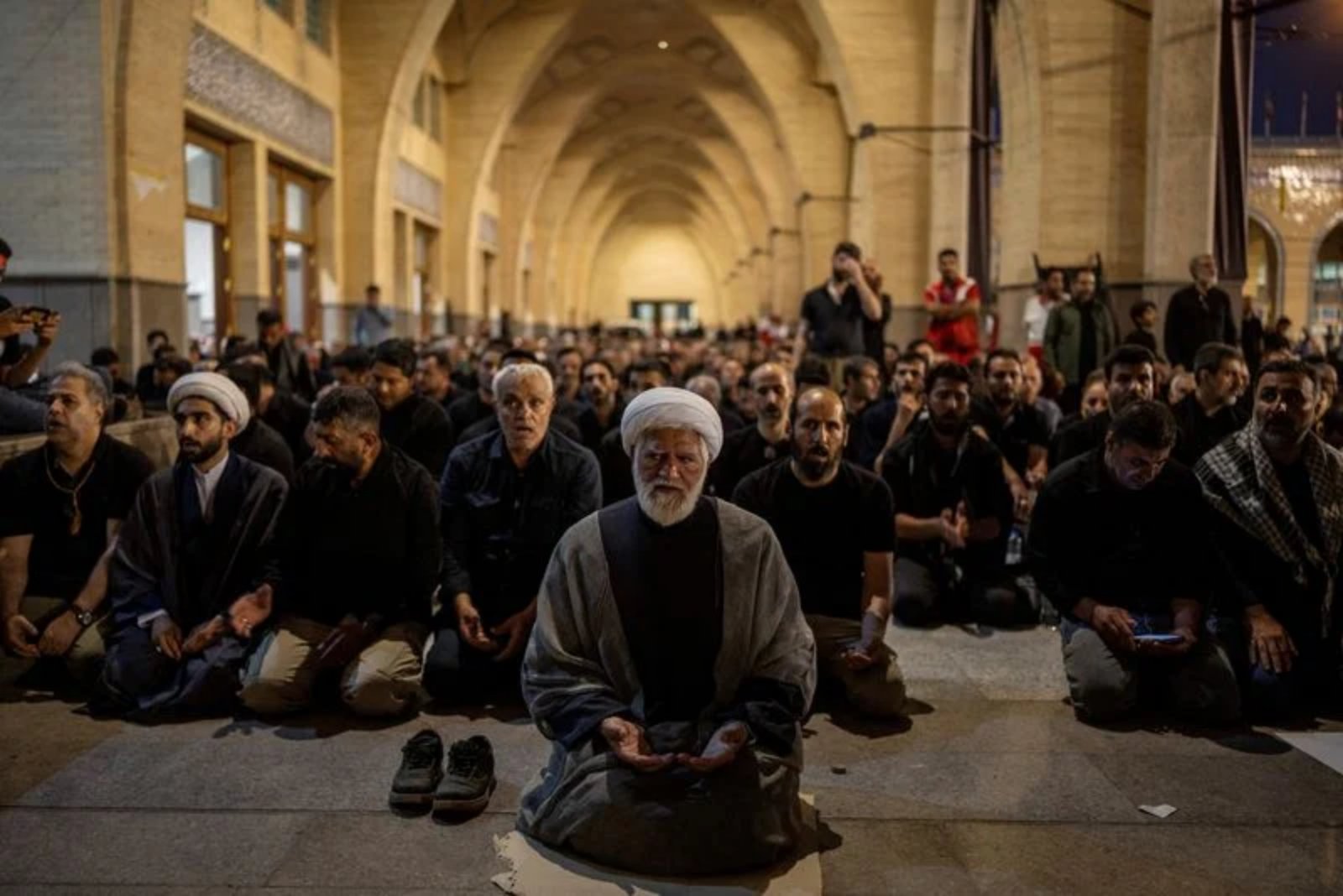
Large numbers of Iranians have attended the Mosalla to participate in the ceremonies, with many weeping and some engaging in chest-beating as expressions of mourning. The city’s metro authority reported about 7 million journeys between late Saturday and Sunday morning as people travelled to the site.
Authorities plan further large-scale processions. After a major procession scheduled in central Tehran on Monday, the remains will be taken to Qom - the seminary city that is the centre of Iran's Shi'ite hierarchy - for ceremonies on Tuesday. From Qom the body is to be flown to Iraq for observances at the Shi'ite shrine cities of Najaf and Kerbala on Wednesday, before returning to Iran on Thursday for another procession in Mashhad. The burial is planned to take place near the tomb of a medieval Shi'ite imam.
Officials say they will mobilise millions of participants for the upcoming processions, providing transport, food and lodging as part of the arrangements.
Summary of events and logistics
The series of ceremonies comprises indoor and outdoor viewings, national processions and international observances in Iraq, while senior state figures and three of the late leader's sons have participated publicly. Mojtaba Khamenei's whereabouts and condition remain unconfirmed in public.